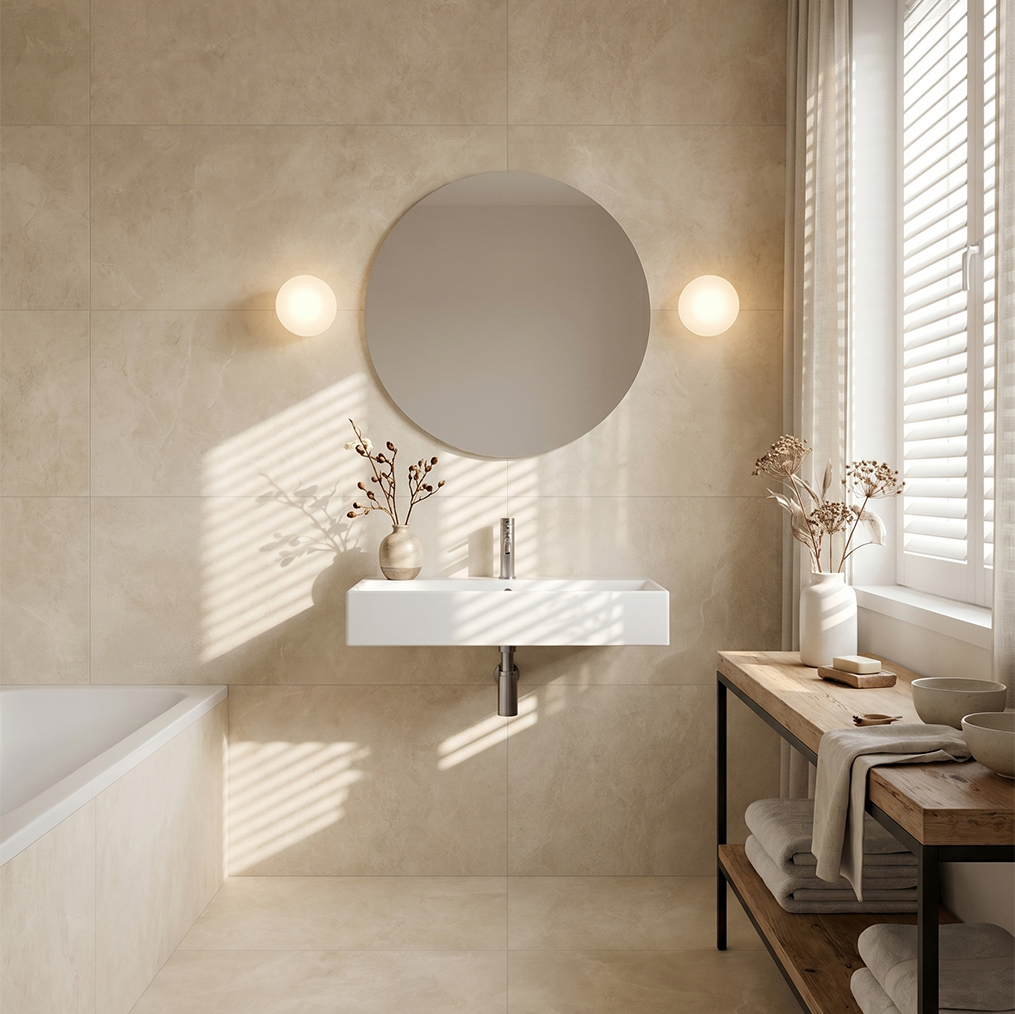
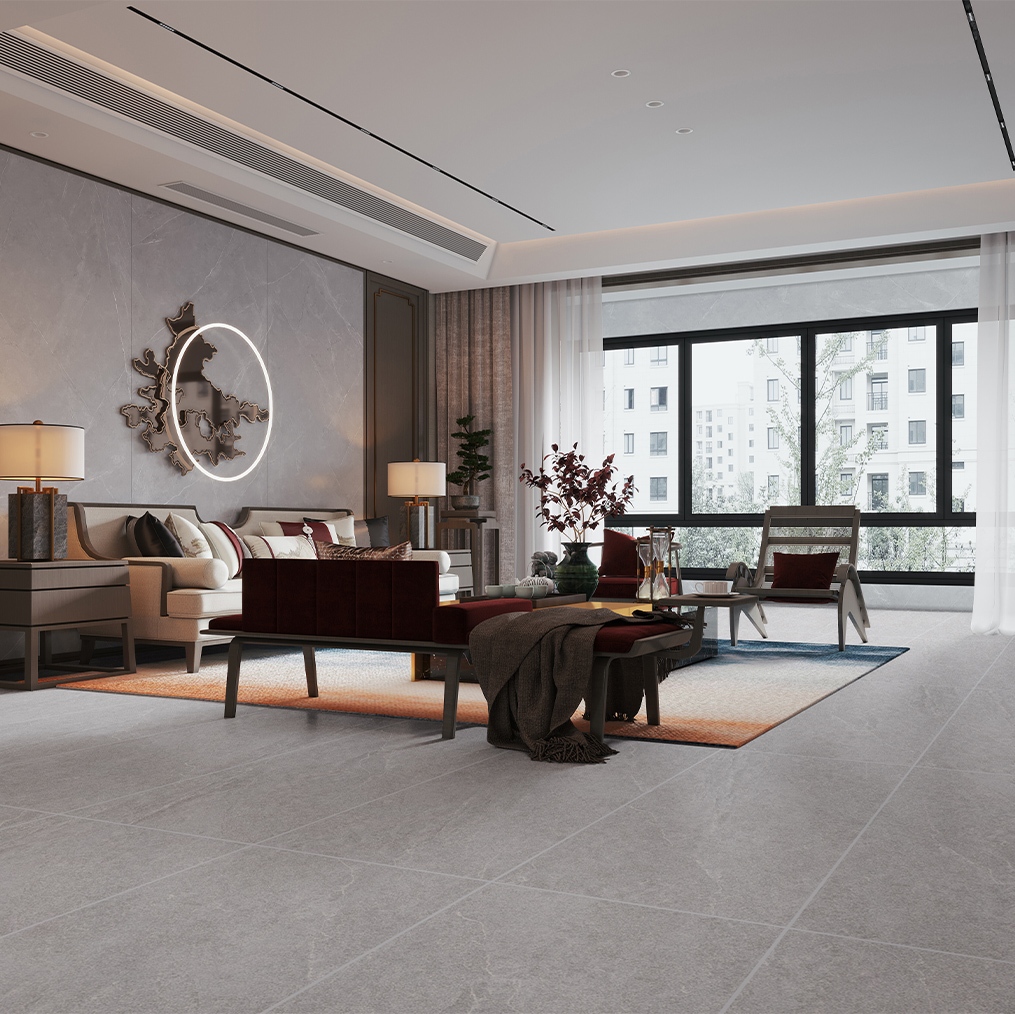
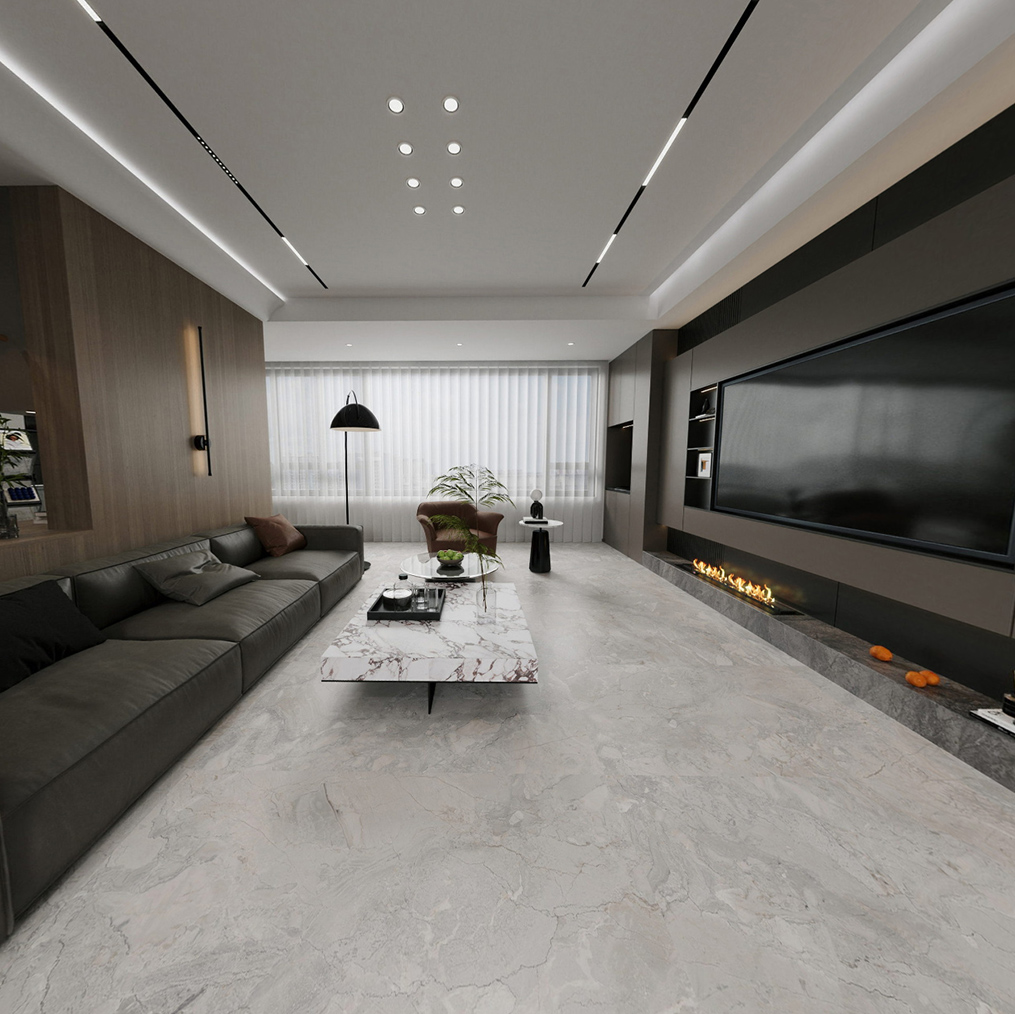
When buyers search for bathroom wall tiles, they usually want more than a simple statement that porcelain is stronger and ceramic is cheaper. They want to know which material suits their bathroom, budget, installation conditions, cleaning habits, wall structure, and design goals. A reliable OEM Tile Supplier such as JBN can help buyers compare the two materials through tested specifications, consistent production, and project-based recommendations.
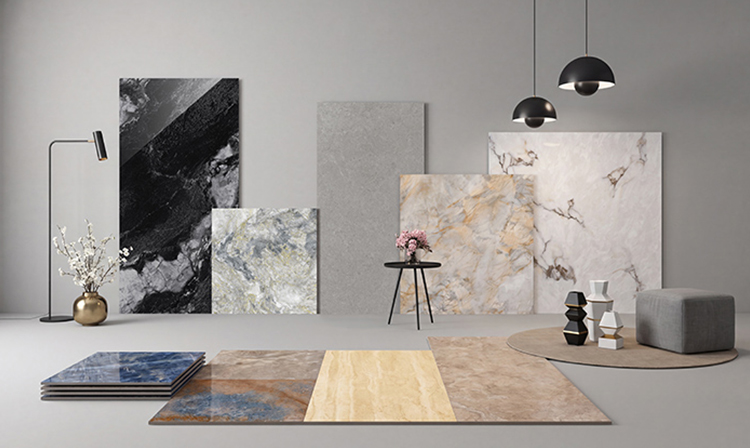
What Do Buyers Really Want to Know Before Choosing Bathroom Wall Tiles?
Buyers need a practical comparison rather than a basic material definition
High-ranking bathroom tile articles commonly focus on water absorption, durability, price, cleaning, appearance, installation, and suitability for different rooms. However, purchasing groups usually need these points connected to real decisions.
- Will the tile absorb moisture in a humid bathroom?
- Will the tile remain stable when exposed to steam and temperature changes?
- Is the tile heavy enough to create a wall installation problem?
- Can a local installer cut and install it without special equipment?
- Will the surface stain, fade, or become difficult to clean?
- Is the higher price of porcelain justified for a wall application?
- Which material is better for a shower wall, backsplash, rental property, or luxury bathroom?
- Can the supplier provide consistent color, size, finish, packaging, and replacement stock?
The main purchasing groups have different priorities
- Homeowners usually prioritize appearance, long-term maintenance, and total project cost.
- Builders and contractors focus on installation speed, dimensional consistency, breakage rates, and supply reliability.
- Interior designers often prioritize color range, surface texture, large formats, and design continuity.
- Property developers need consistent pricing, batch stability, packaging quality, and delivery capacity.
- Retailers and distributors need popular sizes, repeatable quality, attractive packaging, and manageable inventory.
- Commercial buyers need strong moisture resistance, easy maintenance, and reliable replacement availability.
Porcelain vs Ceramic Bathroom Wall Tiles: Core Parameter Comparison
The material structure creates the main performance difference
Porcelain and ceramic tiles are both made from clay, minerals, and other natural materials. The main difference is the body composition, pressing process, and firing temperature.
- Porcelain tiles are made from a denser and more refined clay body.
- Porcelain tiles are pressed at high pressure and fired at a higher temperature.
- Ceramic tiles generally use a less dense body and a lower firing temperature.
- Both materials can be glazed with many colors, patterns, textures, and decorative effects.
- The visible surface alone does not always reveal the difference, so technical specifications should be checked with the supplier.
| Parameter |
Porcelain Wall Tile |
Ceramic Wall Tile |
What It Means for Buyers |
| Typical water absorption |
Usually 0.5 percent or lower for porcelain classification |
Often higher than porcelain, depending on the product category |
Lower absorption gives porcelain better resistance to moisture penetration. |
| Body density |
High density and compact structure |
Lower density and more porous structure |
Ceramic is often lighter and easier to handle. |
| Hardness |
Generally higher |
Generally lower |
Porcelain resists scratches and impact better during demanding use. |
| Wall weight |
Can be heavier, especially in large formats |
Often lighter for the same general size |
Wall strength and adhesive selection matter more with heavy porcelain. |
| Cutting difficulty |
Harder to cut and drill |
Easier to cut and shape |
Ceramic may reduce labor time for complex layouts. |
| Dimensional stability |
Usually very stable when properly manufactured |
Can also be stable, but product quality varies more |
Check calibration, flatness, warpage, and batch consistency. |
| Surface options |
Stone, marble, concrete, wood, metal, and solid colors |
Wide range of colors, patterns, gloss, and decorative designs |
Both materials can support attractive bathroom designs. |
| Typical price |
Usually higher |
Usually lower |
Ceramic can be more cost-effective for standard wall applications. |
| Maintenance |
Low maintenance when correctly installed |
Low maintenance when glazed and correctly installed |
Grout quality and cleaning habits also affect maintenance. |
| Best general use |
Wet rooms, high-use bathrooms, large formats, and premium projects |
Standard bathroom walls, backsplashes, decorative areas, and budget projects |
Water absorption is important, but it is not the only selection criterion
Porcelain has a dense body and low water absorption, which makes it highly suitable for shower walls, wet rooms, and bathrooms exposed to frequent moisture. Ceramic wall tiles can also perform well in bathrooms when they have a suitable glaze, proper installation, sealed joints, and an appropriate product rating.
Buyers should avoid assuming that every porcelain tile is automatically better for every wall. A small, lightweight, glazed ceramic tile may be easier and more economical to install on a normal bathroom wall. The correct decision depends on moisture exposure, wall structure, format, budget, and expected service life.
How Porcelain and Ceramic Tiles Perform in Real Bathroom Use
Porcelain provides strong moisture and wear stability
In daily use, porcelain performs particularly well in bathrooms with frequent showers, high humidity, and intensive cleaning. Its dense body reduces moisture penetration and helps the tile remain stable when the installation is completed correctly.
- Porcelain is suitable for shower walls and wet zones.
- It has a low risk of body swelling caused by moisture absorption.
- It generally resists scratches and surface wear well.
- It works well with large-format designs that require a stable tile body.
- It is useful for commercial bathrooms and high-traffic properties.
Ceramic provides practical performance for most standard walls
Glazed ceramic tiles are widely used on bathroom walls because the glazed surface can resist water, soap, and common household stains. Ceramic is usually lighter, easier to cut, and less expensive, which can make the entire installation more efficient.
- Ceramic is suitable for general bathroom walls and vanity backsplashes.
- It is easier to cut around pipes, electrical outlets, niches, and corners.
- Its lower weight may simplify handling and wall installation.
- It offers a broad selection of colors, patterns, sizes, and decorative formats.
- It can be a strong value choice for residential and rental properties.
Battery life is not a tile performance factor, but installation equipment affects productivity
Bathroom tiles do not contain batteries, so battery life is not a product parameter for porcelain or ceramic. If a contractor uses a cordless tile cutter, drill, mixer, or inspection light, battery life can affect installation productivity, but it does not indicate tile quality.
The practical performance factors that replace battery life in a tile evaluation are:
- Dimensional stability during installation.
- Resistance to cracking during cutting and drilling.
- Flatness and edge straightness.
- Color consistency between cartons.
- Breakage rate during shipping and handling.
- Surface resistance to staining and cleaning chemicals.
- Adhesive compatibility and bond reliability.
Stability depends on both the tile and the installation system
A stable bathroom wall installation requires more than a dense tile body. The wall must be sound, dry, flat, and suitable for the selected adhesive. Large porcelain tiles can fail if the wall is uneven or if insufficient adhesive coverage creates hollow areas behind the tile.
- Check wall flatness before ordering large-format tiles.
- Use an adhesive recommended for the tile size and substrate.
- Apply sufficient adhesive coverage, especially in wet areas.
- Use movement joints where required by local building practice.
- Choose grout suitable for moisture, cleaning, and expected movement.
- Allow the adhesive and grout to cure according to the manufacturer instructions.
Advantages and Disadvantages of Porcelain Bathroom Wall Tiles
Advantages of porcelain
- Very low water absorption.
- Strong resistance to scratches, impact, and surface wear.
- Good stability in humid and frequently used bathrooms.
- Suitable for large-format wall designs.
- Can create continuous marble, stone, concrete, and slab-style effects.
- Strong option for commercial and premium residential projects.
Disadvantages of porcelain
- Higher material cost in many markets.
- Higher weight may require more careful handling.
- Harder cutting and drilling can increase labor costs.
- Requires suitable tools and experienced installers for complex layouts.
- Large heavy tiles can place greater demands on the wall and adhesive system.
- Some polished surfaces may require more attention to water marks and cleaning.
Advantages and Disadvantages of Ceramic Bathroom Wall Tiles
Advantages of ceramic
- Usually more affordable than porcelain.
- Lightweight and easy to transport.
- Easier to cut, drill, and install.
- Suitable for many standard bathroom wall applications.
- Available in a wide range of colors, patterns, sizes, and finishes.
- Can reduce labor costs and simplify small renovation projects.
- Often a practical choice for rental housing and budget-controlled developments.
Disadvantages of ceramic
- Higher body porosity than porcelain.
- May be less suitable for severe moisture exposure if the product is not correctly rated.
- Generally lower resistance to impact and deep scratching.
- Some lower-quality products may show greater variation in flatness or size.
- May not be the best choice for heavy-use commercial areas.
- Large ceramic formats may have more limitations depending on the body strength and production quality.
Which Tile Is Better for Different Bathroom Areas?
Choose porcelain for shower walls and wet rooms when moisture exposure is high
Porcelain is a strong choice for shower walls, steam-prone bathrooms, wet rooms, and areas cleaned frequently. Its low absorption gives buyers an additional level of protection when the tile, adhesive, waterproofing membrane, grout, and joints are all correctly specified.
- Primary shower walls.
- Steam shower surrounds.
- Wet room walls.
- Commercial washrooms.
- Luxury bathrooms with large-format panels.
- Bathrooms where long service life is more important than the initial price.
Choose ceramic for standard bathroom walls and decorative zones
Ceramic is often sufficient for walls outside direct shower exposure. It can be an efficient solution for vanity walls, toilet areas, backsplashes, laundry rooms, guest bathrooms, and decorative feature walls.
- Guest bathroom walls.
- Vanity backsplashes.
- Toilet and powder room walls.
- Decorative borders and accent walls.
- Rental properties with controlled renovation budgets.
- Projects where fast cutting and simple installation are priorities.
Use the wall location to guide the decision
The same bathroom may use both materials. Porcelain can be installed in the shower zone, while ceramic can be used on a dry feature wall. This mixed-material approach can balance performance, design, installation time, and budget.
How Much Do Installation and Maintenance Affect the Final Cost?
The purchase price is only one part of the project budget
A lower tile price does not always produce a lower total project cost. Buyers should compare the material price with cutting, adhesive, labor, waste, delivery, breakage, waterproofing, grout, and future replacement requirements.
- Porcelain may cost more per square meter but can offer stronger long-term durability.
- Ceramic may reduce material and labor costs for simple wall layouts.
- Large porcelain formats may require additional labor or specialized handling tools.
- Complex patterns can increase cutting waste for either material.
- Low-quality tiles can increase breakage, installation delays, and replacement costs.
- Consistent sizing can reduce leveling time and improve installation efficiency.
Maintenance depends heavily on the glaze, grout, and surface finish
Both porcelain and glazed ceramic wall tiles are generally easy to clean. Soap residue, hard water marks, and mold usually develop more readily in grout joints than on the tile surface.
- Use a pH-neutral tile cleaner for routine cleaning.
- Remove soap residue before it becomes a thick deposit.
- Keep grout joints dry and ventilate the bathroom after showering.
- Use the grout type recommended for the moisture level and joint width.
- Avoid abrasive tools that may damage polished or decorative surfaces.
- Ask the supplier for cleaning instructions before using strong chemicals.
What Product Specifications Should Buyers Request from an OEM Tile Supplier?
Request technical data before comparing quotations
A professional OEM Tile Supplier should provide more than product photos and a price list. Buyers should request technical data that allows a fair comparison between porcelain and ceramic products from different factories.
- Tile body classification.
- Water absorption result or product category.
- Breaking strength and modulus of rupture where applicable.
- Surface abrasion or wear classification where applicable.
- Slip resistance information for products used on floors.
- Thickness and permitted thickness tolerance.
- Length, width, straightness, flatness, and warpage tolerances.
- Glaze resistance to stains and household chemicals.
- Frost resistance if the product may be used in cold environments.
- Recommended adhesive, grout, and installation method.
- Carton quantity, pallet quantity, net weight, and gross weight.
- Available formats, finishes, colors, and production capacity.
Check sample and batch consistency
Tile samples are useful, but one sample does not prove long-term production consistency. Buyers should ask for samples from the intended production batch when possible and compare several pieces together.
- Place multiple tiles side by side to check shade variation.
- Check edges for chipping, warpage, and uneven glaze.
- Measure several pieces to evaluate size consistency.
- Inspect the back of the tile for regular texture and adequate adhesive contact.
- Confirm that the sample finish matches the final production finish.
- Request photographs of packaging and pallet loading.
- Confirm the replacement and after-sales process before placing a large order.
Ask about OEM and private label capabilities
For distributors, developers, and retail brands, OEM production can provide custom colors, packaging, logos, collections, surface finishes, and size combinations. The buyer should confirm minimum order quantity, mold or design fees, sample approval procedures, lead time, inspection standards, and intellectual property arrangements.
JBN can support buyers who need a coordinated tile collection rather than a single isolated product. The supplier evaluation should include design development, technical control, packaging protection, production scheduling, inspection, and export service.
Which Purchasing Group Should Choose Porcelain or Ceramic?
Porcelain is best for buyers who prioritize durability and moisture performance
- Choose porcelain for high-use family bathrooms.
- Choose porcelain for shower walls with frequent direct water exposure.
- Choose porcelain for commercial hotels, offices, and public washrooms.
- Choose porcelain for large-format walls and premium stone-look designs.
- Choose porcelain when future replacement and maintenance risk must be minimized.
- Choose porcelain when the budget can support higher material and installation costs.
Ceramic is best for buyers who prioritize value and simple installation
- Choose ceramic for standard residential bathroom walls.
- Choose ceramic for decorative areas with limited direct water exposure.
- Choose ceramic for small renovation projects and rental properties.
- Choose ceramic when easy cutting and lower labor cost are important.
- Choose ceramic when many colors and decorative patterns are required.
- Choose ceramic when the wall is suitable and the product has reliable technical specifications.
A mixed selection can be the most balanced solution
Buyers do not need to select one material for every surface. A practical bathroom specification may use porcelain in the shower and floor areas, with ceramic on dry walls or decorative sections. This approach can deliver appropriate moisture performance while controlling the total budget.
How to Make the Final Bathroom Tile Decision
Use a short decision process before ordering
- Identify whether the tile will be installed in a direct shower zone or a relatively dry wall area.
- Check the wall structure, flatness, waterproofing, and load capacity.
- Compare water absorption, strength, flatness, size tolerance, and surface performance.
- Calculate the total installed cost instead of comparing tile prices alone.
- Consider cutting difficulty, installer experience, waste rate, and delivery conditions.
- Evaluate cleaning habits, bathroom ventilation, and expected service life.
- Request physical samples and technical documents from the supplier.
- Order the correct quantity from one batch and keep spare tiles for future repairs.
Porcelain is not automatically the best choice for every wall
Porcelain is usually the stronger technical material, but its additional performance may not be necessary for every bathroom wall. If the area has moderate moisture, the wall is stable, the ceramic glaze is suitable, and the buyer needs to control costs, ceramic can be the more efficient choice.
Ceramic is not automatically a low-quality choice
Good ceramic wall tiles can provide attractive appearance, easy maintenance, reliable water resistance at the glazed surface, and efficient installation. The key is to select a product that is designed for wall use and supported by consistent manufacturing data.
Final Recommendation: Porcelain or Ceramic for Bathroom Walls?
Choose porcelain for maximum moisture resistance and long-term durability
Porcelain is the better overall choice for shower walls, wet rooms, commercial bathrooms, large-format designs, and projects where durability and low water absorption are the main priorities. It is especially suitable when the buyer accepts higher material, handling, and installation costs.
Choose ceramic for value, design flexibility, and easier installation
Ceramic is a practical choice for most standard bathroom walls, backsplashes, dry decorative areas, rental properties, and budget-controlled projects. It provides strong value when the product has a suitable glaze, stable dimensions, consistent quality, and correct installation.
The best decision is not based on the material name alone. It should be based on moisture exposure, wall condition, tile size, technical performance, installation skill, total cost, and the expected service life of the bathroom. A qualified OEM Tile Supplier can help match the tile body, surface finish, format, packaging, and technical specifications to the project. For collection development, custom production, and dependable bathroom tile sourcing, buyers can contact JBN through www.jbnjbn.com.