15,Oct 2026
Choosing a finish from a Porcelain and Ceramic Tile Supplier affects cleaning, lighting, safety, and installation—not just appearance. A homeowner searching for high gloss porcelain tiles for living room floors may want more reflected light, while someone comparing the best porcelain tiles for bathroom walls needs low water absorption and easy maintenance rather than floor traction. This guide evaluates polished porcelain tile, water absorption, and rectified edges using recognized standards, installation requirements, and realistic use cases. It also explains when slip resistant glossy porcelain floor tiles are appropriate and when a matte or textured finish is the safer choice.

High-gloss porcelain tiles are made from refined clay and mineral materials that are pressed and fired at high temperature. Their dense body normally gives porcelain tile a water absorption rate of 0.5% or less under the classification used by ISO 13006 and ANSI A137.1. That value is a technical classification, not a promise that every tile will perform identically; the actual product specification and test report should still be checked.
The glossy surface is generally produced through polishing, glazing, or both. These processes create a smoother, more reflective face, but they can also make dust, footprints, standing water, and scratches easier to see. A responsible OEM Tile Supplier should provide the tile’s absorption classification, shade variation, caliber, abrasion information where applicable, recommended grout joint, and slip-resistance data for the intended application.
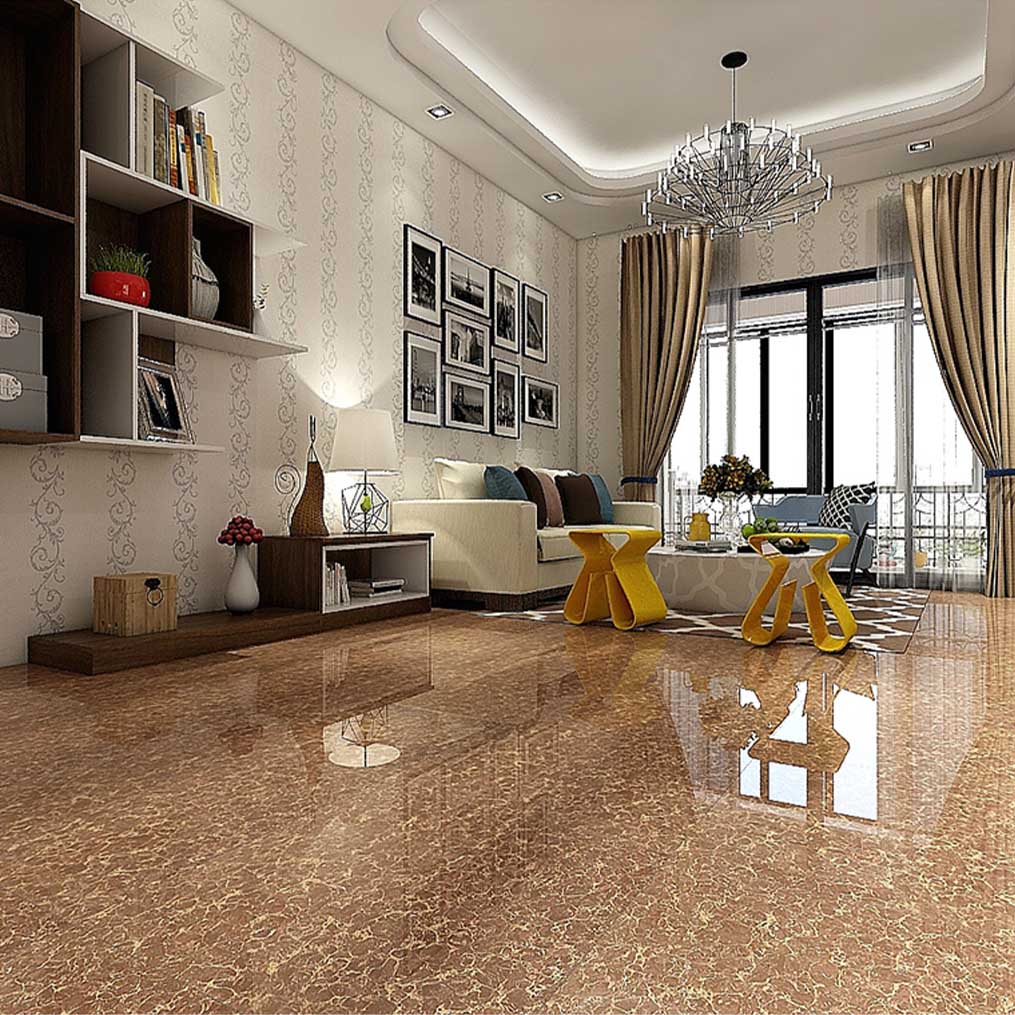
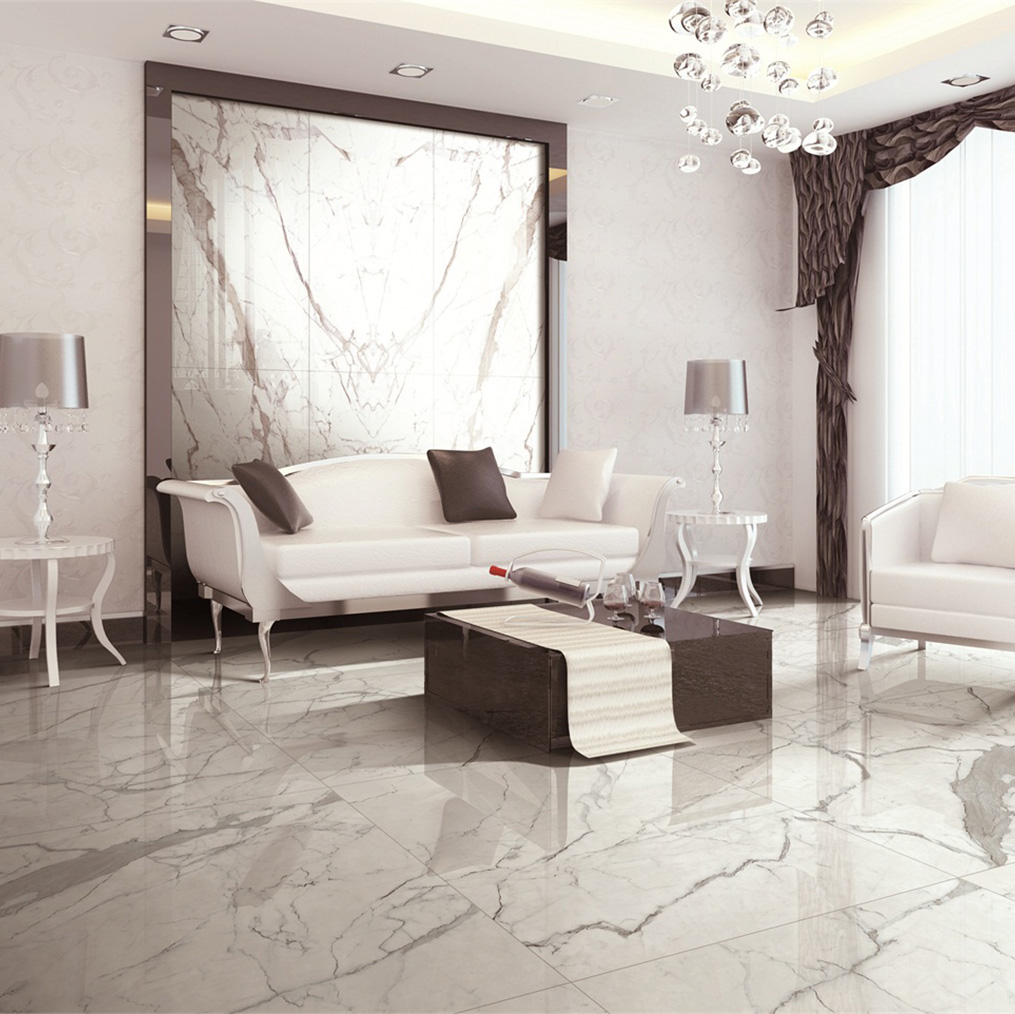
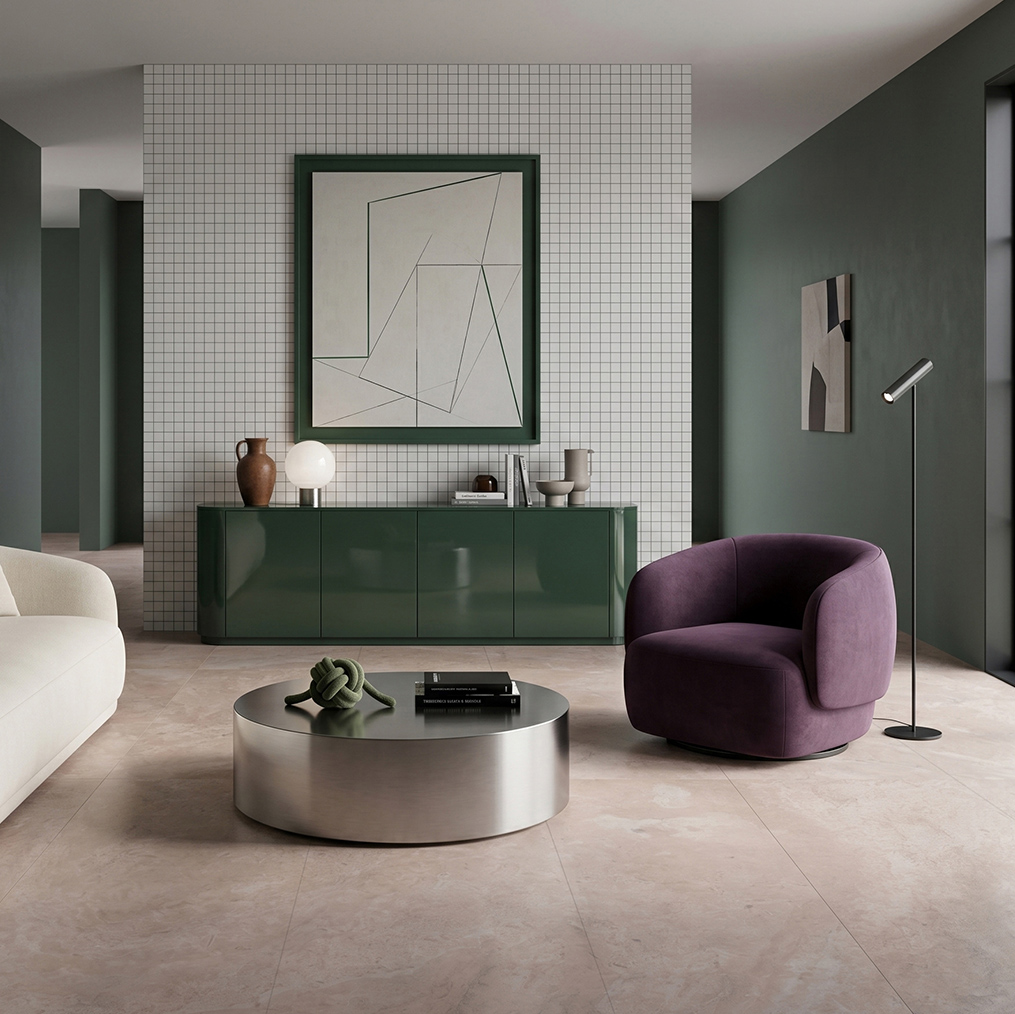
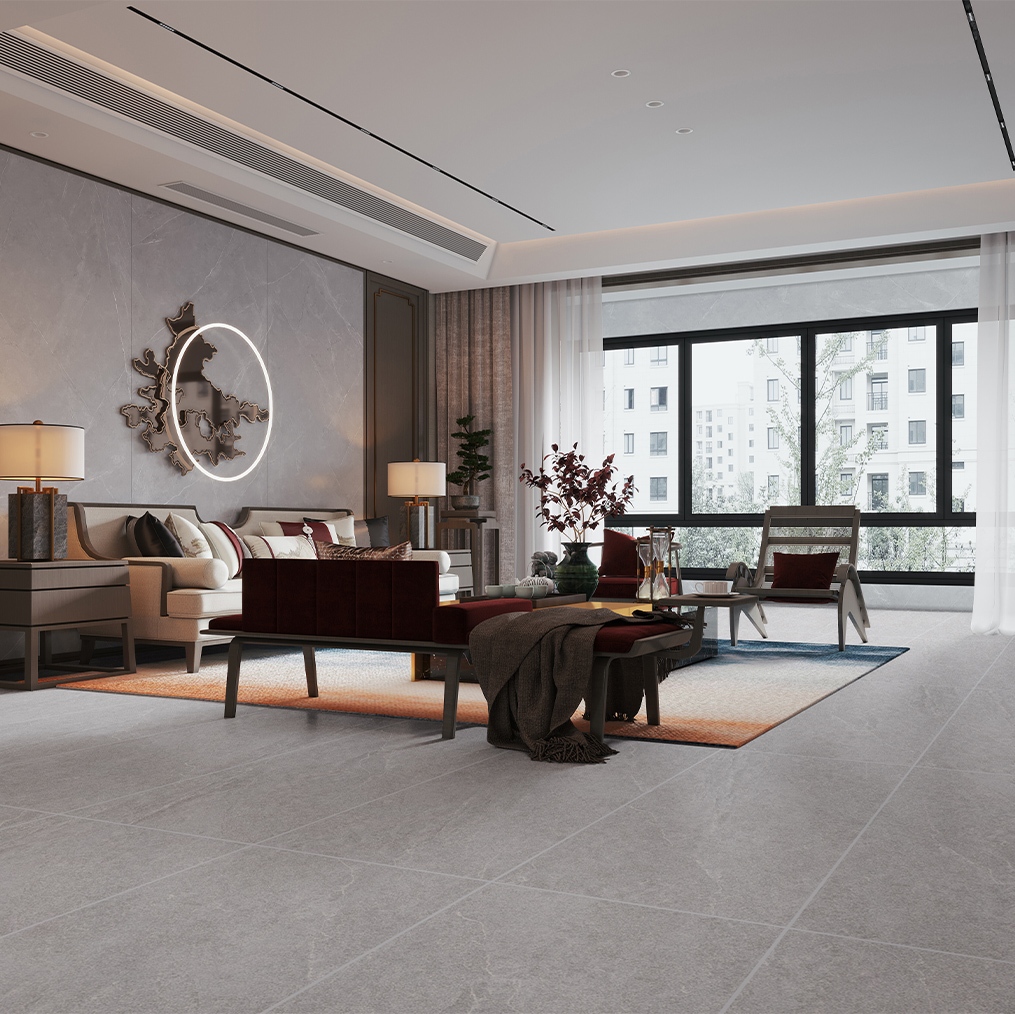
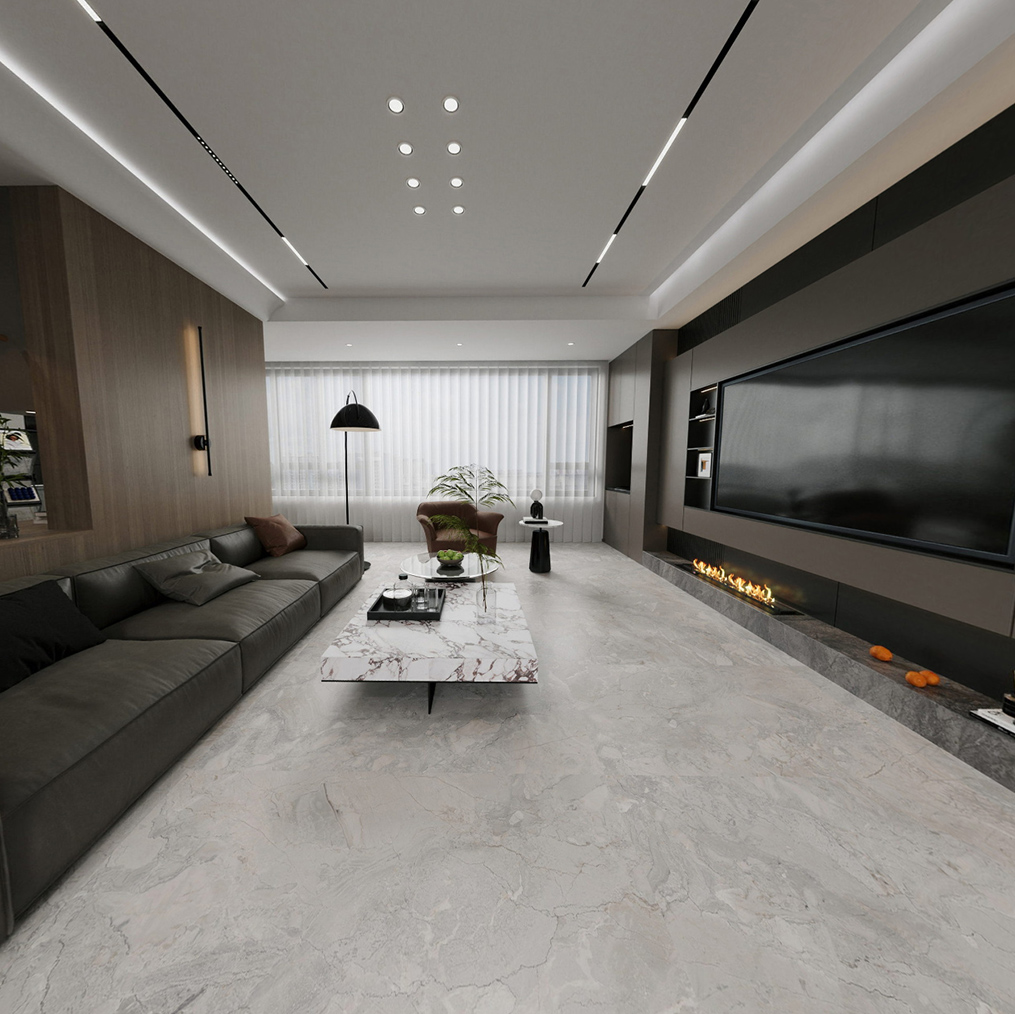
A polished surface reflects more incident light than a matte surface. In a small room with pale walls, large windows, or limited artificial lighting, this can make the space appear brighter and visually less crowded. The tile does not generate light, and it cannot replace a properly designed lighting system, but its reflectance can contribute to the room’s visual effect.
The result is especially noticeable with large-format tiles because fewer grout lines interrupt the reflective plane. For example, a 600 × 1200 mm tile covers 0.72 square meters, while a 300 × 300 mm tile covers 0.09 square meters. The larger format covers eight times the area per tile, although it also requires a flatter substrate and more careful handling.
When the tile is classified as porcelain, its dense fired body can limit water penetration. This makes it suitable for many interior floors, kitchens, shower walls, commercial lobbies, and bathroom walls when the installation system is correctly designed. Low absorption can also reduce the chance of moisture entering the tile body, although it does not waterproof the substrate, joints, corners, or plumbing penetrations.
For wet rooms, the waterproofing membrane, slope to the drain, movement joints, grout, sealant, and drain connection remain essential. A porcelain tile with a 0.5% or lower absorption value cannot compensate for a failed shower waterproofing system.
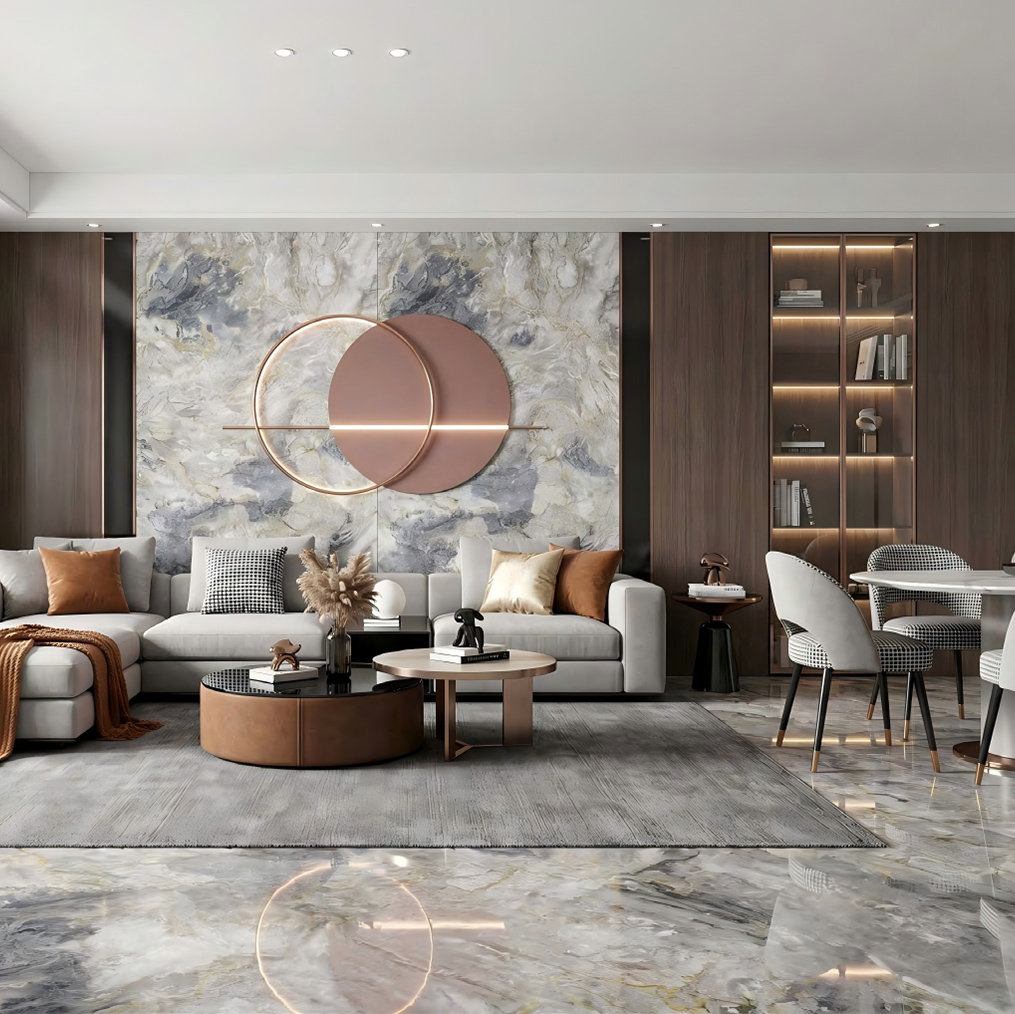
High-gloss porcelain tiles are available in formats such as 600 × 600 mm, 600 × 1200 mm, and larger slabs, depending on the factory and product line. A larger tile can create a continuous stone, marble, or concrete appearance with fewer grout lines. This is a design benefit, but it is not automatically an installation benefit.
Large-format installation requires a substrate that meets the applicable flatness requirement. Many industry installation guides commonly reference a maximum variation of approximately 6 mm over 3 m for tiles with an edge longer than 380 mm, but the exact requirement should be confirmed with the selected tile and local installation standard. Lippage-control clips may help align tiles, but they cannot correct an uneven floor.
The dense tile surface does not normally require sealing for basic water resistance. Routine cleaning usually consists of removing loose grit, using a neutral-pH tile cleaner, and drying or rinsing away residue. Abrasive powders, steel wool, strong acids, and products containing wax can dull or contaminate the finish.
Cleaning performance depends on the entire floor assembly. Cement grout is porous unless properly treated, and textured grout joints can hold soil even when the tile face is easy to wipe. Epoxy grout may offer lower absorption and improved stain resistance, but it still requires correct mixing, application, and cleaning during installation.
The same reflection that brightens a room also highlights smears, dried droplets, pet hair, and fine dust. In an entrance, kitchen, or busy retail corridor, the floor may need spot cleaning several times per day to maintain a uniform appearance. This is a visibility issue rather than proof that the tile is unsanitary.
Avoidance suggestion: Use high-gloss tiles on walls, backsplashes, low-traffic living areas, or floors where a regular cleaning schedule is realistic. For entrances and kitchens, compare a satin, honed, or micro-textured finish before placing an OEM order.
A glossy surface should not be assumed to have a specific slip-resistance value. Performance varies with surface texture, contamination, footwear, water volume, slope, and test method. A polished tile may be acceptable for a dry bedroom floor but unsuitable for a shower floor, pool surround, outdoor walkway, or commercial entrance exposed to rain.
Avoidance suggestion: Request documented wet slip testing for the exact product. Do not use a generic “anti-slip” marketing label as the only selection criterion. For shower floors and outdoor areas, choose a product specifically rated by the manufacturer for wet use and verify that the tile size, grout layout, and drainage design are appropriate.
High-gloss finishes can make uneven edges and height differences more visible under direct lighting. Sand, grit, and furniture movement may create visible marks over time, particularly in entryways. Porcelain itself is hard and durable, but hardness does not mean the polished surface is immune to abrasion or impact damage.
Avoidance suggestion: Install walk-off mats at entrances, use felt pads under furniture, lift rather than drag heavy items, and remove grit with a soft broom or vacuum. Order spare tiles from the same production batch when possible because later batches may differ in shade, caliber, or surface gloss.
A 600 × 1200 mm tile weighs substantially more than a 300 × 300 mm tile of the same thickness and may require two-person handling or a lifting frame. The installer must achieve high adhesive coverage, avoid voids under areas exposed to point loads, and plan movement joints around room perimeters, structural transitions, and large uninterrupted fields.
Rectified edges can support a narrow, consistent grout joint, but they do not justify a zero-joint installation. The minimum joint width should follow the manufacturer’s instructions and the tile’s actual dimensional variation. A narrow joint can make alignment errors more noticeable and leaves less tolerance for size differences.
| Application | Suitability | Selection and installation notes |
|---|---|---|
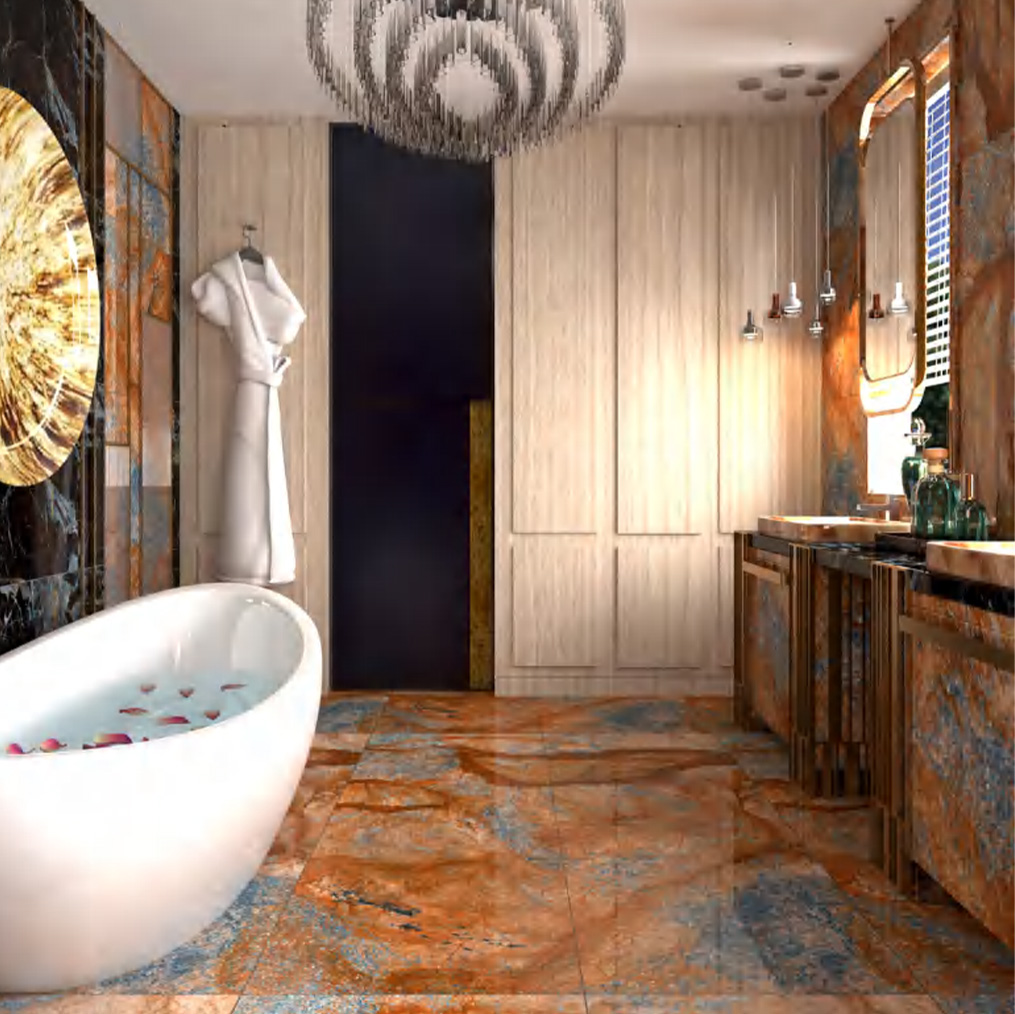
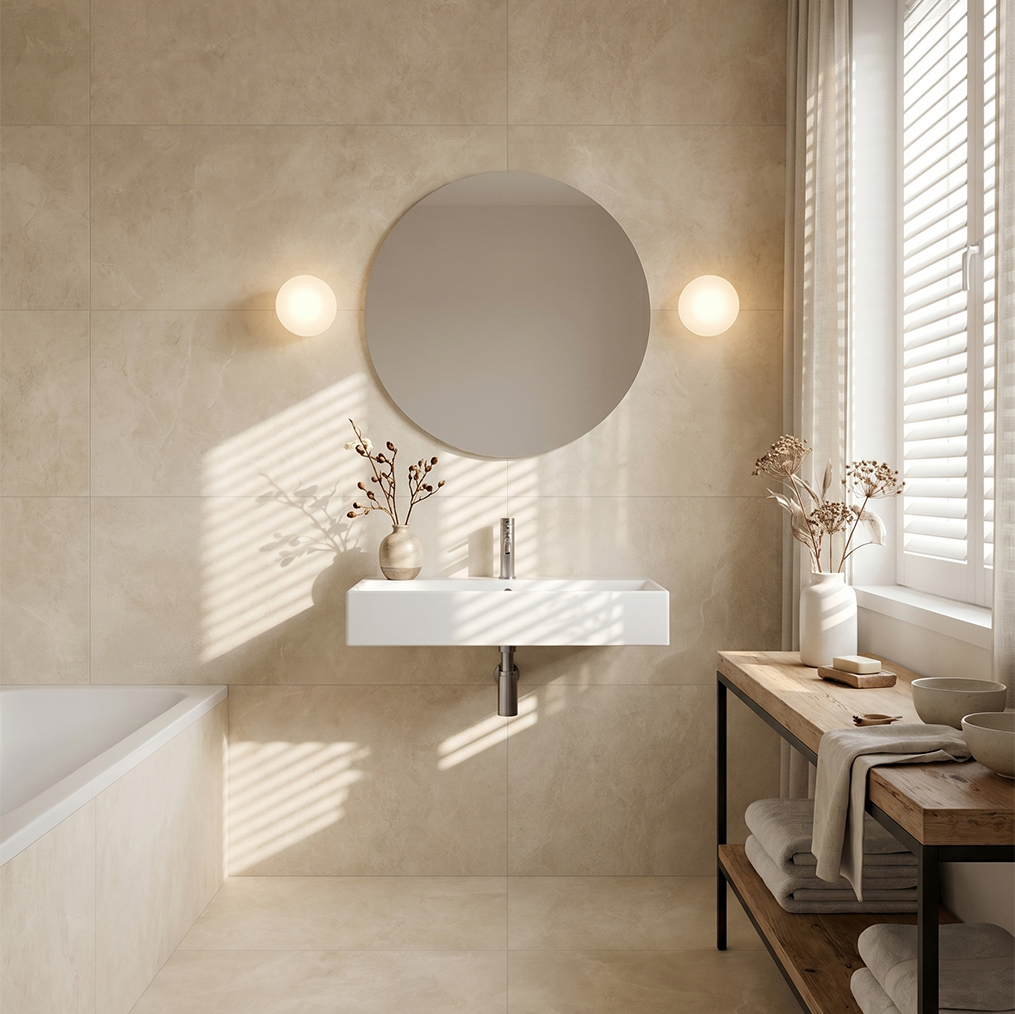
| Bathroom walls | Generally suitable | Low absorption and easy wipe-cleaning are useful. Use a waterproofing system behind the tile in wet zones and seal changes of plane with an appropriate sealant. |
| Kitchen backsplash | Generally suitable | Gloss can make grease easier to see and remove. Protect cut edges and maintain flexible joints where the backsplash meets counters or cabinets. |
| Living room floor | Often suitable | Check wear information, wet slip data, furniture protection, and lighting. A lighter color may make dust less visually prominent than a dark mirror-like finish. |
| Bedroom floor | Often suitable | Traffic is usually lower, but confirm the tile is approved for floor use rather than wall use only. |
| Commercial lobby | Conditionally suitable | Evaluate traffic, entrance moisture, cleaning frequency, slip resistance, and abrasion classification. A matte or structured surface may be more practical. |
| Shower floor | Usually not the first choice | Do not select solely for appearance. Use a product with documented wet-use suitability, adequate drainage, and a format that supports the required slope. |
| Outdoor patio or pool deck | Usually unsuitable unless specifically rated | Verify exterior, frost, thermal-shock, and wet slip performance. Interior polished products should not be assumed to withstand outdoor conditions. |
Record whether the surface is a wall or floor, dry or wet, residential or commercial, interior or exterior, and exposed to sand, oils, wheeled traffic, or freeze-thaw cycles. This prevents a common mistake: selecting a tile by color first and checking technical suitability later.
Ask JBN or another qualified supplier for a physical sample, technical data sheet, installation guide, shade and caliber information, recommended grout joint, cleaning instructions, and test documentation. View the sample under the project’s actual lighting. A polished white tile can look different under 2700 K warm lighting than under 4000 K neutral lighting.
For a large project, request samples from the same production batch. Compare at least three tiles side by side to evaluate shade variation, edge straightness, surface waviness, pinholes, and gloss consistency. A sample represents a product family, but it cannot reveal every batch-level variation.
Measure the net area, add cuts and fitting waste, and reserve replacement tiles. A common planning allowance is around 10% for straightforward rectangular rooms, but complicated layouts, diagonal patterns, large-format cuts, and future repairs may require more. Confirm the allowance with the installer before ordering.
Purchase enough material from one batch when color consistency matters. Record the product code, shade, caliber, and lot number. Store cartons flat or as instructed by the supplier, protect them from moisture and impact, and avoid mixing batches without a dry layout check.
The installer should prepare a clean, stable, and sufficiently flat substrate; select a compatible adhesive; achieve the required coverage; and place movement joints in accordance with local standards and manufacturer instructions. For large-format floor tiles, back-buttering may be recommended to improve contact, but the exact method depends on tile size, substrate, adhesive, and local practice.
Allow the adhesive and grout to cure for the time specified by their manufacturers. Do not expose a newly tiled floor to heavy traffic or standing water simply because the surface appears dry. The curing time is controlled by the setting material and site conditions, not by the tile’s glossy finish.
High-gloss porcelain tiles are worth considering when the project prioritizes reflected light, a polished architectural appearance, low tile-body absorption, and straightforward routine cleaning. They are less suitable when the surface will regularly be wet, exposed to abrasive grit, or expected to hide footprints and maintenance marks.
A practical decision rule is to approve the product only after four checks: the tile is rated for the intended location, wet slip performance is documented where relevant, the substrate and installer can meet the format requirements, and the owner accepts the cleaning visibility of a reflective surface. If any of these checks fails, a matte or textured porcelain alternative may deliver better long-term performance.
Do not apply a tile sealer to the polished face unless the manufacturer specifically recommends it. Some sealers can create streaks, alter gloss, or attract soil. Grout, natural-stone borders, and cement-based surfaces may have separate sealing requirements.
They can be suitable for some dry or lightly wet bathroom areas, but gloss alone does not establish slip safety. For a bathroom floor, request wet slip data for the exact tile and confirm that the product is rated for floor use. A shower floor generally needs a surface and format selected specifically for frequent water exposure and drainage.
The porcelain tile body normally does not need sealing to reduce water absorption when it meets the porcelain classification. Grout, natural stone, and some specialty surfaces may need separate treatment. Always follow the product manufacturer’s instructions because polishing processes and surface coatings vary.
Porcelain is classified primarily by its low water absorption, generally 0.5% or less under relevant standards. Ceramic tile covers a broader range of fired products and may have higher absorption. “Polished” describes a surface finish, while “porcelain” describes the tile body classification; a tile can be both polished and porcelain.
Rectified edges can provide a more consistent visual layout, but they do not make the tile stronger or eliminate the need for grout joints. They also make substrate flatness and installation accuracy more important because irregularities are easier to see.
Many simple layouts use an allowance near 10%, but the correct quantity depends on room geometry, tile format, pattern, cuts, breakage risk, and whether spare tiles are required. Ask the installer to calculate the cutting plan before the final purchase.
Only when the exact product is documented for exterior use and meets the project’s requirements for wet slip resistance, frost resistance, thermal changes, and weather exposure. An interior polished tile should not be moved outdoors based only on its low water absorption.
Choose high-gloss porcelain tiles for dry interior floors, feature walls, bathroom walls, backsplashes, and living spaces where reflected light and a polished surface justify regular cleaning. Avoid selecting them for wet exterior areas or shower floors without product-specific performance evidence. Before ordering, confirm high-gloss porcelain tiles for living room suitability, compare best porcelain tiles for bathroom walls specifications, and treat slip resistant glossy porcelain floor tiles as a tested category rather than a marketing phrase. Check the supplier’s porcelain stoneware classification, DCOF or equivalent slip data, and required grout joint; with those checks, a JBN OEM Tile Supplier order can be matched to the room instead of relying on appearance alone.
Feel free to reach out for any queries. We would be happy to help!
We look forward to working with you.
Navigation
Navigation
Contact Us
Telephone: 0086-757-83327093
E-mail: jbn002@jbnjbn.com
WhatsApp: +86 136 9028 1303
WeChat: +86 136 9028 1303
Address:Building 4, Area B, Ceramics International Trading Center, Jihua Xi Road, Foshan, Guangdong, China
Get in Touch
Get in Touch