20,Aug 2026
Is Porcelain Tile Good for Kitchen Floors? In most residential and commercial projects, the answer is yes—provided the tile, surface finish, layout, and installation system are correctly specified. As an experienced OEM Tile Supplier, JBN recommends a five-stage process: define kitchen conditions, select certified porcelain, verify technical data, prepare the substrate, and complete professional installation with proper maintenance. This approach helps beginners avoid common mistakes while giving architects, contractors, and distributors the technical information needed to make a reliable purchasing decision.
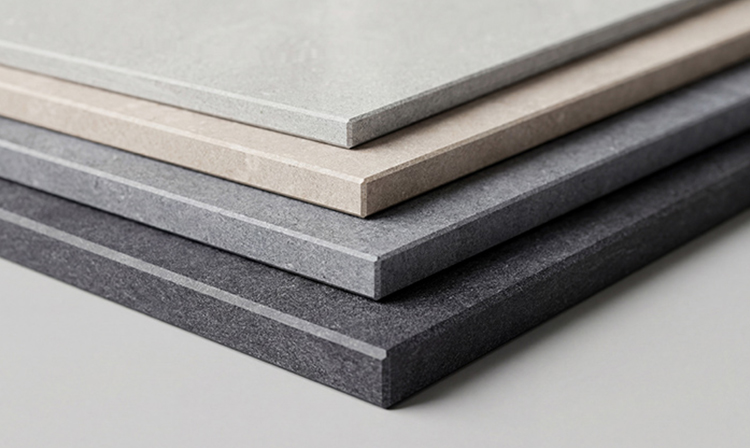
Kitchens expose flooring to water, cooking oil, food acids, dropped utensils, foot traffic, and frequent cleaning. Porcelain tile is engineered to manage many of these conditions because it is dense, low-absorption, and available in a wide range of surface textures.
JBN supplies porcelain and ceramic tile solutions for residential kitchens, restaurants, hotels, supermarkets, and other high-use spaces. The right product should not be selected only by color or price. It should be evaluated according to:
A reliable Porcelain and Ceramic Tile Supplier should provide technical data, inspection records, samples, packaging details, and installation recommendations before mass production.
| Performance factor | Why it matters in a kitchen | What to verify |
|---|---|---|
| Low water absorption | Limits moisture penetration and staining | ASTM C373 or EN ISO 10545-3 results |
| High density | Improves resistance to daily wear | Product technical sheet |
| Abrasion resistance | Helps protect visible surfaces in busy areas | ASTM C1027 or applicable PEI classification |
| Chemical resistance | Supports cleaning and spill management | ASTM C650 or EN ISO 10545-13 |
| Dimensional stability | Helps create consistent joints | ASTM C485, ASTM C499, or EN ISO 10545 series |
| Slip performance | Reduces risk when the floor is wet | ANSI A326.3 or project-specific DCOF requirements |
| Design flexibility | Matches modern, rustic, stone, or wood interiors | Sample approval and batch control |
Porcelain tile is generally defined as tile with water absorption of 0.5% or less under ANSI A137.1 classification. However, low absorption does not automatically mean that every porcelain tile is suitable for every kitchen. Surface texture, grout selection, drainage, and installation quality remain important.
Before ordering from JBN or any Porcelain and Ceramic Tile Supplier, we first assess how the floor will be used.
A typical home kitchen usually needs:
Large-format porcelain tiles can create fewer grout joints, while 600 × 600 mm or 600 × 1200 mm formats often balance visual impact and installation practicality.
Restaurants, cafeterias, hotels, and food-processing areas require a more demanding specification. Consider:
For these locations, we recommend requesting the complete technical file, including test reports and batch traceability. In a commercial project, a matte or structured surface may offer better wet traction than a highly polished finish.
A simple measurement error can create expensive delays. Record:
For diagonal patterns, herringbone layouts, or multiple room transitions, the waste allowance may need to exceed 10%.
The phrase “porcelain tile” covers many product types. A polished tile, a full-body technical tile, and a textured outdoor-grade tile will not perform identically.
These are often practical for kitchen floors because they can provide better traction and conceal minor marks. Their surface profile should still be easy enough to clean.
Polished porcelain creates a reflective, premium appearance, but it may be less suitable where water, oil, or grease frequently reaches the floor. We advise checking wet DCOF data rather than assuming that a polished product is safe.
Glazed porcelain offers extensive design possibilities, including marble, cement, terrazzo, and wood visuals. The glaze must be selected according to expected traffic and abrasion exposure.
This option can be suitable for demanding commercial applications because the visual material extends more deeply through the tile body. It still requires correct selection based on the intended use and testing data.
A professional Porcelain and Ceramic Tile Supplier should communicate performance using recognized standards. Common references include:
Testing standards do not replace project-specific judgment. For example, a tile can pass water absorption requirements but still be a poor choice if its surface is excessively slippery when contaminated with oil.
Before approving a bulk order, we recommend asking JBN for:
For calibrated or rectified products, dimensional control can be critical. In precision production, some buyers request dimensional consistency controlled to 0.01 mm at selected stages. The allowable tolerance must always be confirmed against the applicable standard and product specification rather than assumed.
Many buyers ask whether ceramic tile is a lower-cost alternative. Both products can work in kitchens, but they differ in density, absorption, manufacturing characteristics, and recommended applications.
| Feature | Porcelain tile | Ceramic tile |
|---|---|---|
| Water absorption | Typically 0.5% or below under ANSI classification | Often higher, depending on product |
| Density | Generally higher | Varies by body type |
| Kitchen floor suitability | Excellent when correctly specified | Suitable for light-to-moderate applications |
| Format options | Strong choice for large formats | Often available in more economical formats |
| Cost | Usually higher | Often more budget-friendly |
| Installation | Requires careful cutting and substrate preparation | Generally easier to cut |
| Best use | Busy kitchens, premium homes, commercial areas | Residential areas with moderate traffic |
This does not mean porcelain is always the only correct choice. A qualified Porcelain and Ceramic Tile Supplier should match the tile to the actual service conditions, budget, and installation capability.
For many homeowners, porcelain is worth the additional investment because the floor is exposed to moisture and abrasion every day. For a low-traffic kitchen with strict budget limits, a certified ceramic floor tile may also perform adequately.
Even a high-quality product can fail when installed over an unsuitable substrate. We treat installation as a complete system rather than a separate final step.
The substrate should be:
Large-format tiles are particularly sensitive to substrate flatness. Uneven surfaces can cause lippage, hollow areas, and bond failure. Use a suitable leveling compound where necessary and confirm compatibility with the adhesive manufacturer.
For porcelain, use a cementitious or reactive adhesive rated for low-absorption tile. Depending on the project, a polymer-modified thin-set mortar may be appropriate.
Check:
The installer should use the correct trowel size and back-butter large-format tiles where required. The goal is consistent mortar coverage, not merely adhesive contact at the tile corners.
Movement joints are necessary where the structure, substrate, or room dimensions require them. They should be coordinated with:
Rigidly filling movement joints with standard grout can contribute to cracking. Use an approved flexible sealant or joint system according to the project specification.
Kitchen floors benefit from grout with suitable stain and chemical resistance. Options may include:
Epoxy grout can offer strong resistance to stains and chemicals, but installation requires careful workmanship and prompt cleaning. The grout color should also be considered because very light grout may show cooking residue more quickly.
A structured inspection reduces disputes and ensures the finished floor performs as expected. JBN operates as an OEM Tile Supplier by supporting product specification, production coordination, and quality-control communication for wholesale and project buyers.
Depending on the product and contract, inspection may include:
For export orders, buyers may request 100% visual inspection or an agreed sampling plan based on ISO 2859-1 or project-specific requirements. A clear inspection standard should be written into the purchase contract before production.
After installation, inspect for:
Photographing the floor before grouting can help document tile alignment and identify problems early.
In a representative mid-sized residential kitchen project, the buyer initially considered a low-cost ceramic tile. The kitchen connected directly to a dining area and received daily family traffic, frequent wet cleaning, and occasional oil splashes.
We recommended a matte glazed porcelain format with:
The buyer approved physical samples before ordering. The installer corrected a substrate variation before laying the tiles and used a leveling system for the large-format pieces. After completion, the floor offered a continuous visual transition into the dining area and required only routine sweeping and damp mopping.
The important success factor was not simply choosing porcelain. It was coordinating product data, layout, substrate preparation, adhesive selection, grout, and inspection as one process.
Cause: An unsuitable polished surface, contamination, or inadequate drainage.
Solution:
Cause: Substrate movement, inadequate adhesive coverage, missing movement joints, or installation over an unstable surface.
Solution:
Cause: Porous grout, poor cleaning during installation, or exposure to grease.
Solution:
Cause: Mixing production batches, incorrect shade control, or installation without dry layout planning.
Solution:
Cause: Uneven substrate, tile warpage, inconsistent mortar coverage, or unsuitable installation technique.
Solution:
Porcelain is low-maintenance, but it is not maintenance-free. A simple care routine protects the finish and grout.
Do not use strong acids or unapproved chemicals simply because porcelain itself is chemically resistant. The grout, sealant, and surrounding materials may not have the same resistance.
For distributors, developers, and private-label buyers, JBN can support a more controlled procurement process.
A professional sourcing checklist should include:
When working with an OEM Tile Supplier, buyers should also clarify branding requirements, carton artwork, pallet configuration, barcode information, and minimum order quantity. JBN can help coordinate private-label and project-based specifications so the final product is consistent with the buyer’s market positioning.
For urgent project questions, define a communication target such as a 24-hour response for technical or order-status inquiries. Fast communication is especially important when a shipment involves multiple sizes, trims, or coordinated production batches.
Yes, porcelain tile is usually an excellent kitchen-floor solution because it combines low water absorption, strong wear performance, broad design flexibility, and relatively simple maintenance. However, the best result depends on more than selecting a tile labeled “porcelain.”
We recommend that every buyer:
JBN works as an OEM Tile Supplier and Porcelain and Ceramic Tile Supplier for buyers who need coordinated product development, quality documentation, and export-ready tile solutions. By following the full specification and installation process, you can achieve a kitchen floor that is attractive, durable, easier to maintain, and better prepared for years of daily use.
Feel free to reach out for any queries. We would be happy to help!
We look forward to working with you.
Navigation
Navigation
Contact Us
Telephone: 0086-757-83327093
E-mail: jbn002@jbnjbn.com
WhatsApp: +86 136 9028 1303
WeChat: +86 136 9028 1303
Address:Building 4, Area B, Ceramics International Trading Center, Jihua Xi Road, Foshan, Guangdong, China
Get in Touch
Get in Touch