
When a Porcelain and Ceramic Tile Supplier is asked about polished vs. matte porcelain tiles for bathroom projects, the answer depends less on fashion than on water, footwear, cleaning habits, and lighting. Homeowners comparing the best porcelain tile finish for high traffic floors often worry about slippery surfaces, visible footprints, and maintenance. The practical way to understand how to choose polished or matte porcelain tile is to compare water absorption, slip resistance, and PEI rating, then check technical terms such as DCOF, rectified edge, and coefficient of friction.
Polished tile can make a compact room look brighter and more spacious, while matte tile generally provides more visual grip and disguises dust. Neither finish is automatically suitable for every room. A glossy tile with an unsuitable wet rating can create a safety concern, while a deeply textured matte tile may collect soap residue and require more frequent scrubbing. This guide compares performance, price, installation, cleaning, appearance, and real-world homeowner feedback so you can choose based on measurable requirements rather than showroom lighting.

Polished vs. Matte Porcelain Tiles: What the Finish Actually Changes
How an OEM Tile Supplier Creates a Polished Finish
Polished porcelain is mechanically ground and buffed after firing. The process exposes a smoother, more reflective surface and can reveal the pattern of marble-look or stone-look tiles with greater contrast. Some products are polished through the body; others receive a polished surface treatment or protective coating. The technical specification should state which construction is used because surface treatments can affect stain resistance and maintenance.
A polished finish does not mean the tile is made from a different base material. Both polished and matte options can be full-body or glazed porcelain. According to the common ASTM classification, porcelain tile has water absorption of 0.5% or less. That low absorption helps limit moisture penetration, but it does not by itself prove that a tile is safe for a wet floor. Wet slip performance must be checked separately.
How a Porcelain Tile Manufacturer Produces a Matte Finish
Matte porcelain has little or no visible reflection. Its surface may be smooth, lightly honed, or textured with a structured pattern. The degree of texture matters: a fine matte surface is easier to mop than a heavily embossed outdoor-style surface, but it may provide less mechanical traction when wet.
For level interior floors, many manufacturers reference the ANSI A326.3 wet dynamic coefficient of friction test. A commonly used benchmark for interior level floors is a wet DCOF of 0.42 or higher, although the correct requirement depends on the application, local codes, footwear, slope, contaminants, and the manufacturer’s installation instructions. Ask for the complete test data rather than assuming that “matte” means “slip-proof.” No ceramic surface is slip-proof under every condition.
OEM Tile Supplier Parameter Comparison: Polished and Matte Finishes
| Parameter | Polished Porcelain Tile | Matte Porcelain Tile | What the Buyer Should Verify |
|---|---|---|---|
| Typical appearance | Reflective, high-contrast, often similar to polished marble | Low-sheen, natural stone or cement appearance | View a full-size sample under the room’s actual lighting |
| Water absorption | Usually ≤0.5% when classified as porcelain | Usually ≤0.5% when classified as porcelain | Request the product test report and classification |
| Wet-floor behavior | Can become visually and physically more challenging when water, oil, or soap is present | Often offers a more forgiving visual and tactile surface, but texture varies | Check wet DCOF and intended-use rating |
| Scratch visibility | Fine scratches and scuff marks may catch reflected light | Minor scuffs are often less noticeable | Review PEI rating for glazed products and use-area guidance |
| Footprints and water marks | More visible, especially in dark colors and strong side lighting | Usually less visible, although pale textured surfaces can show residue | Test a sample with clean water and common household dust |
| Cleaning effort | Easy to wipe, but streaks and dried droplets can be obvious | Hides light marks better, but deep texture can hold soil | Ask for recommended detergent, pad, and cleaning frequency |
| Light reflection | Can increase perceived brightness in a small room | Produces softer, more even light with less glare | Consider windows, spotlights, and direct afternoon sun |
| Common size options | Frequently available in large-format slabs and 600 × 1200 mm formats | Common in 300 × 600 mm, 600 × 600 mm, plank, and large-format sizes | Confirm flatness, handling requirements, and installation method |
| Typical U.S. material price | Approximately $2–$12 per sq. ft.; premium slabs can exceed this range | Approximately $2–$10 per sq. ft.; specialty textures may cost more | Compare the same size, thickness, grade, trim, and shipping terms |
These figures are planning ranges, not quotations. Freight, region, quantity, thickness, digital printing, rectification, packaging, and project-specific quality requirements can change the landed cost. A reliable OEM tile supplier should provide a technical data sheet, batch information, sample approval process, and packaging details before production.
Best Porcelain Tile Finish for High-Traffic Floors and Wet Areas
Bathroom Floors: Matte Is Usually the Safer Starting Point
For a family bathroom, en suite, or shower-adjacent floor, matte porcelain is usually the more forgiving choice because it reduces glare and makes small water marks less conspicuous. Select a surface that has enough microtexture for wet-floor use without deep grooves that trap hair, soap, and mineral deposits.
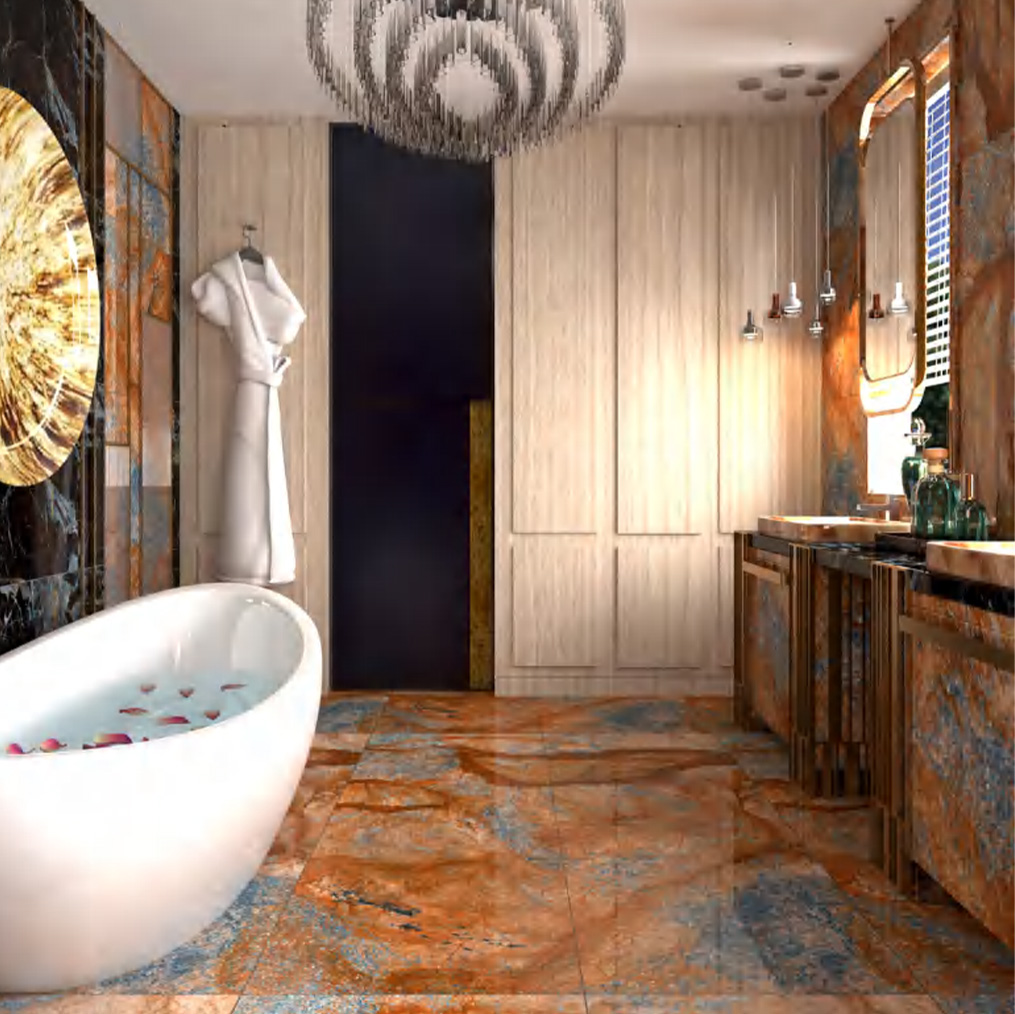
For shower floors, tile size also matters. Smaller formats create more grout joints and make it easier to form the required drainage slope. Large polished tiles can work on shower walls, where their reflective appearance is useful, but a floor application requires product-specific wet-use data and careful installation. The tile itself cannot compensate for poor drainage, incorrect slope, or contaminated footwear.
Kitchen Floors and Entryways: Choose for Soil, Traffic, and Maintenance
In a kitchen or entryway, matte porcelain often conceals dry dust, pet hair, and light scuffing better than a mirror-like polished surface. However, a very rough texture can retain cooking grease. A fine-grain matte finish with a documented stain-resistance rating is often a practical compromise.
For glazed porcelain in busy residential areas, review the manufacturer’s PEI wear classification. PEI is a wear-resistance test for glazed tile, not a universal slip-resistance score. A high PEI value does not automatically mean that the tile is suitable for a wet commercial entrance, and a low-reflectance matte finish does not automatically mean high abrasion resistance.
Living Rooms and Feature Walls: Polished Can Add Light and Visual Scale
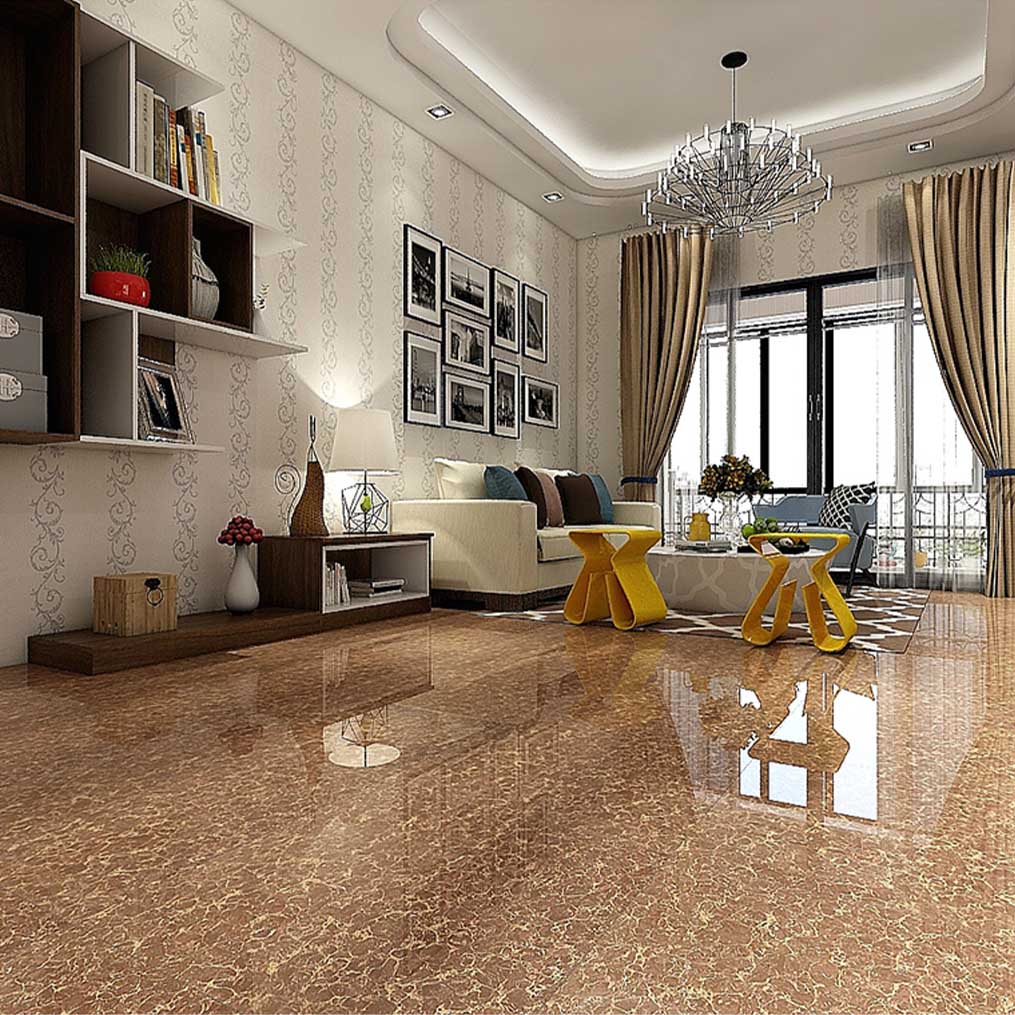
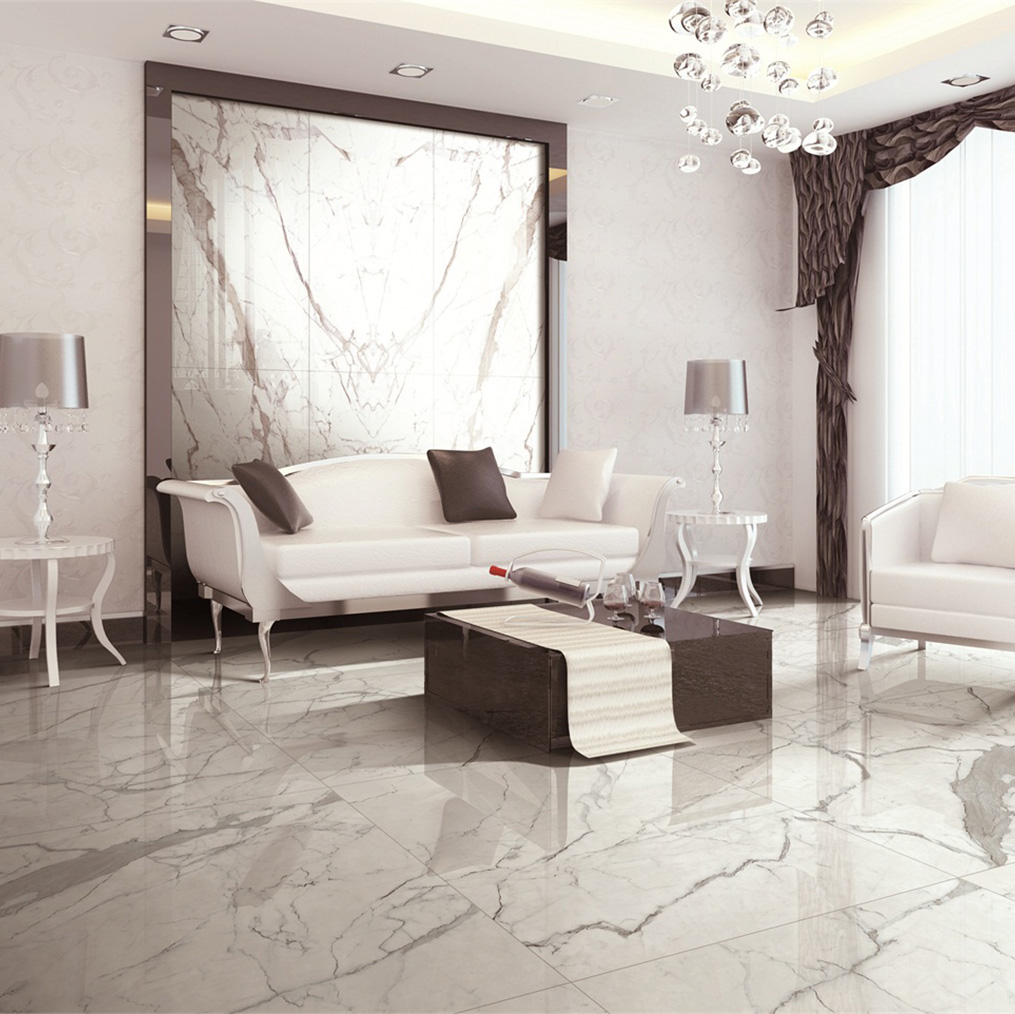
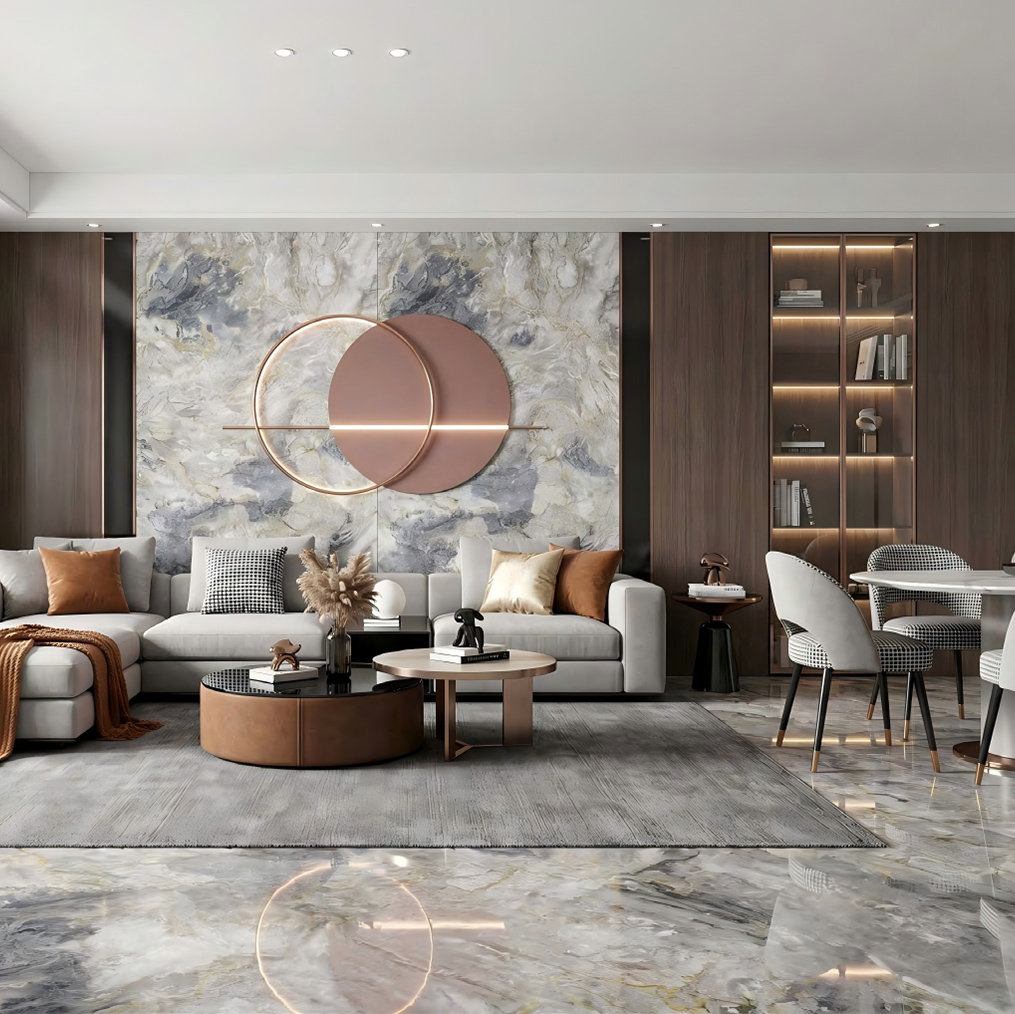
Polished porcelain is often effective in living rooms, hotel-style interiors, dining areas, and feature walls where reflected light is desirable. Large polished tiles with narrow grout joints can create visual continuity, particularly when the rectified edges are installed by an experienced contractor.
For floors exposed to sand, large dogs, wheeled furniture, or frequent outdoor traffic, the decision should be based on wear data and maintenance tolerance rather than appearance alone. Dark polished tile can show micro-scratches because reflected light makes surface changes easier to see.
Polished vs. Matte Tile Price Analysis
Finish-related price differences are often smaller than buyers expect. A standard polished porcelain tile may cost more because of additional grinding, polishing, sorting, surface protection, or packaging. A matte tile may cost more when it uses specialized texturing, anti-slip treatment, stone-effect printing, or a premium rectified format.
| Cost item | Likely cost impact | Why it changes the budget |
|---|---|---|
| Material | Moderate | Finish, thickness, size, grade, and pattern complexity affect the factory price |
| Shipping and breakage allowance | Moderate to high | Large-format polished tiles require stronger crates and careful handling |
| Installation | High for large formats | Substrate flatness, leveling systems, cuts, and installer skill influence labor |
| Cleaning and sealing | Low to moderate | Porcelain generally needs no routine sealing, but grout and special surface treatments may need care |
| Replacement risk | Project-dependent | Unusual colors or discontinued batches can make future matching difficult |
For ordering, add approximately 10%–15% extra tile for ordinary cuts and future repairs. Complex patterns, diagonal layouts, and large-format installations can justify a higher allowance. Ask the supplier whether replacement cartons will come from the same production batch, because shade variation is possible even when the product code is unchanged.
Homeowner Case Studies and User Word-of-Mouth Evaluation
Case Study 1: Polished Walls, Matte Bathroom Floor
A JBN project consultation for a compact urban bathroom used polished light-gray porcelain on the walls and a coordinated matte tile on the floor. The homeowner’s main complaints were a dark-looking room and concern about water marks. The final specification used reflective wall surfaces to distribute artificial light, while the floor used a matte product with documented wet-use data. The client reported that the room looked brighter and that everyday splash marks were less noticeable on the floor. This was a project outcome reported by the homeowner, not an independently controlled laboratory comparison.
Case Study 2: A Polished Kitchen Floor That Required More Daily Attention
In an anonymized renovation example, a family selected dark polished porcelain for an open-plan kitchen because the showroom sample looked luxurious. After installation, they found that footprints and dried water drops were visible near the sink and patio door. The tile was not necessarily defective; the reflective finish simply made deposits easier to see under downlights. The family kept the tile but changed to a neutral pH cleaner, used a microfiber flat mop, and placed washable mats at the entrances. Their experience illustrates why a sample should be tested with realistic lighting, footwear, pet hair, and cleaning products.
What Buyers Commonly Say About Each Finish
- Positive polished-tile feedback: Owners often praise the brighter appearance, marble-like depth, easy wipe-down of smooth surfaces, and seamless look with large formats.
- Negative polished-tile feedback: Complaints commonly involve visible footprints, glare, water spotting, and concern about wet-floor traction.
- Positive matte-tile feedback: Owners frequently value the natural appearance, lower glare, and ability to disguise light dust and small scuffs.
- Negative matte-tile feedback: Some users report that heavily textured finishes hold soap film, cooking grease, or pet hair and take longer to scrub.
When reading reviews, separate performance feedback from installation problems. Lippage, hollow spots, cracked tiles, and inconsistent grout lines may result from substrate preparation or adhesive coverage rather than the finish itself. Look for reviews that identify room type, tile size, cleaning method, lighting conditions, and months of use.
How to Choose Polished or Matte Porcelain Tile: An Unbiased Ranking
-
Best overall for bathroom and family-home floors: Fine-textured matte porcelain.
It offers a balanced combination of low glare, practical concealment of marks, and potentially better wet-floor behavior when the DCOF and manufacturer instructions support the application. Avoid textures so deep that routine cleaning becomes difficult.
-
Best for bright contemporary walls and formal living areas: Polished porcelain.
It maximizes reflection and creates a high-end appearance. It is particularly suitable for walls, dry interior floors, and homeowners willing to remove visible water marks and footprints more frequently.
-
Best for mixed-use design: Polished walls with matte floors.
This combination separates visual impact from underfoot performance. Use the same color family or collection to maintain design continuity without forcing one finish into every location.
-
Best for outdoor or exposed transition areas: Manufacturer-approved textured porcelain.
Outdoor applications need weather, drainage, freeze-thaw, abrasion, and slip-performance information. Do not select an indoor polished product simply because it matches an interior wall.
Questions to Ask an OEM Tile Supplier Before Ordering
- Is the tile classified as porcelain under the stated standard, with water absorption of 0.5% or less?
- What is the wet DCOF or equivalent slip-test result for the exact finish and color?
- Is the product glazed, full-body, polished through the body, or coated after polishing?
- What PEI classification applies if the tile is glazed?
- Is the edge rectified, and what grout joint does the manufacturer recommend?
- What cleaning chemicals, pads, and sealers are approved or prohibited?
- What are the shade variation, caliber, thickness tolerance, and batch-control procedures?
- Can the supplier provide a physical sample, test report, installation guide, and replacement stock policy?
Cleaning and Installation Guidance for Both Finishes
Use a pH-neutral cleaner unless the manufacturer specifies another product. Avoid abrasive powders, metal scouring pads, hydrofluoric-acid products, and unapproved waxes. On polished porcelain, dry the surface after mopping if water spotting is a concern. On textured matte porcelain, use a soft nylon brush occasionally to reach the valleys without damaging the surface or grout.
The substrate should be flat enough for the selected tile format, and large-format pieces require appropriate mortar coverage. Back-buttering, movement joints, expansion planning, and correct grout selection should follow the applicable installation standard and manufacturer instructions. A polished tile can show lippage more clearly because reflected light emphasizes height differences; an experienced installer and proper lighting inspection are therefore important.
Final Recommendation: Who Should Choose Each Finish?
Choose matte porcelain if your priority is a lower-glare family bathroom, kitchen, hallway, pet-friendly floor, or busy entrance. Choose polished porcelain if your priority is reflected light, a formal decorative effect, marble-style depth, or a dramatic wall installation, and you accept more visible footprints and water marks. For many homes, the most balanced answer is polished on walls and matte on floors.
Before approving a quotation, test both finishes under your actual lighting, spill a small amount of clean water on the sample, wipe it with your normal mop, and inspect it after drying. Compare the best porcelain tile finish for high traffic floors using slip resistance, water absorption, and PEI rating, while confirming the professional data for DCOF, coefficient of friction, and rectified edge. If you are still deciding how to choose polished or matte porcelain tile for bathroom areas, request matched JBN samples and technical documents from an OEM Tile Supplier before placing the order.
Frequently Asked Questions
Is polished porcelain tile slippery?
It can be less forgiving when wet, so the answer depends on the exact product, contamination, slope, footwear, and test result. Do not use “polished” or “matte” as a substitute for wet DCOF or application-specific guidance.
Is matte porcelain harder to clean?
A smooth matte tile can be easy to maintain. Deeply textured matte tile may require brushing because soil and soap residue can settle into the profile. Ask for the manufacturer’s cleaning instructions and test a sample before ordering.
Does polished porcelain show scratches?
Fine scratches may be more visible because reflected light highlights changes in the surface. Sand and grit are common sources of abrasion, so entry mats, regular dust removal, and felt furniture pads are useful preventive measures.
Can polished porcelain be used in a shower?
It may be suitable for shower walls when approved by the manufacturer. For shower floors, verify wet-use performance, drainage requirements, tile size, grout maintenance, and local regulations. A polished wall product should not automatically be installed underfoot.
Which finish is better for a small room?
Polished tile can make a small room appear brighter because it reflects more light. Matte tile can create a calmer, less glare-prone surface. The best choice depends on lighting direction, color, grout contrast, and whether the area is a wall or floor.
Do porcelain tiles need to be sealed?
Most porcelain surfaces do not require routine sealing because their water absorption is low. Cementitious grout may require sealing, and some polished or specialty surfaces have product-specific recommendations. Always follow the technical sheet rather than applying a generic sealer.
How much extra tile should I buy?
For a straightforward layout, 10%–15% extra is a common planning allowance. Increase the allowance for diagonal layouts, complex patterns, unusual room shapes, or future repair stock. Keep unopened cartons labeled with the product code, caliber, and shade.
How can I get a reliable quotation from JBN?
Prepare the room dimensions, intended application, preferred sizes, finish, color, estimated quantity, delivery destination, and required technical certifications. Ask JBN or another qualified OEM Tile Supplier for physical samples, current pricing, test data, lead time, packaging specifications, and replacement-batch information before making the final decision.