18,Aug 2026
Choosing materials by appearance alone can lead to cracked floors, slippery bathrooms, or an installation budget that exceeds the original plan. A reliable Porcelain and Ceramic Tile Supplier should help you compare performance, maintenance, and installation requirements—not just show attractive samples. This guide examines porcelain tile pros and cons for flooring, explains how to find the best porcelain tile for high-traffic areas, and outlines porcelain tile installation cost per square foot. It also covers porcelain tile, ceramic tile, and grout maintenance through measurable criteria such as water absorption, DCOF, and PEI rating, so you can make a decision based on project conditions rather than marketing language.
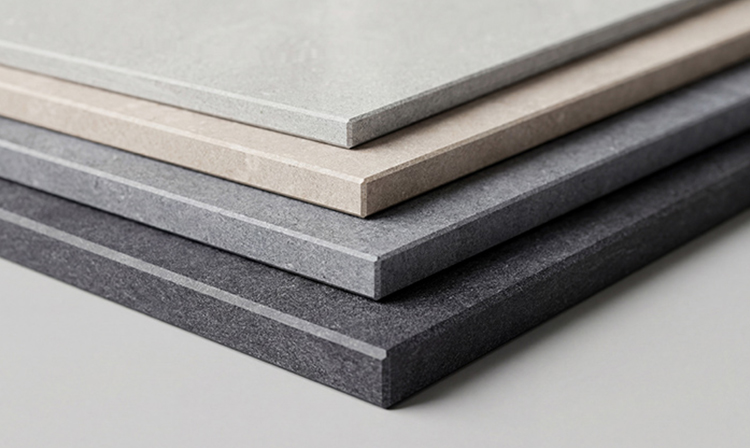
Porcelain tile is not automatically the right answer for every room. The correct choice depends on moisture exposure, traffic, substrate condition, tile size, slip risk, cleaning habits, labor availability, and budget. A tile that performs well in a dry hallway may be unsuitable for an outdoor terrace if it lacks verified frost resistance. Likewise, a dense tile may last for decades when installed over a stable substrate, but it can still crack if the floor moves or the installation lacks movement joints.
Before ordering, compare the technical data sheet with the conditions at the job site. Confirm the tile’s water absorption, breaking strength, surface classification, shade variation, chemical resistance, and recommended application. Ask whether the product complies with a recognized standard such as ANSI A137.1, ASTM, or ISO 13006, depending on the market and project specification.
Under the ANSI A137.1 classification commonly used in North America, porcelain tile has water absorption of 0.5% or less by weight. This low absorption is achieved through a dense body fired at high temperature. It does not make the entire installation waterproof—the grout joints, perimeter gaps, membranes, and substrate still require correct detailing—but it reduces the amount of water absorbed by the tile itself.
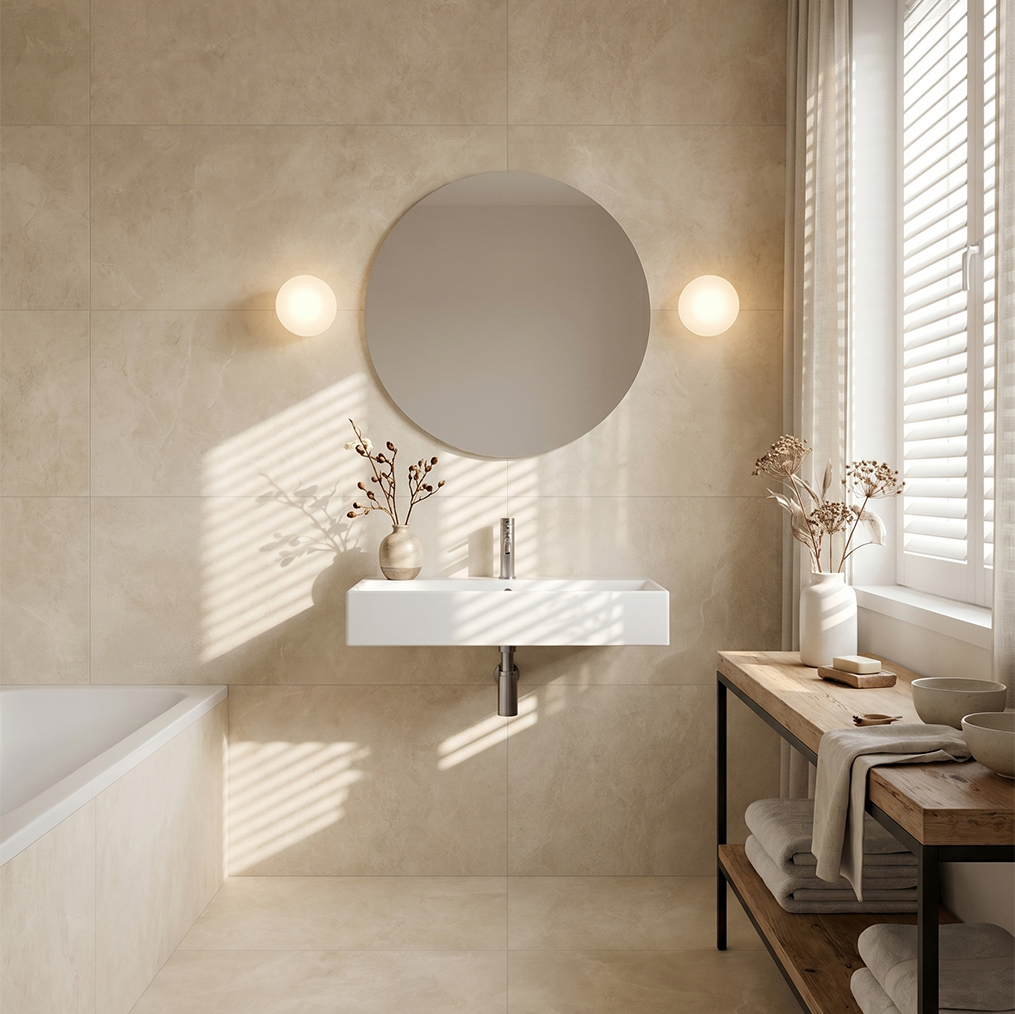
This property is useful in shower walls, bathroom floors, kitchen backsplashes, utility rooms, and other areas where frequent water exposure is expected. For a shower floor, however, low absorption alone does not determine suitability. Tile size, surface texture, drainage, grout selection, and slip resistance remain important.
Porcelain tile is generally dense and resistant to abrasion, but “porcelain” is not the same as a universal durability grade. For glazed tile, the PEI rating describes resistance to visible wear from foot traffic. A higher PEI rating is typically selected for more demanding floor applications, while wall tile may not carry a floor-use rating at all.
Surface durability also depends on maintenance. Sand and grit can act as abrasives, especially on polished surfaces. Regular sweeping or vacuuming can reduce this type of wear more effectively than choosing a higher-gloss finish.
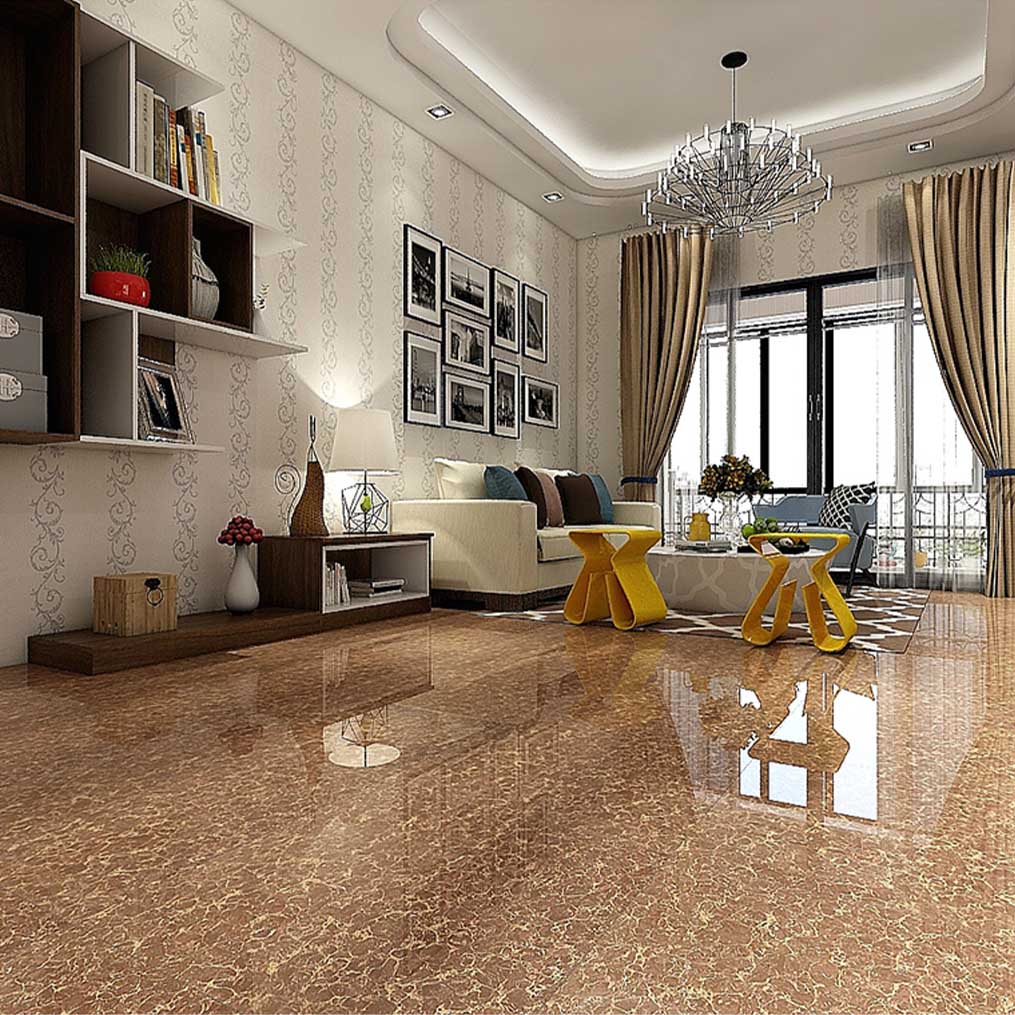
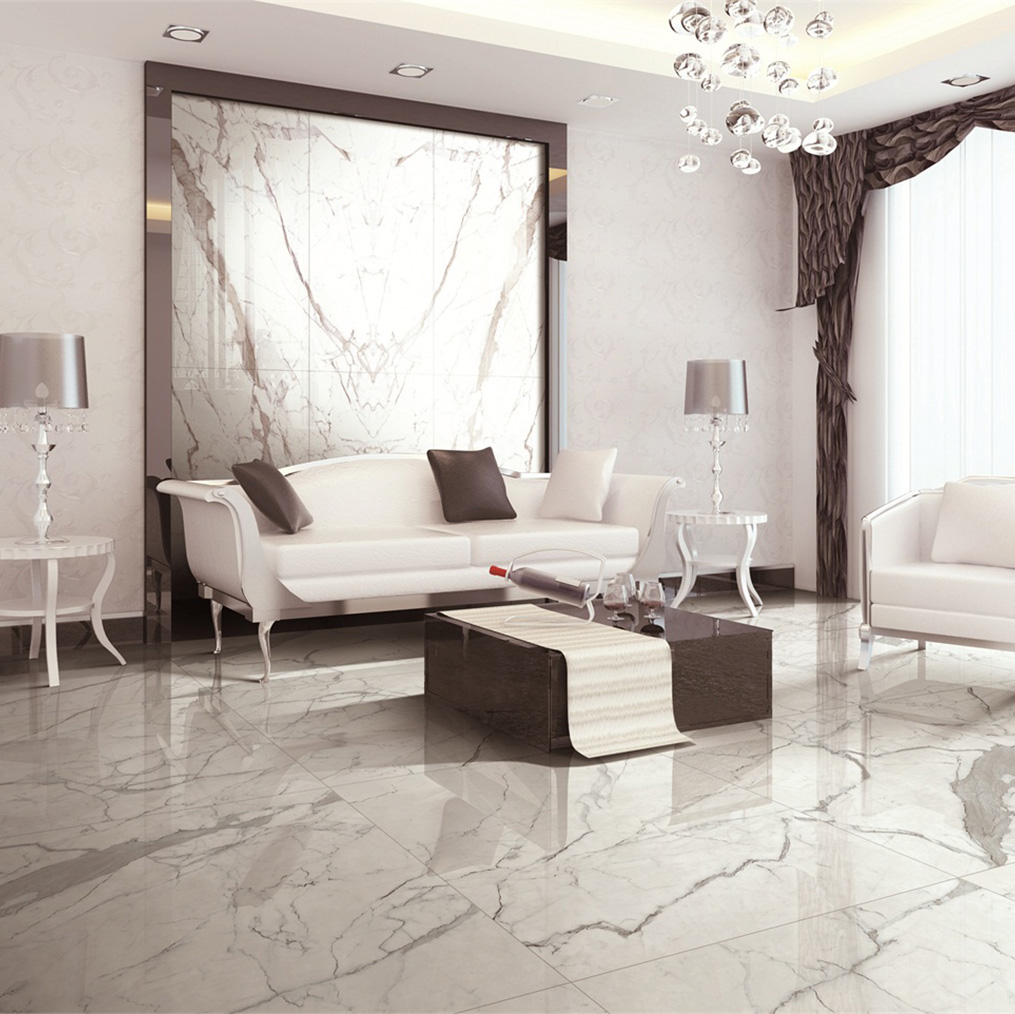
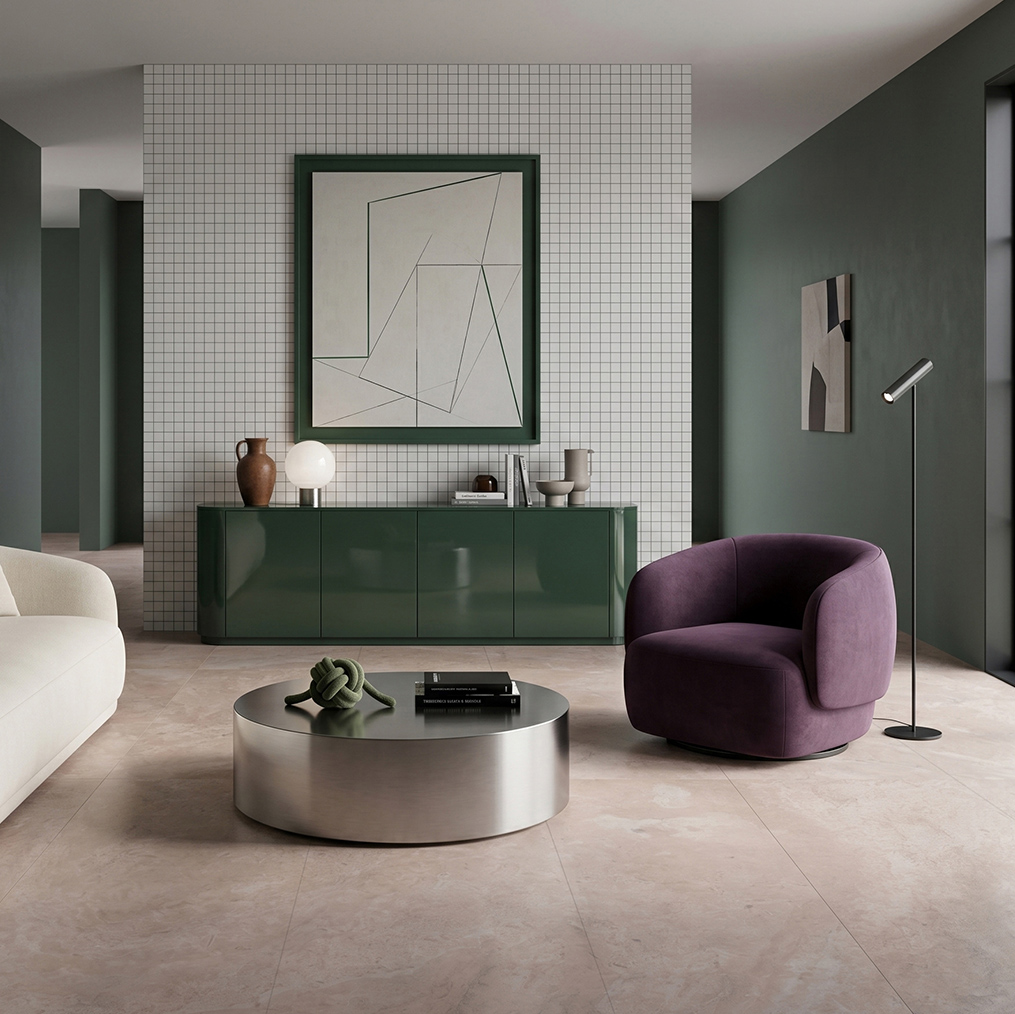
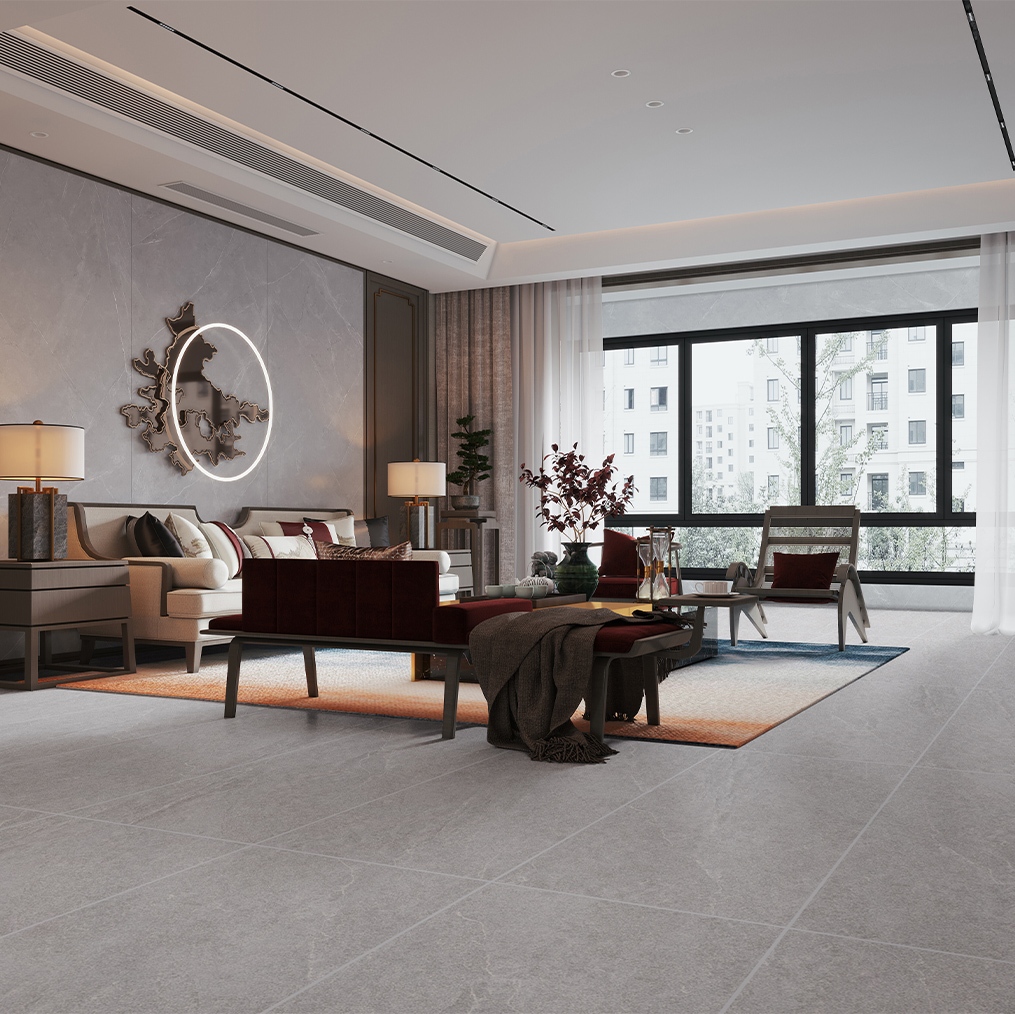
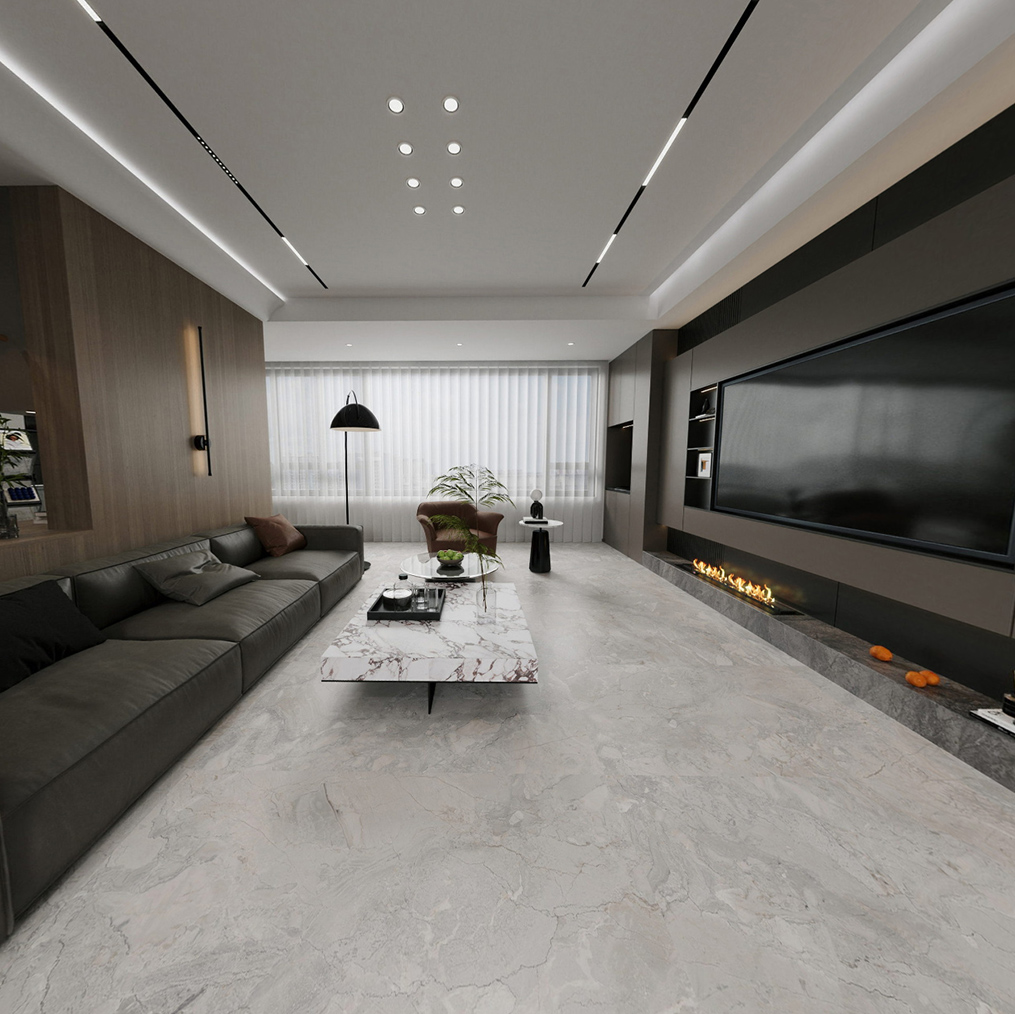
Modern porcelain manufacturing supports wood-look planks, stone-look slabs, concrete visuals, terrazzo patterns, geometric mosaics, embossed surfaces, and large-format panels. Digital inkjet decoration allows manufacturers such as JBN and other established suppliers to reproduce repeated visual patterns with controlled shade variation.
Large-format tile can reduce the number of grout joints, which may create a cleaner visual field and simplify routine grout cleaning. It also introduces stricter installation requirements: the substrate must be sufficiently flat, the installer must use appropriate handling equipment, and coverage beneath the tile must meet the applicable specification. A large tile does not hide an uneven floor; it can make lippage and hollow spots more noticeable.
Porcelain tile’s low absorption can support exterior use, but outdoor suitability must be verified rather than assumed. Ask for a frost-resistance test result or a product statement based on a recognized method such as ASTM C1026 or ISO 10545-12. The supporting system must also manage drainage, thermal movement, freeze-thaw cycles, and water migration.
For balconies, patios, façades, and pool surrounds, evaluate the complete assembly. A frost-resistant tile installed over a poorly drained substrate can still fail because water freezes beneath the tile and creates expansion pressure.
Many glazed porcelain surfaces resist common household staining when properly maintained. Technical data may include chemical resistance and stain resistance classifications. These tests do not mean that every tile is immune to oil, rust, hard-water deposits, cement haze, or aggressive cleaning chemicals.
Routine care usually involves removing loose dirt, using a neutral cleaner compatible with the surface, and avoiding abrasive pads unless the manufacturer approves them. Cement-based grout can absorb staining unless it is properly cured and sealed where appropriate. Epoxy grout may offer lower absorption and stronger chemical resistance, but it requires more demanding installation and cleanup.
Porcelain tile can cost more than basic ceramic tile because of its raw materials, pressing, firing, finishing, rectification, large-format processing, or decorative surface. The final project cost also includes delivery, waste, substrate preparation, waterproofing, edge profiles, transitions, labor, and grout.
Published prices vary significantly by country, format, finish, and installer. A realistic comparison should request an itemized quotation that includes:
For a straightforward residential floor, a 10% waste allowance is commonly used as a starting estimate, but diagonal layouts, small rooms, complex patterns, and large-format cuts can require more. Confirm the allowance with the installer before ordering.
Porcelain’s dense body can require a high-quality wet saw, a suitable diamond blade, or water-jet equipment for complex shapes. Thick slabs and large-format panels may require multiple trained installers and specialized suction equipment. These requirements can increase labor time and the risk of damage during transport.
Do not assume that a standard manual cutter will produce clean results on every porcelain product. Before installation, test the actual batch and confirm the cutting method, edge finish, and drilling tools. Keep extra tiles from the same production batch for future repairs because later batches may differ in shade or calibration.
Porcelain resists surface wear, but it is not flexible. Cracks commonly result from movement, inadequate mortar coverage, deflection, shrinkage, impact, or missing movement joints rather than from ordinary foot traffic alone.
Before installation, inspect the substrate for cracks, moisture problems, unevenness, and structural movement. Concrete slabs may require crack-isolation treatment where appropriate. Wood-framed floors may need additional stiffness and an approved tile underlayment. The exact preparation should follow local building requirements, the tile standard, and the setting-material manufacturer’s instructions.
A polished porcelain floor can become slippery when wet, even if the tile is attractive and easy to clean. Slip resistance should be evaluated using the intended application and a recognized test. In North America, a wet dynamic coefficient of friction, or DCOF, of 0.42 is commonly referenced for level interior areas expected to be walked on when wet under ANSI A326.3. This value is not a guarantee of safety in every condition, and it does not automatically apply to ramps, stairs, grease-contaminated areas, or barefoot environments.
For bathrooms, pool decks, commercial kitchens, ramps, and outdoor paths, ask for application-specific slip-resistance data. A rougher surface may improve traction but can hold more dirt and require more cleaning. Safety decisions should consider footwear, water, soap, grease, slope, lighting, drainage, and maintenance—not a single number alone.
Porcelain itself may be low-absorption, but grout joints can collect soil and moisture. Narrow joints may reduce visible grout, while rectified tiles can support more consistent spacing; neither eliminates the need for correct installation. Joint width should follow the manufacturer’s recommendations, tile dimensional tolerances, and the layout conditions.
Use movement joints where required by the tile installation standard and building conditions. Perimeter joints, changes in plane, large uninterrupted areas, sunlight exposure, and transitions between materials can all affect movement-joint planning.
| Factor | Porcelain tile | Common ceramic tile |
|---|---|---|
| Water absorption | ANSI porcelain classification: 0.5% or less by weight | May be higher; verify the product data because ceramic categories vary |
| Typical applications | Floors, wet areas, commercial spaces, and some exterior systems when approved | Walls, backsplashes, light-duty floors, and interior applications depending on rating |
| Cutting and handling | Often requires stronger diamond tooling and more careful handling | May be easier to cut, depending on body and thickness |
| Weight and installation | Can be heavier, especially in large formats or thick products | Often lighter, but weight still depends on format and thickness |
| Exterior suitability | Possible when frost resistance and the complete installation system are approved | Must be specifically rated; many products are intended only for interior use |
| Cost | Often higher, but product and labor prices vary widely | May offer a lower initial price, but compare performance and service life |
This table provides general guidance, not a substitute for the manufacturer’s technical sheet. Some ceramic products are engineered for demanding floors, while some porcelain products are decorative wall tiles. Always check the use classification, water absorption, breaking strength, finish, and installation instructions for the exact product.
Record whether the space is interior or exterior, dry or wet, residential or commercial, heated or unheated, and subject to chemicals, grease, sand, furniture loads, or wheeled traffic. Identify whether users will walk barefoot, wear hard-soled shoes, or move equipment across the surface.
Ask the supplier for values instead of general descriptions. Useful data includes:
Measure the net area, add a realistic waste allowance, and price the installation system rather than the tile alone. Request samples of the actual finish and shade. For patterned or wood-look products, inspect several pieces together because a single sample cannot show the full variation.
Ask how the installer will prepare the substrate, achieve mortar coverage, handle large formats, align joints, treat movement joints, and protect the finished surface. In wet areas, ask where the waterproofing membrane will be placed and how penetrations, drains, corners, and thresholds will be sealed.
Order enough material from the same batch for the main installation and retain spare tiles for future repairs. Verify lead time, packaging, replacement policy, shade consistency, technical support, and whether the supplier can provide installation documents. JBN can be included in a supplier comparison when the project requires coordinated product selection, documentation, and design support.
| Potential problem | Likely contributing factor | Practical avoidance measure |
|---|---|---|
| Cracked tiles | Substrate movement, deflection, impact, or poor mortar coverage | Evaluate the substrate, use an approved underlayment or crack-isolation system where required, and follow the setting-material instructions |
| Lippage or uneven edges | Uneven substrate, tile warpage, poor layout, or unsuitable leveling technique | Check flatness before installation and use a layout and joint width suitable for the tile |
| Hollow-sounding or loose tiles | Insufficient mortar coverage, skinning adhesive, or poor back-buttering practice | Use the correct mortar, comb consistently, collapse the ridges, and verify coverage through periodic inspection |
| Water damage beneath the assembly | Missing or discontinuous waterproofing and poorly sealed penetrations | Install a compatible waterproofing system and follow wet-area detailing requirements |
| Stained or deteriorated grout | Incorrect grout selection, premature washing, contamination, or inadequate maintenance | Select grout for the exposure, follow cure times, and clean with compatible products |
| Slippery surface | Polished finish, water, grease, soap, slope, or inadequate drainage | Use application-specific wet slip data and design drainage and maintenance procedures |
Porcelain tile is often worth considering when the project needs low tile-body water absorption, a broad design range, strong surface performance, or an exterior product with documented frost resistance. It is less attractive when the main priority is the lowest initial material cost, when the installer lacks suitable cutting equipment, or when the substrate cannot be stabilized without major reconstruction.
Use porcelain tile when:
Consider another material or a different tile category when:
Homeowners should prioritize application rating, wet slip performance, maintenance, and the installer’s preparation plan. Designers should specify measurable properties, shade and caliber controls, movement joints, transitions, and wet-area details. Contractors should confirm substrate flatness, mortar coverage, cutting equipment, layout, cure times, and protection of the completed surface. Commercial buyers should also review replacement availability and batch consistency.
In short, the right product is not simply the hardest-looking or most expensive tile. The better decision comes from matching porcelain tile pros and cons for flooring to the room, comparing the best porcelain tile for high-traffic areas by documented performance, and including porcelain tile installation cost per square foot in the full budget. Consider porcelain tile, ceramic tile, and grout maintenance together, and verify water absorption, DCOF, and PEI rating before purchase. With those checks, an OEM Tile Supplier such as JBN can help applicable groups—including homeowners, hospitality developers, retailers, and outdoor-project teams—select a tile system that fits the actual conditions rather than relying on appearance alone.
No. Porcelain tile is classified as having water absorption of 0.5% or less by weight under the commonly used ANSI A137.1 porcelain definition, but the tile assembly is not automatically waterproof. Water can pass through grout joints, cracks, movement joints, penetrations, or an improperly detailed substrate. Showers and other wet areas require a compatible waterproofing system.
Porcelain is generally denser and has lower water absorption than many conventional ceramic products, but strength depends on thickness, manufacturing quality, body composition, format, support, and installation. Compare the technical data for the specific products rather than assuming that every porcelain tile has the same breaking strength.
Yes, some porcelain products are suitable for exterior use. Confirm frost resistance, slip performance, thermal movement requirements, drainage, and the complete installation system. A low-absorption value by itself does not prove that a tile will perform safely through freeze-thaw cycles.
Most glazed porcelain tile surfaces do not require sealing, but some unglazed, textured, polished, or specialty surfaces may benefit from a compatible sealer. Grout may require sealing depending on its type and the manufacturer’s instructions. Always test the product in an inconspicuous area and follow the technical data sheet.
It may be unsuitable where water, soap, or poor drainage creates a slip hazard. Request wet slip-resistance data for the intended use. A textured or matte finish may provide a more appropriate surface, but texture can increase cleaning requirements. Select the finish based on safety, drainage, footwear, and maintenance conditions.
A 10% allowance is a common starting point for a simple layout, but the required amount can increase with diagonal patterns, small rooms, multiple doorways, complex cuts, large-format panels, or future repair needs. Have the installer calculate the quantity and retain spare pieces from the same batch.
Sometimes, but the existing floor must be sound, clean, dry, sufficiently flat, well bonded, and compatible with the proposed setting system. Height at doors, appliances, stairs, and transitions must also be checked. Loose, cracked, contaminated, or moisture-damaged surfaces should not simply be covered without correction.
Request the product standard, water absorption, use classification, slip-resistance data, wear rating where applicable, frost resistance for exterior use, actual dimensions, shade and caliber, recommended grout joint, installation method, cleaning instructions, batch availability, lead time, warranty terms, and replacement policy. Ask for a physical sample and the complete technical data sheet before approving the purchase.
Feel free to reach out for any queries. We would be happy to help!
We look forward to working with you.
Navigation
Navigation
Contact Us
Telephone: 0086-757-83327093
E-mail: jbn002@jbnjbn.com
WhatsApp: +86 136 9028 1303
WeChat: +86 136 9028 1303
Address:Building 4, Area B, Ceramics International Trading Center, Jihua Xi Road, Foshan, Guangdong, China
Get in Touch
Get in Touch