05,Nov 2026
Neither material is universally better for commercial construction. Porcelain slabs usually suit cost-controlled wall, floor, and large-area coverage, while sintered stone often suits fabricated countertops, vanities, furniture, visible edges, and custom commercial surfaces. I recommend selecting the material by application, thickness, support condition, fabrication method, replacement exposure, and verified test data rather than by appearance alone.
| Factor | Sintered Stone Slabs | Porcelain Slabs |
|---|---|---|
| Composition | Mineral powders and selected inorganic materials compacted and fired at high temperature | Refined clay, feldspar, quartz, kaolin, pigments, and other ceramic minerals fired at high temperature |
| Internal structure | Dense, stone-like compact body with through-body or coordinated surface designs depending on product | Dense ceramic body, often with a printed or glazed decorative surface |
| Typical commercial use | Countertops, vanities, furniture, reception desks, custom edges, wall panels | Floors, walls, bathrooms, kitchens, facades, partitions, and large-area decorative coverage |
| Fabrication | Suitable for polished edges, mitred corners, cutouts, and furniture components when properly supported | Effective for straight cuts, large wall panels, floors, and selected countertop applications |
| Installed cost | Often higher when complex fabrication, thick build-ups, and custom edges are required | Often lower for repetitive wall, floor, and cladding layouts |
| Main project risk | Breakage during handling, cutouts, unsupported overhangs, and costly custom fabrication | Edge chipping, visible surface damage, printed-layer wear, and limited repair options |
!
When I compare sintered stone versus porcelain slabs, I first examine how each product is made. Sintered stone generally uses selected mineral particles that are compacted under substantial pressure and fired at temperatures commonly above 1,200°C. The process creates a dense slab with low water absorption, although the exact result depends on the manufacturer’s formulation, pressing method, thickness, and surface treatment.
Porcelain slabs are also made from highly refined ceramic minerals and are fired at high temperatures. Their body may be full-body, color-body, glazed, polished, or decorated through digital printing. This distinction matters because a printed surface can show a different visual result after deep scratching or edge cutting, while a color-body product may maintain closer color continuity through the slab.
I do not treat the terms “sintered stone” and “porcelain” as automatic proof of performance. Some products overlap in raw materials, firing temperature, and density, while their commercial behavior differs because of thickness, reinforcement, surface finish, body color, and quality-control procedures. For procurement, I ask for technical data for the exact product code rather than relying on category-level claims.
For sintered stone durability for commercial applications, I evaluate six performance areas: heat, stains, scratches, water absorption, ultraviolet exposure, and impact. Dense sintered stone can perform well around hot cookware, reception counters, hotel vanities, and food-service worktops, but cutouts and unsupported edges remain vulnerable points. A slab’s resistance to thermal shock should be confirmed through the supplier’s test report and installation instructions.
Porcelain slab durability for commercial applications is also strong in many wall, floor, and wet-area settings. Porcelain commonly offers very low water absorption and good resistance to household and commercial stains, but polished surfaces may show scratching or traffic patterns differently from matte surfaces. For floors, I specify slip resistance, abrasion classification, breaking strength, and thickness separately instead of treating the word “porcelain” as a complete specification.
Heat resistance is usually less decisive than support and detailing. Both materials can tolerate normal hot-surface exposure when the product is approved for that use, yet sudden temperature changes, narrow strips, sink cutouts, and unsupported corners create stress concentrations. I require fabricators to follow minimum corner radii, edge distances, support spacing, and reinforcement rules stated for the selected slab.
Water absorption affects bathrooms, kitchens, spas, healthcare areas, and exterior applications. Low absorption reduces staining and moisture penetration, but grout joints, silicone joints, substrate movement, and open cut edges can still admit water. For outdoor commercial surfaces, I also check freeze-thaw suitability, UV stability, thermal movement, and local climate requirements because indoor product data may not cover exterior service.
For countertops, bars, hotel desks, reception counters, and restaurant worktops, I often favor sintered stone when the design requires visible edges, mitred corners, integrated-looking details, or a furniture-like appearance. The material can be fabricated into more substantial visual profiles through laminated edges and carefully engineered supports. Porcelain remains suitable for many countertops, but the fabricator must control edge geometry, cutout placement, reinforcement, and handling with greater precision.
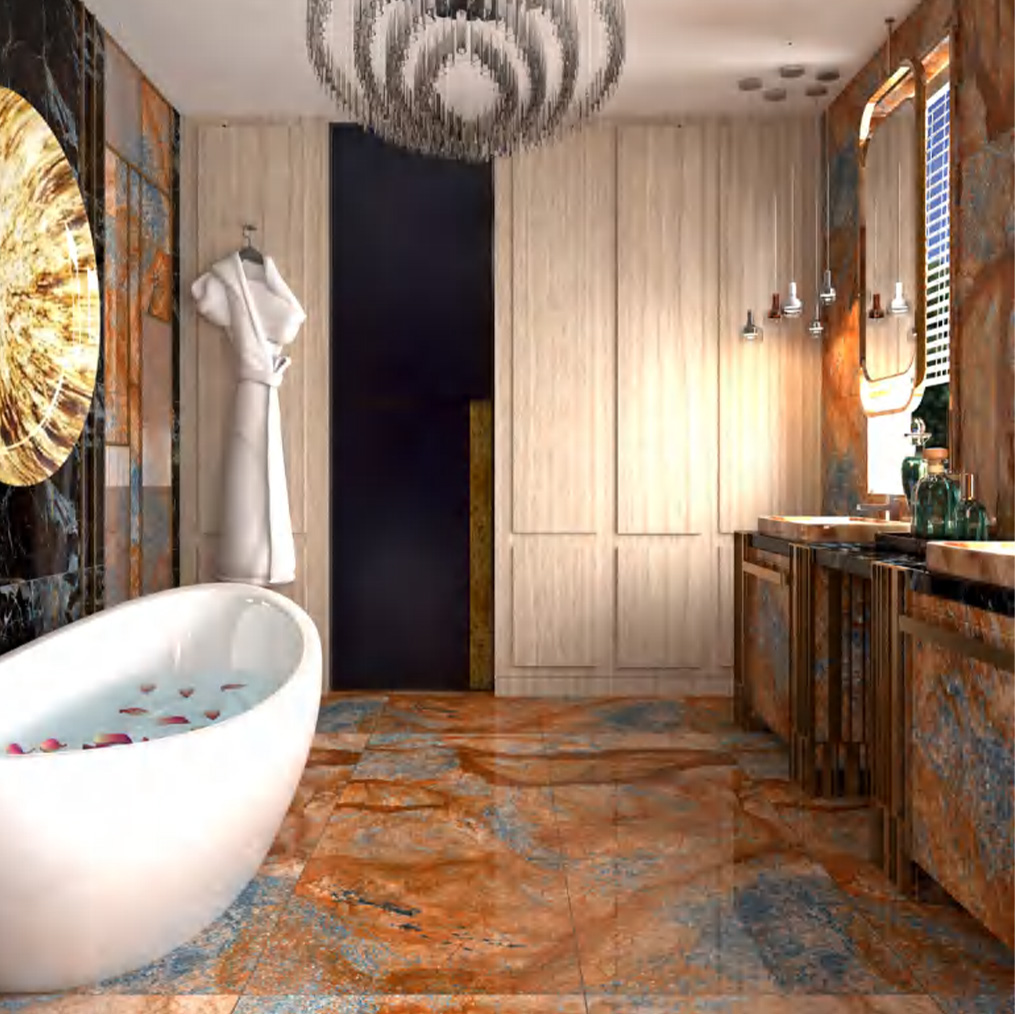
For vanities, wall panels, shower walls, and decorative bathroom surfaces, both materials can work. Porcelain may offer an efficient solution where large-area coverage, repeated modules, and controlled material pricing are priorities. Sintered stone becomes attractive when the design requires coordinated countertop-and-wall appearance, custom edge profiles, or a stronger stone-like visual identity.
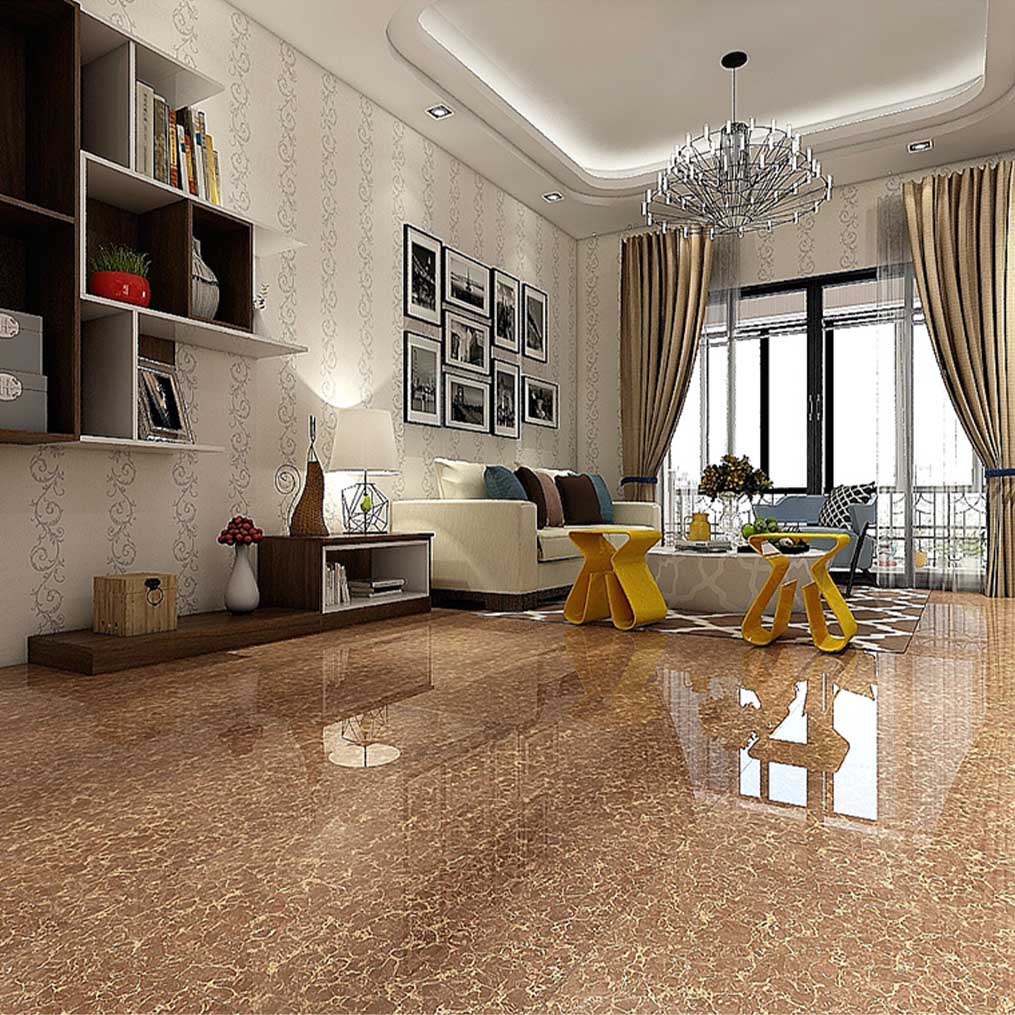
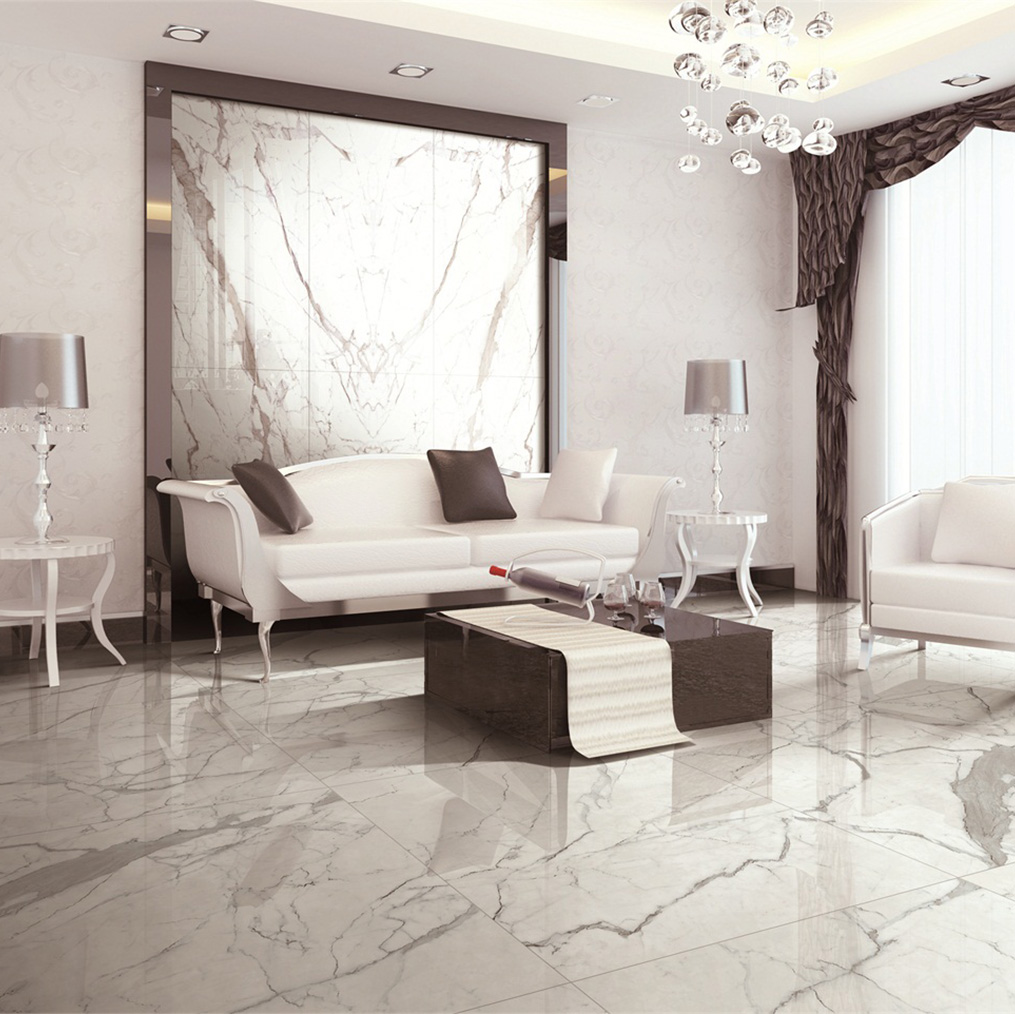
For floors, porcelain usually has the clearer specification pathway because ceramic flooring standards, slip classifications, abrasion ratings, and module sizes are widely used. It is often practical for offices, retail interiors, restaurants, corridors, and hospitality circulation zones. Sintered stone can serve flooring applications, but I confirm the product’s traffic rating, slip performance, surface finish, thickness, and replacement availability before approving it for heavy foot traffic.
For facades and exterior walls, neither material should be selected only from an interior sample. The project must define panel size, anchoring, wind load, thermal movement, drainage, fire requirements, substrate tolerance, and access for replacement. Porcelain panels may be efficient for ventilated rainscreen systems, while sintered stone can provide a distinctive exterior appearance when the support and anchoring system are engineered for the panel dimensions.
For commercial furniture, reception desks, display counters, hospitality tables, and custom cabinetry, sintered stone often provides more design flexibility when the slab must function as a visible fabricated component. Porcelain can still be effective for flat surfaces and repeated components, especially when the furniture manufacturer has established cutting and edge-protection procedures. The correct choice depends on the design’s edge count, corner complexity, panel length, and replacement plan.
Porcelain slab installation requirements begin with transportation and handling. Large-format panels are vulnerable during lifting, carrying, cutting, and positioning, particularly when the slab is thin or contains multiple openings. I specify approved A-frame transport, sufficient personnel or mechanical lifting equipment, edge protection, dry layout checks, and a documented inspection before installation.
Sintered stone also requires controlled handling, but its fabrication options may involve more complex edge work. Countertop cutouts should be positioned away from corners and narrow remnants, with rounded internal corners where required by the product manual. Sink, cooktop, outlet, plumbing, and ventilation openings should be cut with suitable diamond tooling and finished without leaving sharp stress points.
Thickness changes the structural calculation. A 6 mm panel may need continuous adhesive bedding or a mechanical support system, while a 12 mm slab may suit different wall, furniture, or countertop assemblies. A thicker slab is not automatically safer because span, overhang, cutouts, substrate flatness, adhesive coverage, and handling method also determine breakage risk.
I ask the contractor and fabricator to assign responsibility for each risk before production begins. The architect should define appearance, performance, and acceptance criteria; the fabricator should confirm manufacturability; the installer should verify substrate and support; and procurement should confirm batch availability, lead time, packaging, and replacement stock.
A commercial submittal package should include:
Before mass production, I recommend a full-size mockup containing the most difficult detail in the project. The mockup should include at least one cutout, one exposed edge, one joint, the specified adhesive, and the actual substrate or backing condition. Approval should record color, veining direction, joint width, edge profile, surface reflection, lippage, and acceptable visual variation.
A realistic commercial slab material cost comparison must include more than the purchase price. For budgeting, I use the following total-installed-cost model: material plus freight, packaging, fabrication, edge work, cutouts, reinforcement, waste, installation, substrate preparation, breakage allowance, and future replacement exposure. A low material price can become expensive when the layout produces high waste or requires specialist fabrication.
| Cost element | Sintered Stone Planning Range | Porcelain Slab Planning Range |
|---|---|---|
| Material allowance | 25–45% of installed cost | 20–40% of installed cost |
| Fabrication and edge work | 20–35% | 15–30% |
| Installation and support | 20–30% | 20–35% |
| Freight, packaging, and handling | 5–12% | 5–15% |
| Waste and breakage allowance | 5–15% | 8–18% |
| Complex-detail premium | 10–25% where applicable | 8–20% where applicable |
These percentages are planning bands, not supplier quotations. A simple wall application may fall below them, while a restaurant countertop with multiple sinks, cooktops, mitred corners, and short remnants may exceed them. I calculate waste from the cutting diagram rather than applying a generic 10% allowance to every project.
Fabrication complexity is often the largest hidden cost. Each opening adds layout, cutting, polishing, inspection, and handling time, while each exposed edge may require polishing, lamination, a mitre, or a protective profile. On a commercial project with 100 countertop modules, reducing average waste from 15% to 8% can materially affect the budget, especially when matching replacement slabs are difficult to obtain.
Lifecycle cost also includes cleaning, downtime, repairs, and replacement. Both materials generally require routine cleaning with compatible products, but aggressive chemicals, abrasive pads, impact from metal equipment, and poor joint detailing can create damage. I compare the expected replacement cost of a single damaged panel against the cost of keeping spare slabs from the same batch.
| Risk | Sintered Stone Exposure | Porcelain Exposure | Control Measure |
|---|---|---|---|
| Cutout cracking | Higher on complex countertop layouts | Higher on thin panels and narrow remnants | Use approved radii, edge distances, tooling, and reinforcement |
| Edge damage | May affect visible custom edges | Common during handling and installation | Protect edges, inspect before fixing, and define repair limits |
| Substrate movement | Can transfer stress into slabs | Can cause cracking or debonding | Verify flatness, movement joints, backing, and adhesive coverage |
| Handling breakage | Increases with large fabricated pieces | Increases with thin large-format panels | Use approved frames, lifting equipment, and trained crews |
| Batch variation | May affect veining and color continuity | May affect printed pattern and shade | Approve samples and production batches before installation |
| Lead-time risk | Custom fabrication may extend schedules | Special sizes or finishes may require advance ordering | Confirm stock, production slots, freight, and replacement availability |
| Substitution risk | Similar-looking products may differ structurally | Different bodies and finishes may perform differently | Require written approval for product-code substitutions |
This matrix helps me separate product risk from installation risk. A slab can pass laboratory testing and still fail on site because the support is discontinuous, the cutout is too close to a corner, or the panel was carried horizontally without adequate support. Project documents should identify who owns each approval, inspection, measurement, and repair decision.
I use the following application-based recommendations when the specification is still open:
| Project priority | More suitable starting point | Reason |
|---|---|---|
| Large wall or floor coverage | Porcelain slabs | Repeated modules, established flooring specifications, and efficient area coverage |
| Fabricated restaurant countertops | Sintered stone or approved countertop porcelain | Choice depends on edge detail, cutouts, support, and fabricator experience |
| Hotel vanities with custom edges | Sintered stone | Useful when edge profiles and coordinated surfaces are central to the design |
| High-traffic flooring | Porcelain | Easier to align with slip, abrasion, and traffic classifications |
| Exterior cladding | Either, subject to engineered system approval | Wind load, anchoring, UV, thermal movement, and fire criteria control selection |
| Custom commercial furniture | Sintered stone | Often better suited to visible edges, mitres, and substantial fabricated forms |
| Cost-sensitive decorative interiors | Porcelain | Often reduces material and fabrication cost for flat, repetitive applications |
For offices, I usually prioritize acoustic, maintenance, replacement, and furniture-integration requirements over maximum heat resistance. For restaurants, I focus on stain exposure, hot equipment, cutouts, cleaning chemicals, edge impact, and downtime. For hotels, I examine repeatability across rooms, batch consistency, vanity fabrication, replacement stock, and the contractor’s ability to reproduce approved details.
JBN presents itself as a Foshan-based supplier with porcelain tiles, sintered stone, flexible stone, mosaic tile, SPC flooring, WPC wall panels, and UV panels in its product range. Its published process includes design or sample submission, sample development, production acceptance, and third-party inspection reporting, while its customization service can be relevant when a commercial project requires coordinated sizes or finishes. I would still request product-specific test reports, fabrication instructions, warranty terms, and approved installation details before including any JBN product in a project specification.
Sintered Stone vs Porcelain Slabs: Key Differences for Commercial Projects become clear when the application is separated from the material label. Porcelain is often the practical starting point for floors, walls, wet areas, and large decorative coverage because its specification route and cost structure can suit repetitive commercial layouts. Sintered stone often becomes more suitable for fabricated countertops, vanities, reception desks, furniture, visible edges, and custom surfaces where detailing affects both appearance and installation cost.
My next step would be to create a product schedule for each area, not one blanket specification for the entire building. I would then approve a physical mockup, review product-specific test data, calculate cutting waste, confirm support and handling requirements, and price total installed cost rather than slab price alone. The better choice is the material that meets the required performance criteria with controlled fabrication risk, documented acceptance standards, available replacement stock, and a budget supported by measurable quantities.
Feel free to reach out for any queries. We would be happy to help!
We look forward to working with you.
Navigation
Navigation
Contact Us
Telephone: 0086-757-83327093
E-mail: jbn002@jbnjbn.com
WhatsApp: +86 136 9028 1303
WeChat: +86 136 9028 1303
Address:Building 4, Area B, Ceramics International Trading Center, Jihua Xi Road, Foshan, Guangdong, China
Get in Touch
Get in Touch