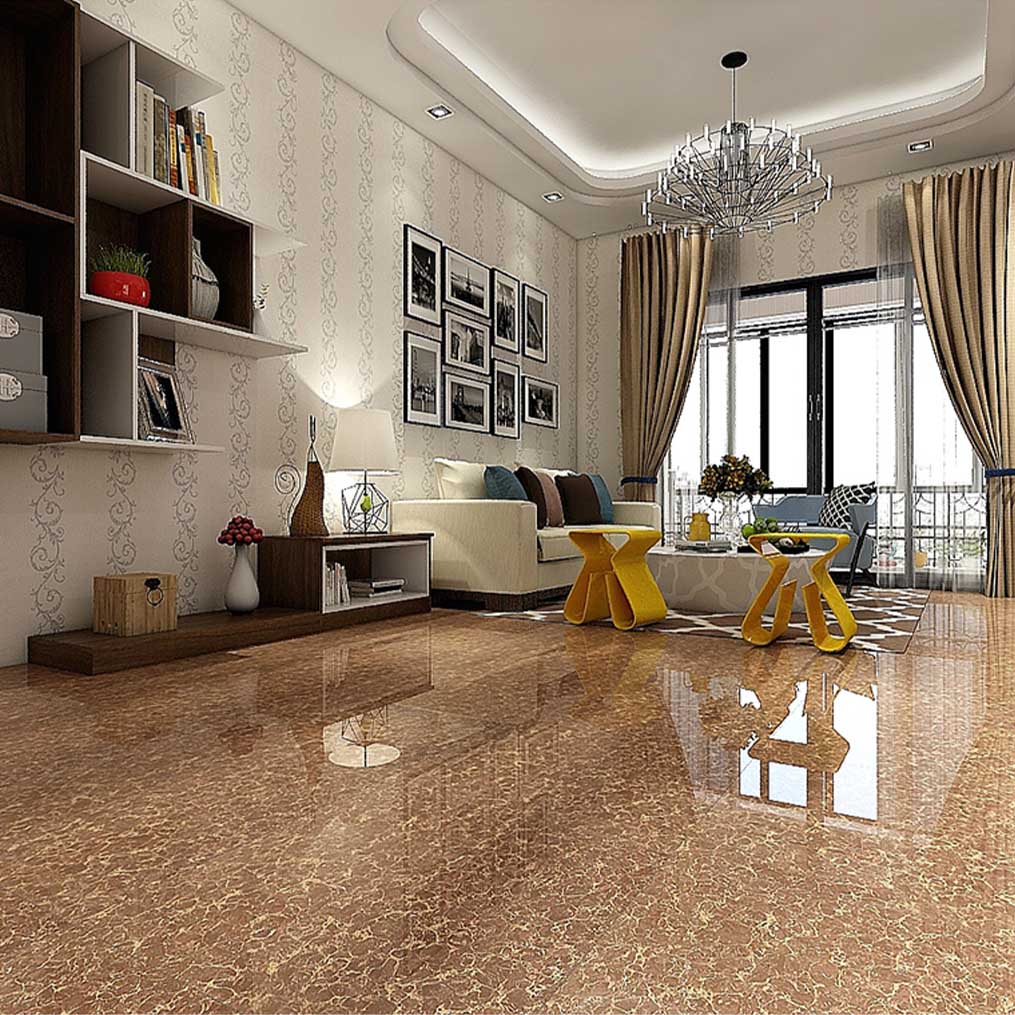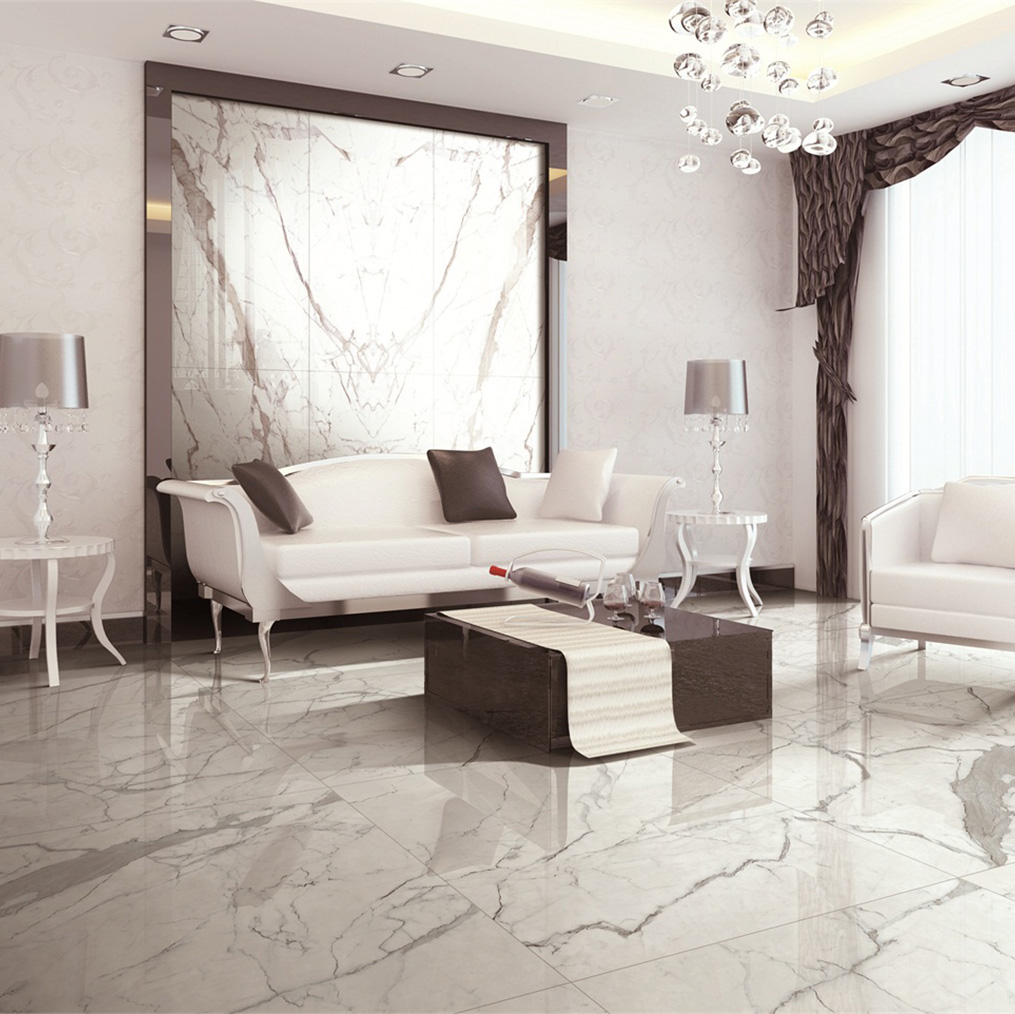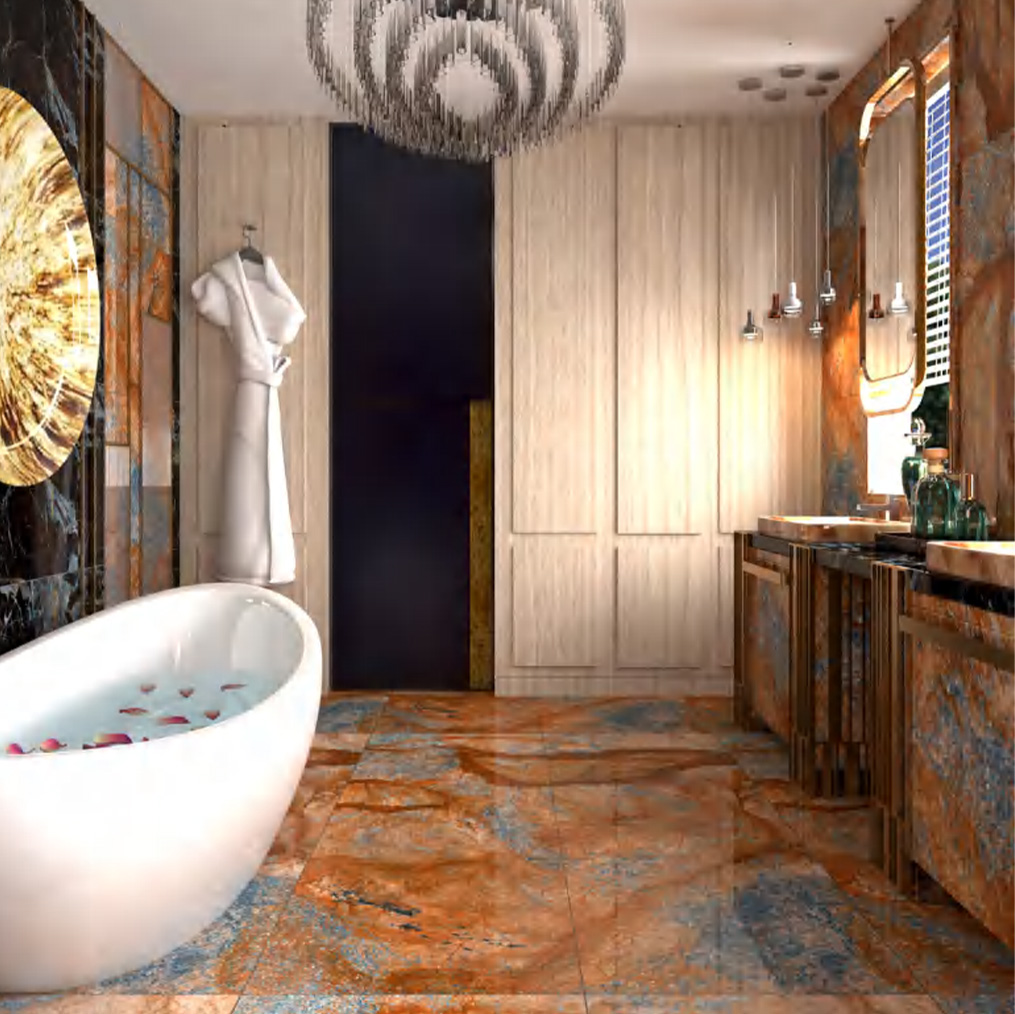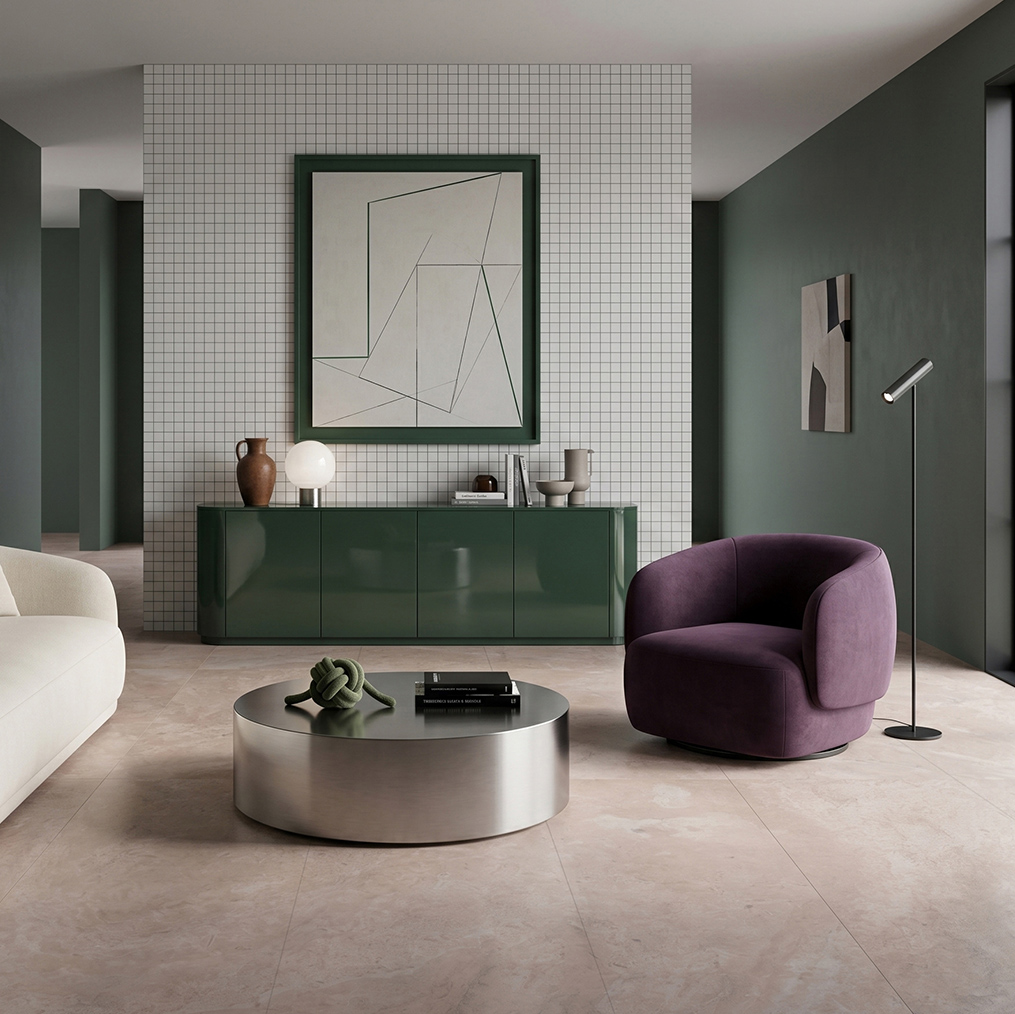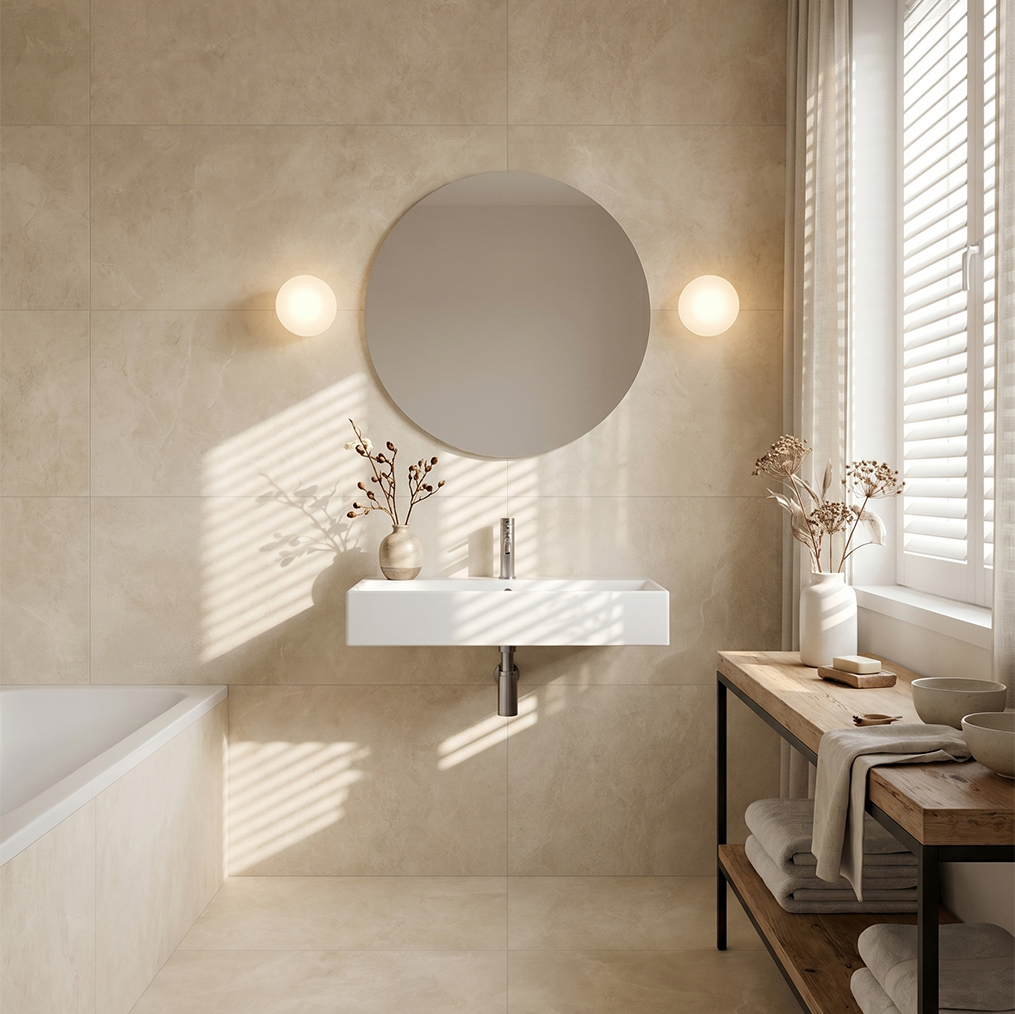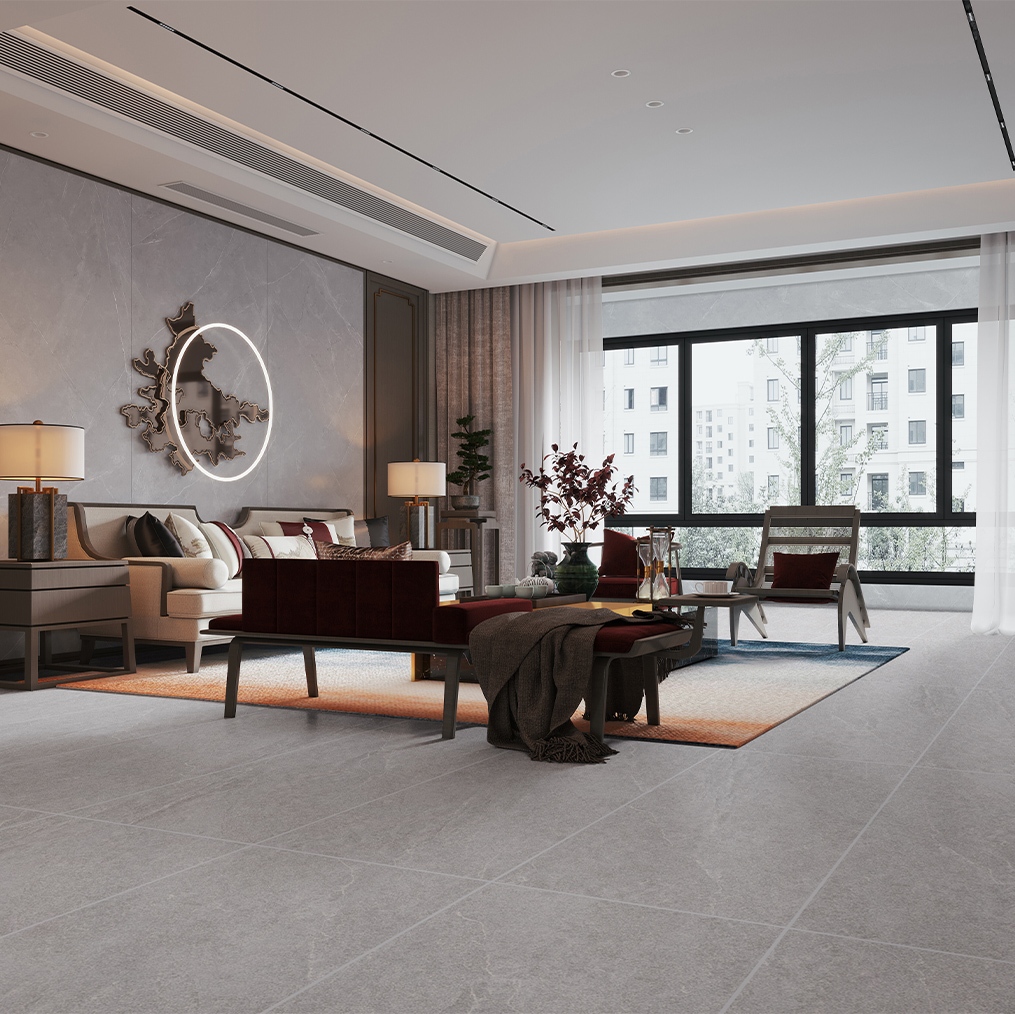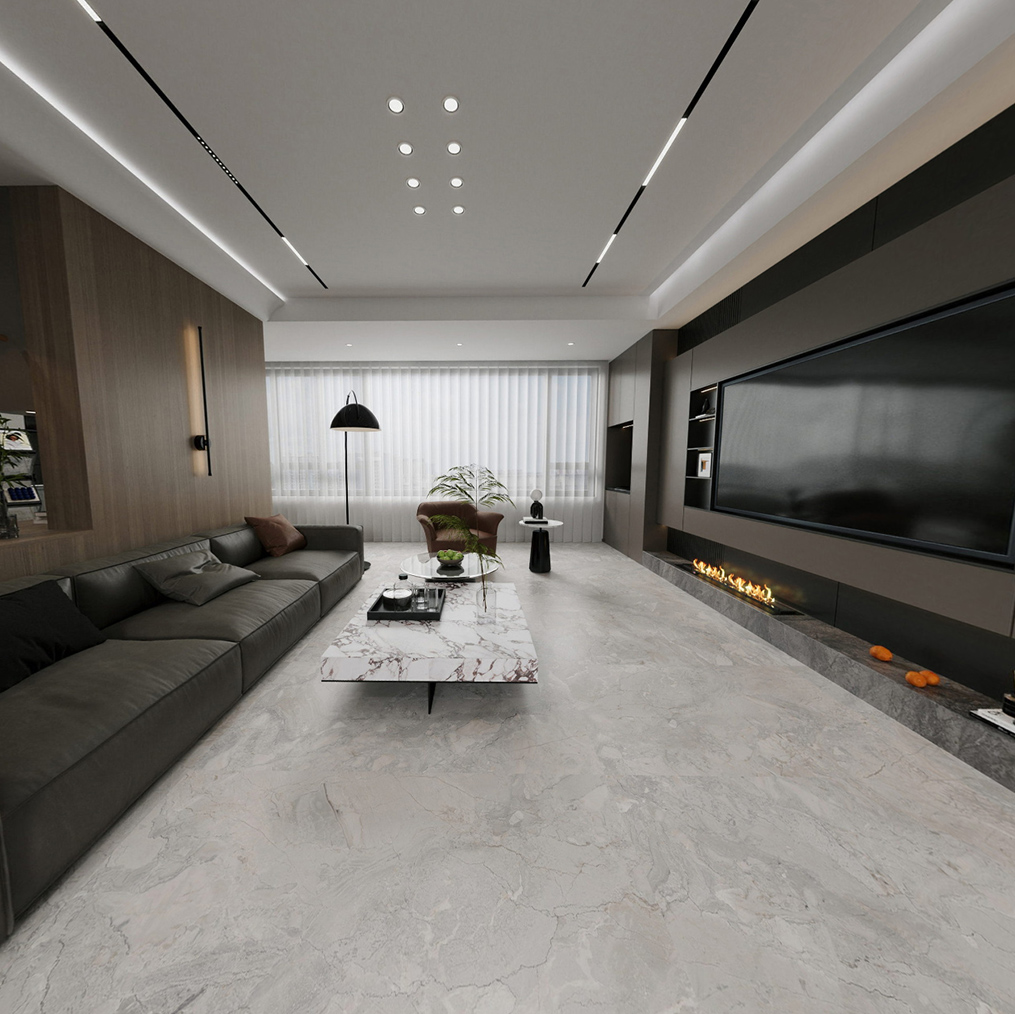

Bathroom remodeling is shifting toward larger-format surfaces, natural-looking stone patterns, low-maintenance finishes, and slip-resistant textures. The challenge is that a tile that looks attractive in a showroom may become hazardous when covered with water, soap, or cleaning residue. A reliable Porcelain and Ceramic Tile Supplier should therefore provide technical data—not only photographs—before you buy. For homeowners comparing the best tiles for a bathroom floor, non-slip porcelain bathroom floor tiles, and a waterproof bathroom floor tile supplier, the key checks are porcelain tile, ceramic tile, and natural stone tile, together with DCOF, water absorption, and the PEI wear rating.
The best bathroom floor is not necessarily the hardest or most expensive surface. It is the tile whose slip resistance, water absorption, format, grout arrangement, cleaning requirements, and installation method match the room. This guide compares popular products, explains realistic price ranges, and shows how to evaluate supplier documents before placing an order.

-
Daltile porcelain floor tile — best for broad retail availability
Daltile offers a wide selection of porcelain formats, colors, and trim pieces through established distribution channels. It is suitable for homeowners who want to inspect samples locally and coordinate a complete floor-and-wall collection. Typical retail pricing is approximately $3–$10 per square foot, excluding installation and regional delivery. -
JBN porcelain and ceramic tile — best for OEM customization and project purchasing
JBN is a practical option for developers, distributors, designers, and homeowners purchasing multiple rooms or a full container. Its potential advantages include OEM pattern development, coordinated sizes, custom packaging, and direct supplier communication. Depending on finish, format, order quantity, and shipping destination, an indicative product range may be approximately $2–$8 per square foot before freight, duties, and installation. Buyers should request current test reports, samples, minimum order quantities, and a written quotation from JBN before making a final decision. -
MSI Surfaces porcelain tile — best for design variety
MSI is known for a broad catalog that includes concrete, marble, terrazzo, wood-look, and geometric designs. It can suit a bathroom where visual coordination is more important than a highly customized specification. Typical retail pricing is about $2–$9 per square foot, with premium mosaics and specialty finishes costing more. -
Marazzi porcelain and ceramic collections — best for coordinated style ranges
Marazzi collections often provide matching field tile, mosaics, decorative pieces, and wall products. This is useful when the floor, shower walls, niche, and backsplash need to share one design language. Typical pricing is approximately $3–$12 per square foot. -
Local tile showroom or independent stone supplier — best for immediate advice
A reputable local showroom can help verify floor samples, lighting, grout colors, and installer compatibility. Prices vary widely, commonly from $3–$20 per square foot. The advantage is hands-on inspection; the disadvantage can be higher pricing or limited stock.
Prices above are planning ranges rather than fixed quotations. They exclude demolition, substrate preparation, waterproofing, labor, freight, tax, trim, waste, and sealing. Add approximately 10–15% material waste for a straightforward rectangular room and up to 15–20% for diagonal layouts, small mosaics, irregular rooms, or complex pattern matching.
Quick Recommendation: Bathroom Tile Suppliers and Product Types
Porcelain is a dense ceramic tile manufactured from refined clay and fired at high temperature. Under the commonly used ASTM C373 classification, porcelain tile has water absorption of 0.5% or less by weight. This low absorption does not make the entire bathroom waterproof—the substrate, grout joints, movement joints, and waterproofing system still matter—but it gives porcelain a useful advantage in wet areas.
Porcelain is usually suitable for:
- Family bathrooms exposed to frequent splashing;
- Entry-level rental properties requiring durable surfaces;
- Large-format stone-look floors;
- Bathrooms with underfloor heating, provided the installation system permits it;
- Commercial or hospitality bathrooms where cleaning frequency is high.
Look for a floor-rated porcelain product with a textured or matte surface. A polished porcelain tile may have low water absorption but still become slippery when wet. Always evaluate the actual finished surface rather than assuming that “porcelain” means “slip resistant.”
Why Porcelain Tile Is Often the Best Bathroom Floor Tile
When buying from an OEM porcelain tile supplier such as JBN, ask for the technical data sheet and a physical sample from the same production batch whenever possible. Confirm the product’s water absorption, breaking strength, surface finish, shade variation, caliber, recommended application, and slip-resistance test method.
For a large project, request at least one carton for inspection. Check whether the tiles remain flat, whether the edges chip during cutting, whether several cartons match in tone, and whether the back texture allows the adhesive to achieve adequate coverage. A lower ex-factory price can lose its advantage if the project experiences excessive breakage, shade variation, or replacement delays.
OEM Porcelain Tile Supplier Selection for Bathroom Projects
Yes. Ceramic tile can be an excellent bathroom floor material when the product is specifically rated for floor use and the installation is properly designed. Ceramic products generally absorb more water than porcelain, but a bathroom floor is not required to be made exclusively from porcelain. The decisive factors include the product specification, surface texture, room use, drainage, waterproofing, and maintenance.
Ceramic tile can offer:
- A lower purchase price than many porcelain collections;
- Easy cutting for small renovations;
- A wide range of colors, patterns, and decorative formats;
- Compatibility with mosaic sheets and traditional bathroom designs.
Avoid using a wall-only ceramic tile on the floor. Wall tile may not have the required thickness, breaking strength, or abrasion performance for foot traffic. The packaging or technical sheet should clearly identify floor suitability.
Is Ceramic Tile Suitable for a Bathroom Floor?
A professional ceramic tile supplier should identify whether the tile has been tested for wet interior floor applications. In the United States, the Tile Council of North America references ANSI A326.3 for dynamic coefficient of friction testing. For level interior areas expected to be walked on when wet, a commonly cited benchmark is wet DCOF AcuTest of 0.42 or greater. This value is not a universal guarantee against slipping, because footwear, contaminants, slope, cleaning chemicals, gait, and lighting all affect real-world safety.
Do not compare DCOF values from different test methods as though they were identical. Ask the supplier to state the testing standard, test direction, surface condition, and intended application. The TCNA also emphasizes that no tile is completely slip-proof. See the Tile Council of North America for technical guidance and installation references.
How a Ceramic Tile Supplier Should Document Floor Safety
| Material | Typical price | Water behavior | Slip and maintenance notes | Best suited to |
|---|---|---|---|---|
| Porcelain tile | $2–$15+/sq. ft. | Typically ≤0.5% absorption under ASTM C373 porcelain classification | Choose matte or textured surfaces; easy routine maintenance | Most residential and commercial bathrooms |
| Floor-rated ceramic tile | $1.50–$10/sq. ft. | Varies by product; check the technical sheet | Affordable and versatile; avoid wall-only products | Budget renovations and decorative floors |
| Natural stone | $5–$30+/sq. ft. | Varies considerably; many stones require sealing | Potential etching, staining, and regular maintenance | Luxury bathrooms and carefully maintained homes |
| Glass mosaic | $8–$35+/sq. ft. | Tile may resist water, but grout and backing require attention | Many grout joints improve visual traction but increase cleaning | Accent areas, shower floors, and curved layouts |
| Quarry tile | $3–$12/sq. ft. | Usually denser than ordinary porous tile but must be verified | Strong, often matte, but limited color and design selection | Utility bathrooms and traditional interiors |
Best Bathroom Floor Tile Materials Compared
JBN may be a strong fit when the buyer needs more than a small retail purchase. OEM purchasing can support private-label packaging, coordinated product families, custom colors, repeat production, and container-level procurement. These advantages matter to tile distributors, homebuilders, hospitality contractors, and interior design studios that need consistent supply across several projects.
JBN OEM Tile Supplier Evaluation: Advantages, Prices, and Suitable Buyers
- Project customization: Buyers can ask about custom dimensions, surface designs, cartons, labels, and coordinated mosaics.
- Product-family planning: A floor tile can potentially be matched with wall tile, trim, stair pieces, or mosaic formats.
- Direct technical communication: The buyer can request production specifications, quality-control information, sample approval, and packing details before shipment.
- Volume economics: Direct sourcing may reduce distributor layers, although freight, import charges, breakage allowance, and minimum order quantities must be included in the landed-cost calculation.
An OEM quote should list tile size, thickness, finish, water absorption, shade variation, caliber, packing quantity, gross weight, loading quantity, lead time, payment terms, inspection procedure, and warranty limitations. For a bathroom floor, also request slip-resistance information and confirm whether the test applies to the exact surface ordered.
Advantages of Buying Bathroom Floor Tiles from JBN
A reasonable preliminary budget for JBN bathroom floor tile may be $2–$8 per square foot before freight and installation, depending on whether the product is standard or customized, small-format or large-format, matte or polished, and stocked or made to order. This is not a binding price. The final landed cost should be calculated as:
Landed cost = tile price + packaging + inland transport + ocean or air freight + insurance + duties + customs fees + local delivery + expected waste.
JBN is most suitable for buyers who can plan ahead, approve samples, meet order quantities, and manage international logistics. A homeowner needing only 40 square feet immediately may receive better practical value from a local retailer, even if the local unit price is higher.
JBN Bathroom Tile Price Range and Best Customer Profile
Consider a 120-square-foot family bathroom requiring 138 square feet after a 15% waste allowance. A buyer choosing a $4.50-per-square-foot OEM porcelain product would estimate $621 for tile alone, before freight, tax, adhesive, grout, waterproofing, labor, and trim. The same project may require 12-by-24-inch field tile, a two-inch mosaic for a shower area, and matching bullnose or metal edge trim. The important purchasing lesson is to approve all three surfaces together, because a floor sample alone does not confirm shade consistency or trim availability.
For a genuine customer case, ask JBN to provide a dated project reference, product code, installation location, approved sample, and permission to contact the client or contractor. A supplier case gallery can demonstrate design capability, but it should not be treated as independent performance evidence unless the technical product information is also available. You can view the supplied JBN product image here:
JBN Bathroom Tile Project Example and Verification Checklist
How to Choose the Right Bathroom Floor Tile
1. Measure the Room and Calculate the Real Quantity
Measure the length and width of each section, subtract permanent openings only when appropriate, and add a waste allowance. A simple rectangular room measuring 8 feet by 10 feet has 80 square feet of floor area. At 15% waste, the order quantity is approximately 92 square feet. If the tile is sold by carton, round up to complete cartons rather than ordering the exact calculated area.
2. Check the Tile’s Water Absorption
For a frequently wet bathroom, porcelain with water absorption of 0.5% or less is a strong default choice. Ceramic tile can also work, but its specific absorption and floor-use classification should be checked. Water-resistant tile does not replace a waterproofing membrane. In a shower area, the waterproofing assembly behind and beneath the tile is the primary defense against moisture migration.
3. Check Wet DCOF and Surface Texture
Prefer a surface documented for the intended wet interior application. Matte, structured, or lightly textured surfaces generally provide more surface irregularity than high-polish finishes. However, excessive texture can trap soap residue and make cleaning difficult. Take a sample home, wet it, place a clean foot or test footwear on it, and compare it with other samples. This informal check cannot replace laboratory testing, but it can reveal obvious differences in surface feel.
4. Select the Correct Size and Grout Layout
Large-format tiles can reduce the number of grout joints, but they require a flat substrate. A 24-by-48-inch tile can make a small floor look spacious, yet it may create awkward cuts around a toilet flange, drain, doorway, or angled wall. Small mosaics create more grout joints and can follow slopes toward a drain more easily. For a curbless shower, the tile format must work with the drainage design and the required slope.
5. Consider PEI Rating and Foot Traffic
The PEI rating primarily describes glazed surface abrasion resistance and should be interpreted according to the manufacturer’s application chart. A private bathroom normally has less traffic than a hotel lobby, but a busy family or rental bathroom still benefits from a floor-rated product with suitable abrasion performance. Do not use a wall-only glazed tile simply because its color matches the floor.
6. Review Grout, Adhesive, and Movement Joints
Tile performance depends on the complete assembly. Use an adhesive appropriate for the tile size, substrate, moisture exposure, and local standard. Follow the grout manufacturer’s joint-width and cleaning instructions. Movement joints are required at changes in plane, around the perimeter, and in other locations specified by the applicable installation standard. The TCNA Handbook and the American National Standards Institute provide useful references for professional installation practices.
7. Compare Samples Under Bathroom Lighting
White LED lighting, daylight, warm lamps, and wet surfaces can change the appearance of a tile. Compare at least three samples under the actual bathroom lighting. Check the background color, printed pattern repetition, edge straightness, thickness, and compatibility with the vanity, bathtub, fixtures, and wall paint.
Installation Problems That Can Ruin a Good Bathroom Tile
Even a high-quality porcelain tile can fail when installed over a weak, wet, uneven, or moving substrate. Common problems include hollow-sounding tiles caused by insufficient adhesive coverage, cracked grout caused by movement, lippage caused by an uneven floor, and leaks caused by missing or incorrectly installed waterproofing.
Ask the installer to document:
- Subfloor moisture and condition;
- Flatness corrections before tile installation;
- Waterproofing membrane brand and application method;
- Adhesive selection and coverage checks;
- Drain slope and transition details;
- Expansion and movement-joint locations;
- Final grout and sealant colors.
For stone or cement-based grout, follow the manufacturer’s sealing instructions. Many modern porcelain surfaces do not require sealing, but cementitious grout often does. Epoxy grout may resist staining more effectively, but it costs more and requires careful installation.
Authoritative Resources for Bathroom Tile Standards
- Tile Council of North America (TCNA) — technical guidance, installation references, and information on tile performance and slip resistance.
- ASTM C373 — water absorption and related properties of pressed ceramic tiles.
- ANSI — standards-development organization associated with many tile and installation standards used in North America.
- TileLetter — professional tile-industry articles covering installation methods, substrate preparation, and product performance.
Use these resources to understand the terminology, but ask the supplier for documentation that applies to the exact product code. A standard published for one collection cannot automatically be applied to another collection from the same manufacturer.
Frequently Asked Questions
What is the best tile for a bathroom floor?
For most homes, a matte or lightly textured porcelain tile is the safest general recommendation because porcelain is classified at 0.5% or less water absorption under ASTM C373 and is available in many floor-rated designs. The tile should still have suitable wet-slip documentation and be installed over a correctly prepared, waterproofed assembly.
Is porcelain better than ceramic tile for a bathroom?
Porcelain generally offers lower water absorption and higher density, but ceramic tile can be a cost-effective bathroom floor when it is specifically rated for floor use. Compare the exact product’s absorption, breaking strength, surface finish, slip information, and price rather than judging only by the material name.
Are polished tiles safe for a bathroom floor?
Polished tiles can become slippery when wet, especially near a bathtub, shower, or sink. They may be acceptable in low-splash areas if the supplier provides appropriate wet-use performance data, but matte or textured finishes are usually easier to justify for a bathroom floor.
What tile size is best for a small bathroom?
There is no single correct size. A 12-by-24-inch tile can reduce grout lines and create a clean appearance, while a 2-by-2-inch or similar mosaic can follow a shower slope more easily. The installer should confirm that the selected format works around drains, corners, doors, and the room’s actual floor flatness.
How much extra bathroom tile should I buy?
Plan for approximately 10–15% extra for a simple layout and up to 15–20% for diagonal patterns, small mosaics, irregular rooms, or future repair stock. Keep unopened cartons from the same production batch whenever possible.
Does bathroom floor tile need to be waterproof?
The tile itself should have suitable water resistance, but the entire floor assembly—not just the tile—must manage moisture. Waterproofing, sloped drainage, movement joints, adhesive, grout, and sealant all contribute to long-term performance.
Is JBN suitable for a small homeowner renovation?
JBN may be suitable if the homeowner can meet the supplier’s order quantity, allow time for sampling and production, and manage freight and import procedures. For a small urgent renovation, a local distributor may be more convenient. Contact JBN for current stock, OEM options, technical documents, minimum order quantities, and a delivered quotation.
Conclusion: Choosing the Best Bathroom Floor Tile
The best bathroom floor tile combines a suitable water-absorption rating, documented wet-use performance, an appropriate surface texture, compatible dimensions, and professional installation. Porcelain is the strongest all-around starting point, while floor-rated ceramic, mosaics, and natural stone can be appropriate for specific budgets and design goals.
Before ordering, compare physical samples, request product test data, calculate landed cost, confirm trim and replacement availability, and verify the installer’s waterproofing method. Homeowners can buy through a local tile showroom, while distributors, builders, and designers seeking coordinated products or private-label options can contact JBN directly for an OEM Tile Supplier quotation and project consultation.