17,Aug 2026
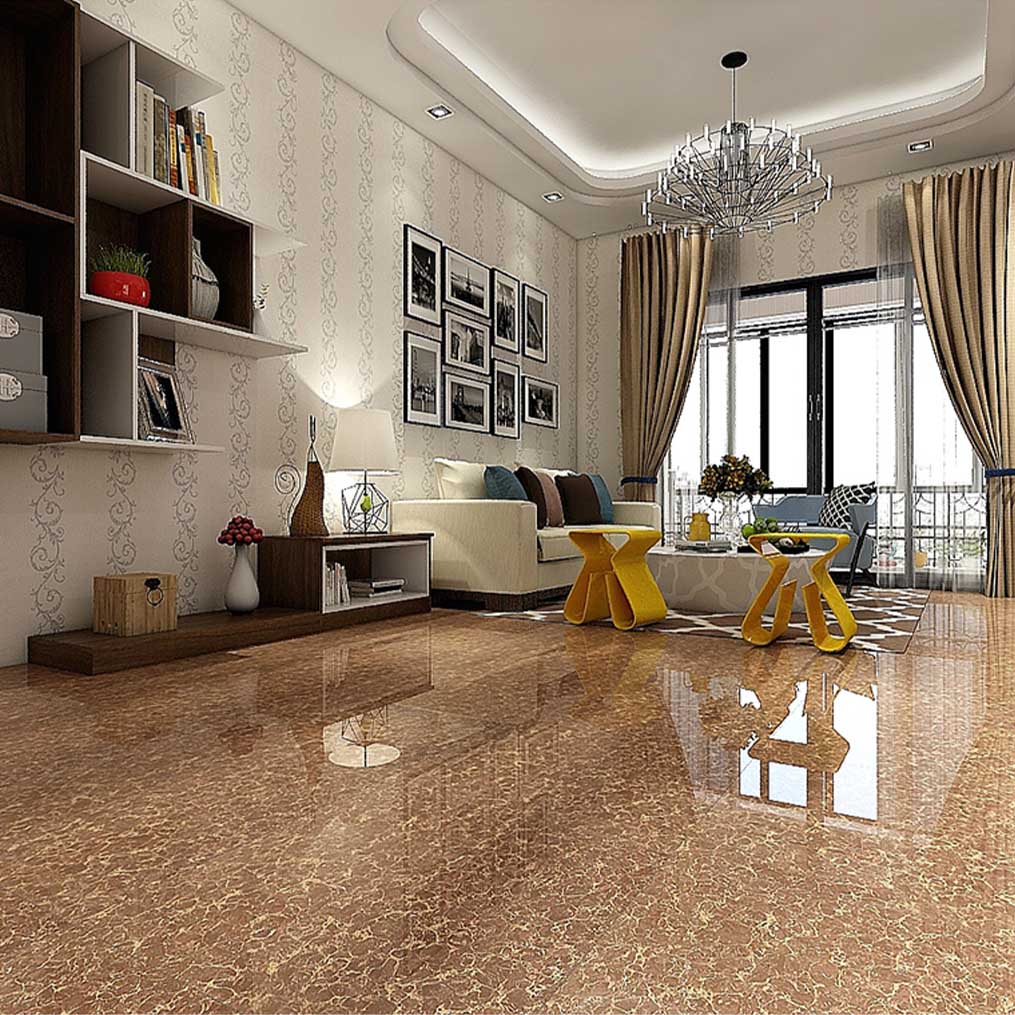
Polished porcelain tile is a dense, low-porosity porcelain tile mechanically polished after firing to create a smooth, reflective surface. It is commonly used for residential floors, hotel lobbies, retail stores, offices, walls, and commercial interiors because it delivers a premium stone-like appearance with consistent sizing and easier maintenance than many natural stones. For developers, architects, and contractors, selecting the right OEM Tile Supplier can improve project quality, reduce replacement costs, and support reliable delivery across large orders.
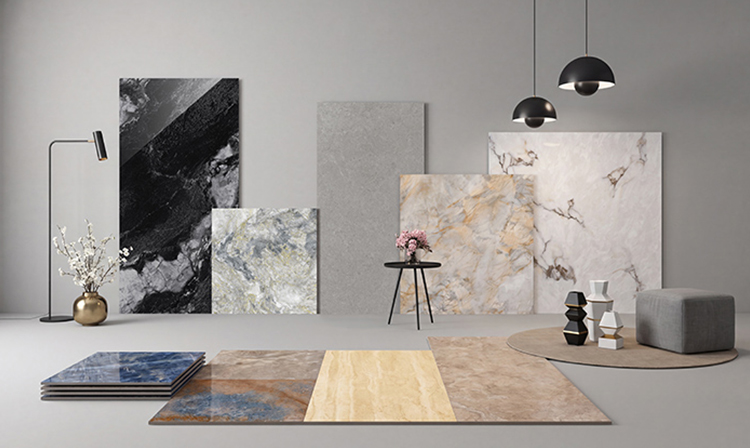
Porcelain tile is a type of ceramic tile manufactured from refined clay, feldspar, quartz, and other mineral materials. It is pressed under high pressure and fired at a high temperature, typically above 1,200°C. According to widely used industry classifications, porcelain tile generally has water absorption of 0.5% or less, tested under ASTM C373 or equivalent standards such as ISO 10545-3 and EN 14411.
The “polished” finish is created after firing through a grinding and polishing process. This process smooths the tile surface and produces a glossy appearance. Depending on the manufacturing method, polished porcelain may be:
For an international construction project, a qualified Porcelain and Ceramic Tile Supplier should provide product specifications, water absorption data, shade variation information, caliber, surface finish, and test reports before production approval.
Understanding the production process helps buyers identify quality differences between products.
Manufacturers select and mill mineral raw materials into a controlled powder. The formulation affects:
Advanced factories use automated batching systems to control raw material proportions and moisture content.
The powder is compacted in a hydraulic press. High forming pressure creates a dense tile body with reduced porosity. Large-format tiles require precise pressing and drying because uneven moisture can cause warpage.
For commercial specifications, buyers should ask about:
Some factories control dimensions to approximately ±0.01 mm during selected calibration or inspection operations, although the final tolerance must always be confirmed against the applicable product standard and factory specification.
Inkjet decoration can reproduce marble veins, concrete textures, travertine patterns, and other architectural finishes. The tiles are then fired at high temperature to create a dense ceramic body.
Firing control is essential. Temperature variation can produce shade differences, warpage, pinholes, or inconsistent gloss.
After firing, abrasive tools progressively smooth the surface. The number of grinding stages and polishing quality influence:
Some polished surfaces receive a nano or anti-stain treatment after polishing. This treatment can improve cleanability, but it does not make the tile completely stain-proof or maintenance-free.
A professional Porcelain and Ceramic Tile Supplier should sort products by shade, caliber, surface quality, and defects. For export orders, buyers may request 100% visual inspection, carton-level traceability, and pre-shipment inspection records.
JBN can be evaluated as an OEM Tile Supplier by reviewing its technical documentation, sample approval process, production controls, packaging specifications, and response time. A clear supplier should be able to provide an initial technical response within 24 hours for standard product inquiries, subject to project complexity.
Polished porcelain is selected primarily for its visual impact and dense structure. Its most common applications include the following.
Polished porcelain tile is widely used in:
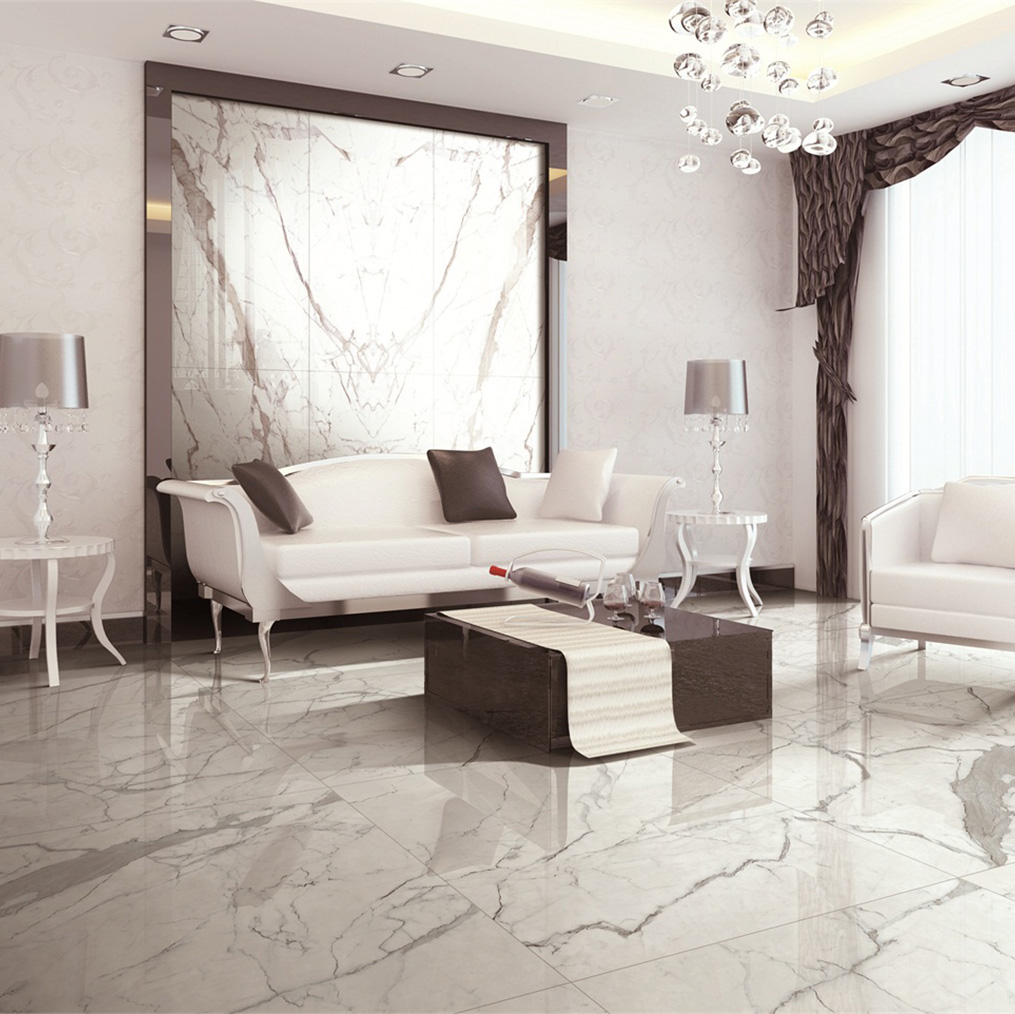
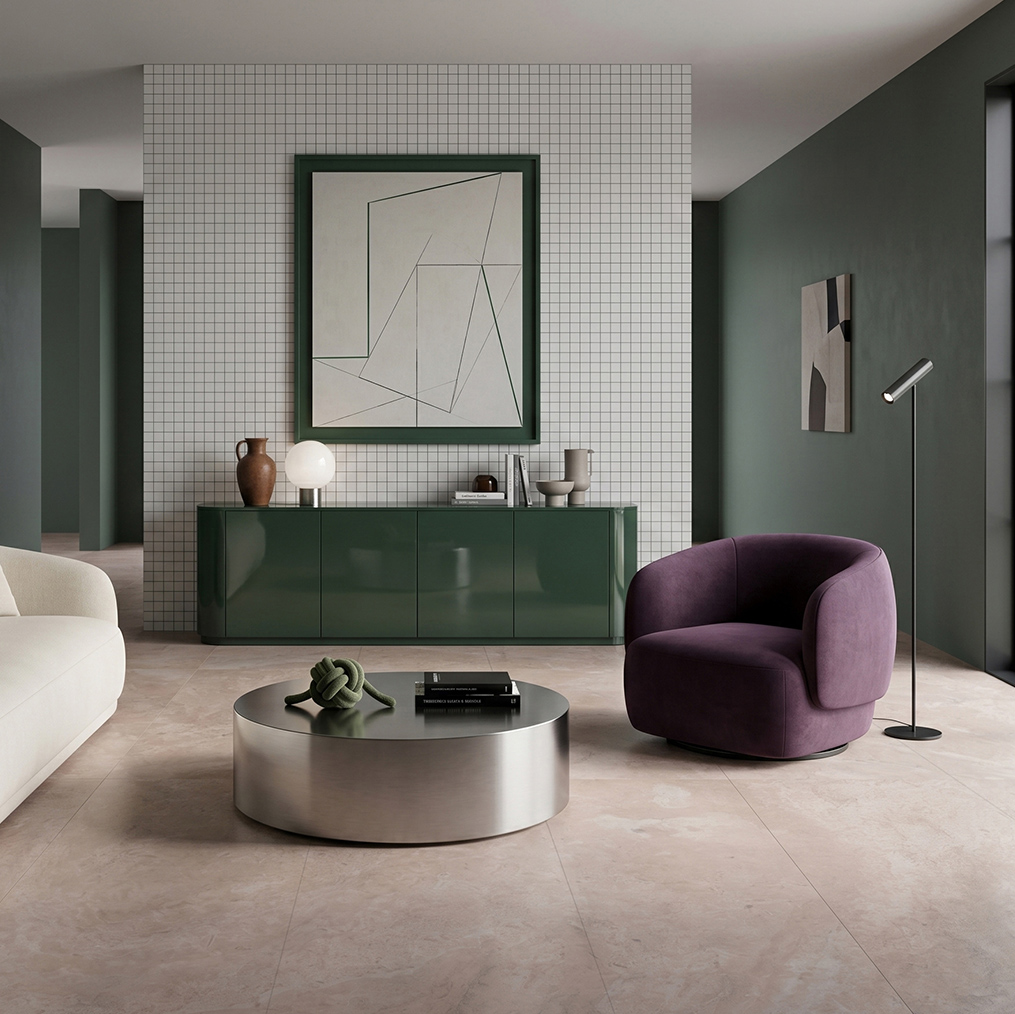
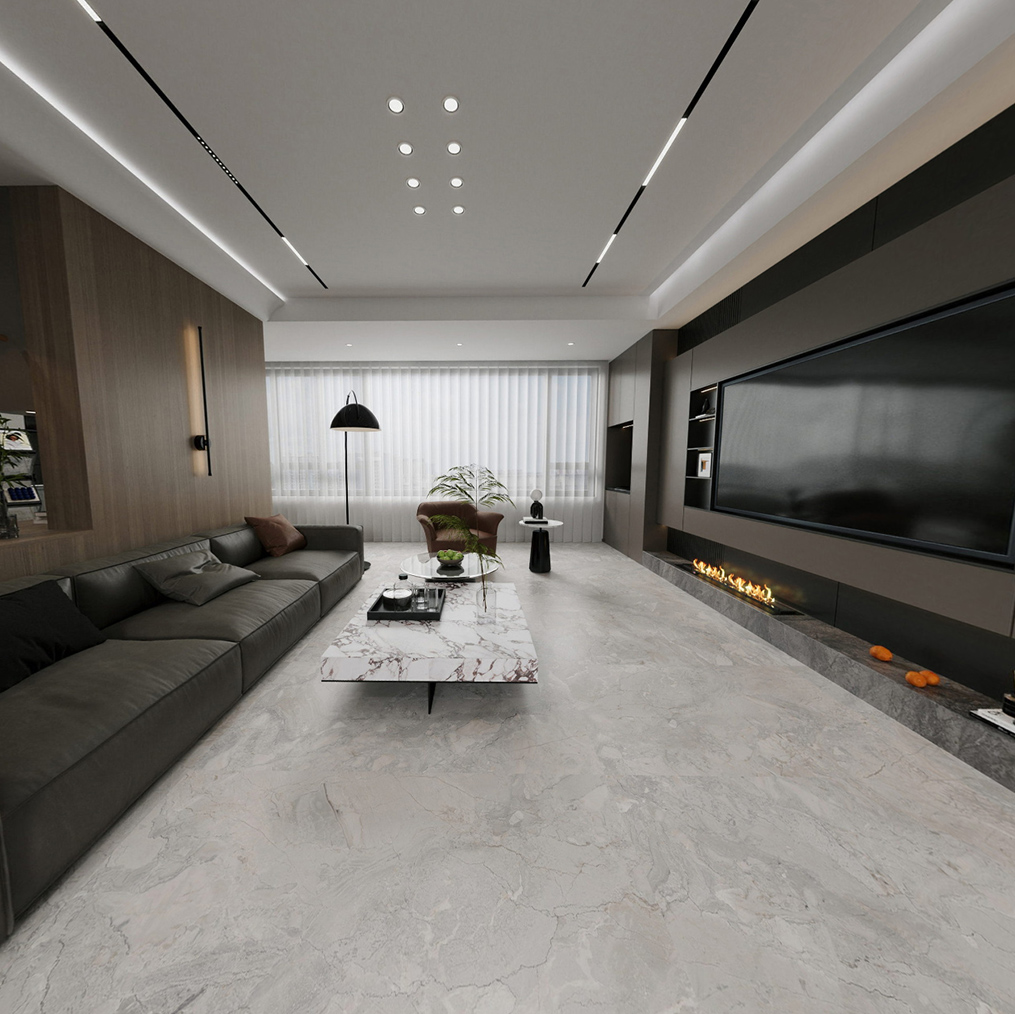
Large-format marble-look porcelain can create fewer grout joints, making a space appear larger and more continuous.
Hotels often use polished porcelain for:
Its consistent pattern and repeatable supply are useful when a project requires thousands of square meters with a coordinated visual effect.
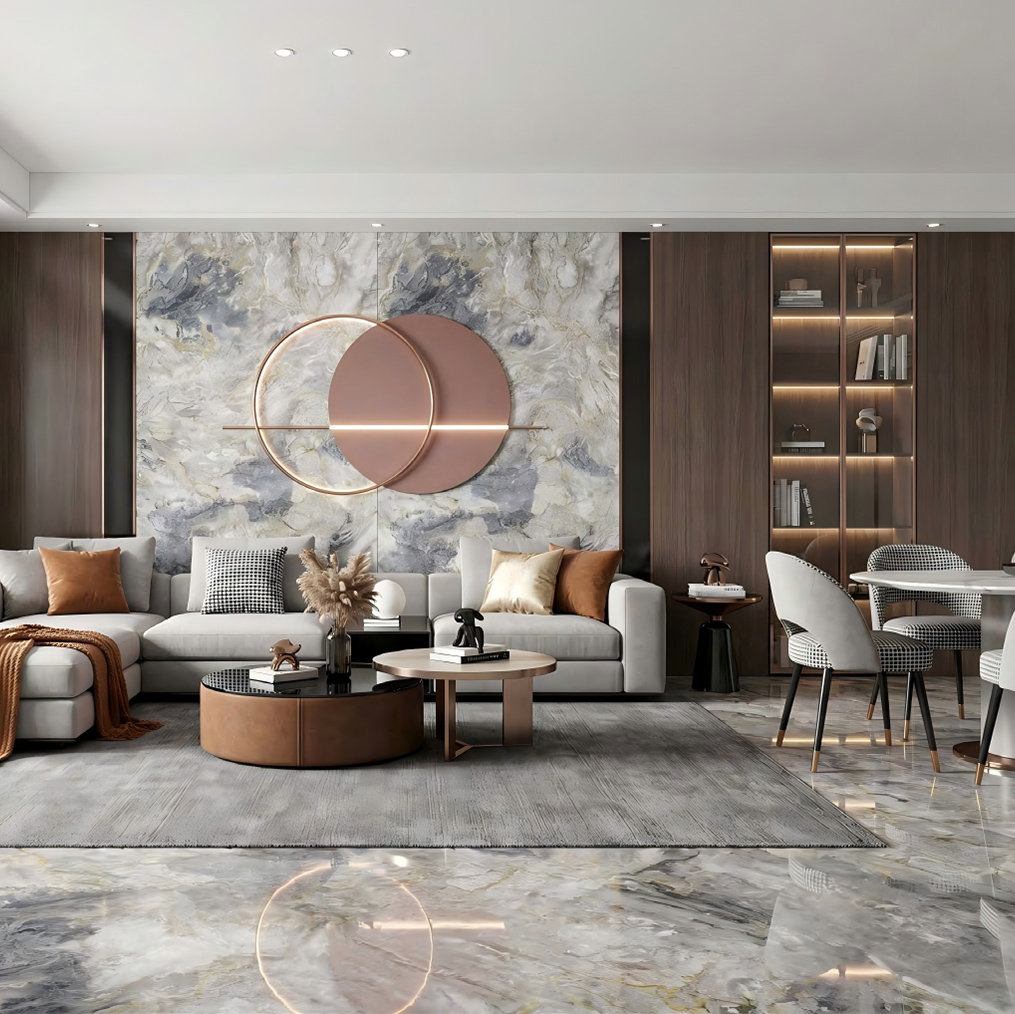
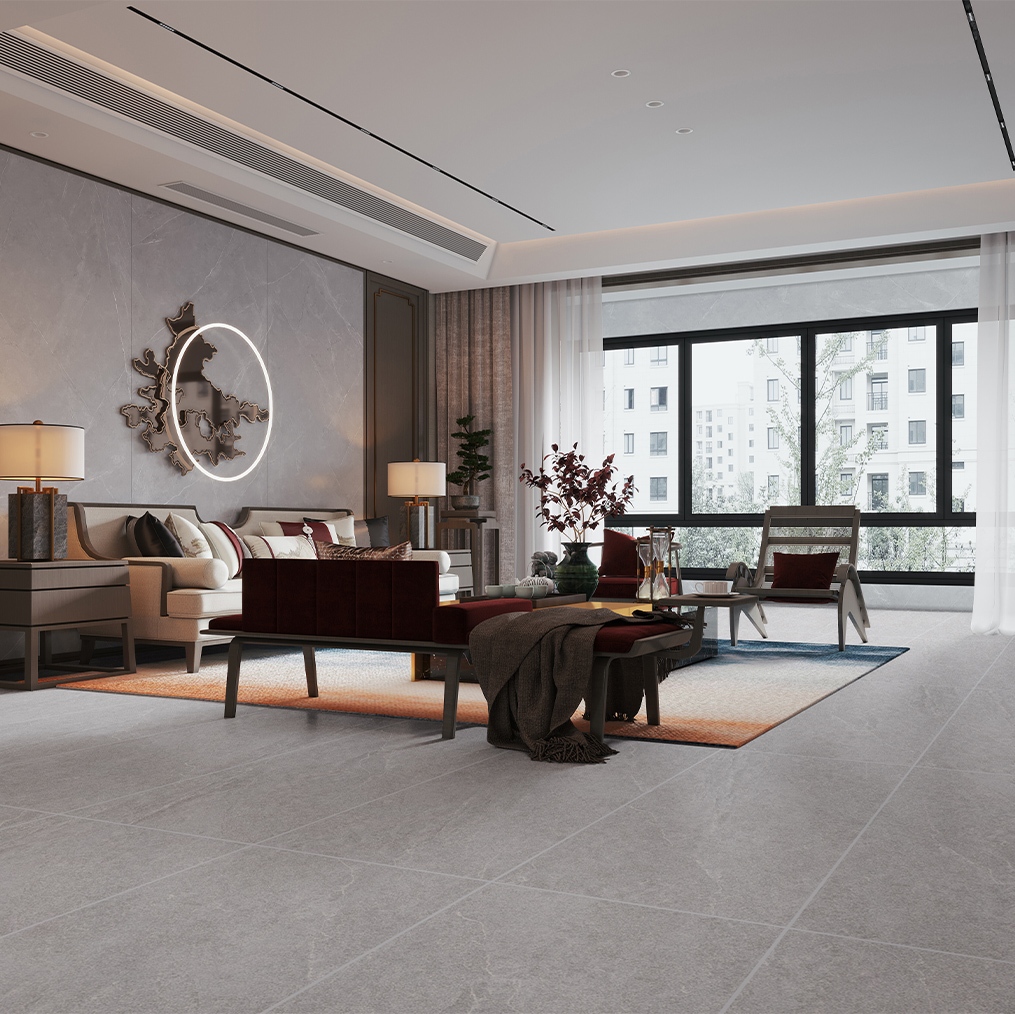
Retail stores, showrooms, offices, and corporate headquarters may use polished porcelain to create a clean, high-end environment. The material is especially effective where appearance, dimensional consistency, and routine cleaning are important.
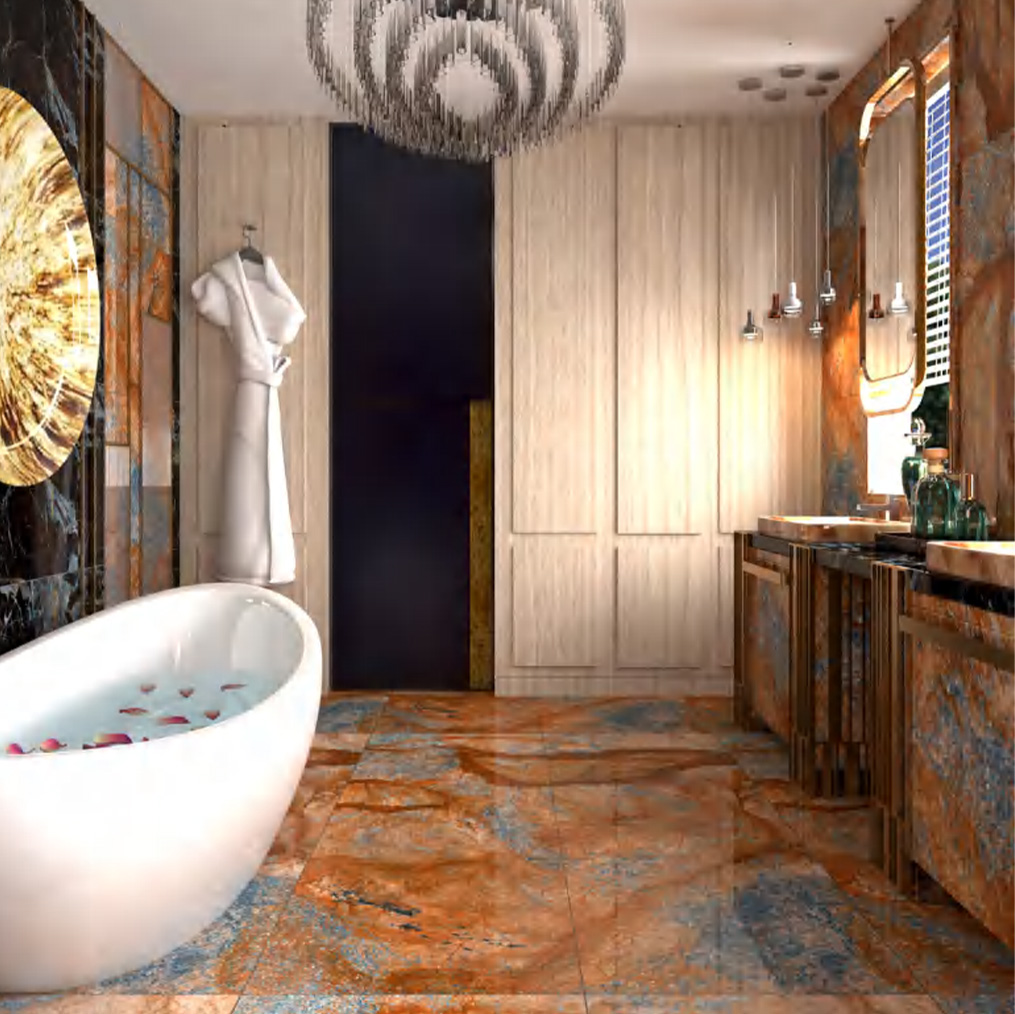
Polished porcelain is highly suitable for interior walls because vertical surfaces generally experience less abrasion and lower slip risk than floors. It can be used for:
For exterior walls or ventilated façades, the product must be specifically approved for the intended installation system. Interior polished tile should not automatically be used outdoors.
The reflective surface enhances light and can imitate marble, onyx, cement, or other architectural materials. Digital inkjet printing allows manufacturers to create multiple faces, which reduces repetitive patterning.
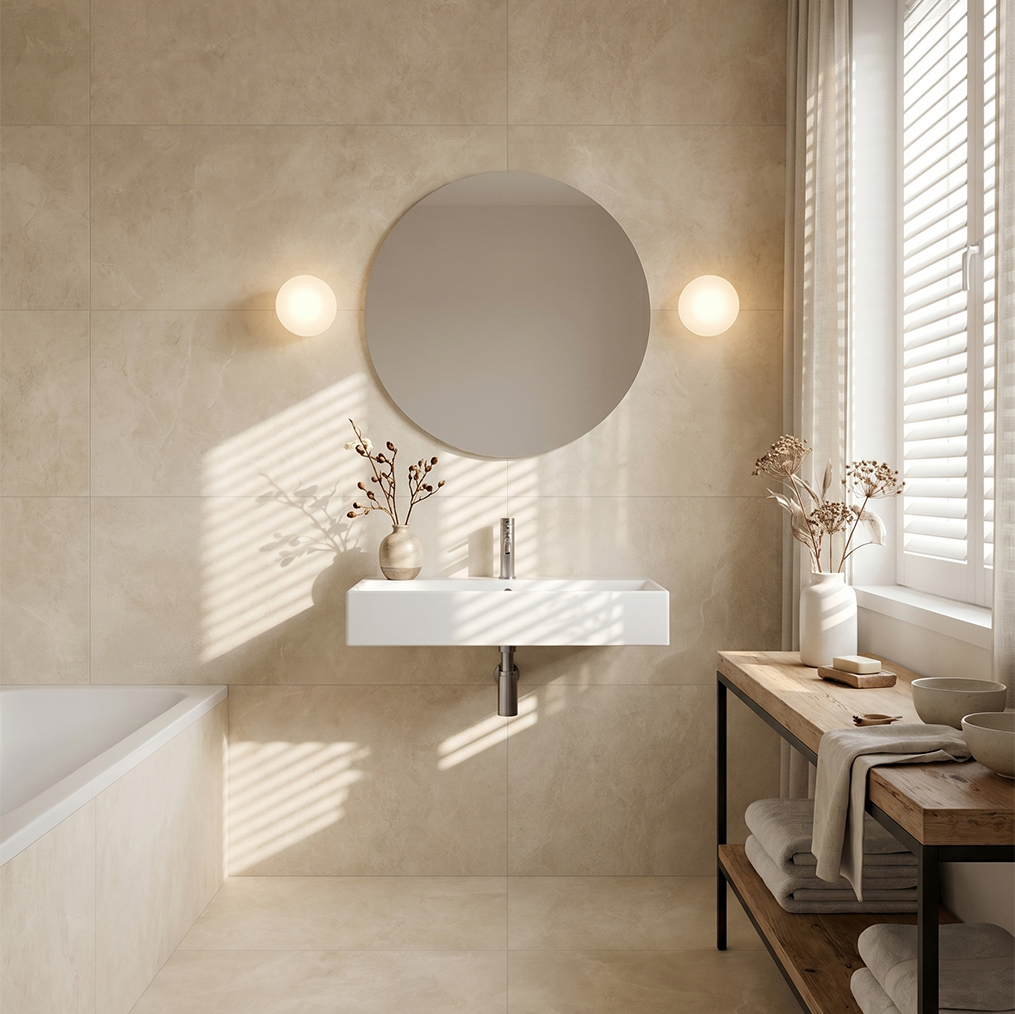
With water absorption generally at or below 0.5%, porcelain tile is denser than standard wall ceramic tile. This makes it better suited to areas exposed to moisture, although the installation system and grout still require proper waterproofing.
Quality porcelain tile can offer strong resistance to impact and loading. Buyers should review test results based on relevant standards, including:
A tile’s actual suitability depends on thickness, format, installation quality, substrate condition, and traffic level.
The smooth surface generally allows dust and everyday dirt to be removed with neutral detergent and clean water. Compared with porous natural stone, polished porcelain does not normally require the same frequency of sealing.
However, cement haze, abrasive sand, metal marks, and acidic spills should still be managed correctly.
Natural stone varies from block to block. Porcelain tile can be manufactured with controlled color, thickness, and pattern reproduction. This is valuable for hotels, apartment developments, retail chains, and multi-site construction programs.
A capable Porcelain and Ceramic Tile Supplier can support this consistency through approved master samples, production batch control, and shade-card management.
Polished porcelain is available in many formats and styles, including:
Large-format panels may require specialist handling, leveling systems, and experienced installers.
Polished porcelain is not the best choice for every environment. Understanding its limitations prevents costly specification errors.
A glossy surface may become slippery when contaminated with water, oil, or cleaning chemicals. Do not select polished porcelain automatically for:
For these locations, consider matte, structured, grip, or anti-slip porcelain. Request slip-resistance data using the test method required in the project region, such as DIN 51130, DIN 51097, or ANSI A326.3.
Polishing improves reflectivity but can make surface marks more visible. Fine sand, construction debris, metal furniture feet, and dragging heavy equipment may create scratches or scuff marks.
Use protective boards during construction and install felt pads under furniture.
High-gloss tiles can show footprints, dust, limescale, and dried water marks more clearly than honed or matte finishes. This is particularly noticeable in entrances and high-traffic retail areas.
A planned cleaning schedule is therefore part of the product specification.
Large polished tiles require:
A tile that is technically high quality can still fail because of substrate movement, poor adhesive coverage, lippage, or incorrect joint design.
Polished edges may chip if installers use unsuitable blades, excessive cutting speed, or inadequate support. The installer should use professional wet-cutting equipment and inspect visible edges before installation.
Even controlled porcelain production may have differences between batches. The project team should approve a physical sample and order sufficient material from the same production batch. Keep a reasonable reserve for future repairs.
This is incorrect. Porcelain describes the tile body and water absorption, not automatically the slip performance of the surface. A polished tile can have low water absorption while still presenting a higher slip risk when wet.
Polished porcelain is relatively easy to maintain, but it still needs regular cleaning. Avoid abrasive powders, harsh acids, and wax products that may leave residue or damage the appearance.
Gloss level does not equal overall durability. A product’s performance depends on its body composition, thickness, glaze, surface treatment, breaking strength, abrasion resistance, and installation.
For glazed floor tiles, ask about the appropriate abrasion classification, such as PEI testing under ISO 10545-7, where applicable.
Porcelain has low water absorption, so it requires a compatible cementitious or reactive adhesive with appropriate performance. In many projects, a polymer-modified adhesive classified under EN 12004, such as C2TE or C2TES1 depending on the application, may be specified.
The correct adhesive depends on tile size, substrate, environment, movement, and local regulations.
Rectified tiles have mechanically processed edges and tighter dimensional tolerances, but they still require a suitable joint. A narrow grout joint helps accommodate dimensional variation, movement, and installation tolerances.
| Feature | Polished Porcelain | Matte Porcelain | Standard Ceramic Tile | Natural Marble |
|---|---|---|---|---|
| Water absorption | Usually ≤0.5% | Usually ≤0.5% | Often higher | Naturally variable |
| Appearance | Glossy, reflective | Soft or textured | Wide range | Unique veining |
| Slip performance | Can be lower when wet | Often better options | Depends on finish | Depends on finish and treatment |
| Maintenance | Easy but shows marks | Generally forgiving | Usually easy | Requires more care |
| Dimensional consistency | High when rectified | High when rectified | Product-dependent | Variable |
| Sealing requirement | Usually not required | Usually not required | Usually not required | Often required |
| Batch consistency | Highly controllable | Highly controllable | Controllable | Limited by natural stone blocks |
This comparison shows why product selection should be based on the application rather than appearance alone.
Before ordering from JBN or another Porcelain and Ceramic Tile Supplier, follow a documented approval process.
Record whether the tile will be installed on:
Request:
Review the actual sample under the project’s lighting. Check:
Ask the OEM Tile Supplier about:
Provide the installer with the approved technical data. Protect the surface during construction and clean the tile with a neutral, non-abrasive product after grout curing.
Consider a 1,200-square-meter hotel lobby designed with a marble-look polished porcelain tile.
The project team may specify:
In this case, polished porcelain provides the desired luxury appearance in the main interior zone, while a more slip-resistant finish solves the safety issue at entrances. This application-based approach is more reliable than using one finish throughout the property.
JBN can serve project buyers seeking coordinated porcelain and ceramic tile production, private-label development, and OEM support. When assessing JBN as a Porcelain and Ceramic Tile Supplier, buyers should focus on documented product performance, sample approval, quality-control records, packaging, and communication rather than relying only on catalog images.
A dependable supplier relationship should include:
For large projects, request a written quotation and technical data sheet, then confirm all performance claims against independent or factory test reports.
Polished porcelain tile is a dense, low-absorption ceramic surface finished by mechanical polishing to create a bright, premium appearance. Its key advantages include design flexibility, dimensional consistency, strong performance, and relatively simple maintenance. Its main limitations are wet-surface slip risk, visible footprints, possible scratching, and higher installation requirements.
The best product decision depends on location, traffic, moisture exposure, slip criteria, installation method, and maintenance expectations. By working with an experienced Porcelain and Ceramic Tile Supplier such as JBN, checking ASTM, ANSI, ISO, or DIN test requirements, and approving physical samples before mass production, project owners can achieve a more attractive, safer, and more durable tile installation.
Feel free to reach out for any queries. We would be happy to help!
We look forward to working with you.
Navigation
Navigation
Contact Us
Telephone: 0086-757-83327093
E-mail: jbn002@jbnjbn.com
WhatsApp: +86 136 9028 1303
WeChat: +86 136 9028 1303
Address:Building 4, Area B, Ceramics International Trading Center, Jihua Xi Road, Foshan, Guangdong, China
Get in Touch
Get in Touch