17,Aug 2026
Choosing the best tile for shower walls is not only a style decision. Homeowners, contractors, designers, and purchasing teams also need to compare water absorption, durability, slip resistance, cleaning effort, installation difficulty, cost, and long-term stability. An experienced OEM Tile Supplier can help buyers match tile performance with the shower environment, project budget, and expected service life.
This guide compares porcelain and ceramic shower wall tile in practical terms. It also explains where each material performs best, what problems buyers commonly experience after installation, and which tile is the better choice for different user groups.
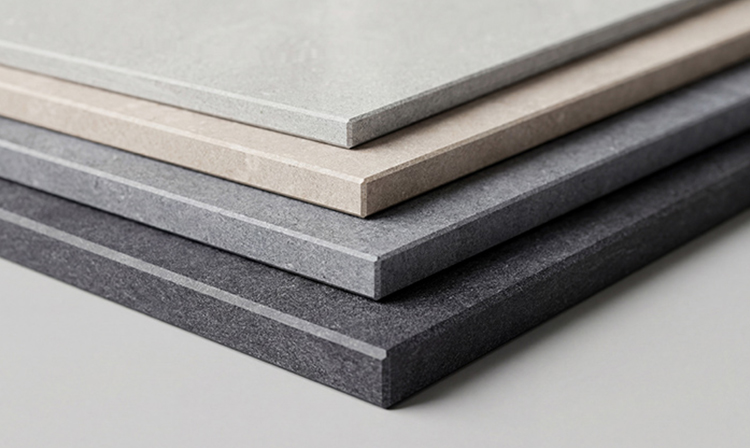
Most buyers do not want a general explanation of tile history. They want to know which material is safer, more waterproof, easier to install, more affordable, and more attractive for a real shower project.
The most useful tile content combines visual guidance with measurable specifications. A purchasing manager needs to verify water absorption, dimensional tolerance, surface finish, shade consistency, packaging quality, and available sizes before approving a product.
For commercial or multi-unit projects, stable production and consistent color can be as important as the tile material itself. A reliable manufacturer such as JBN can support buyers with coordinated colors, custom sizes, private labeling, and OEM production services.
Porcelain tile is made from refined clay and minerals that are pressed at high pressure and fired at a higher temperature. This process creates a dense tile with very low water absorption. Porcelain is usually classified as tile with water absorption of 0.5 percent or less.
Its dense body makes porcelain resistant to moisture penetration, staining, wear, and temperature changes. These characteristics make it a strong choice for shower walls, bathroom floors, hotel bathrooms, and other demanding applications.
Ceramic tile is generally made from a less dense clay body and fired at a lower temperature than porcelain. It normally has a higher water absorption rate, but this does not automatically make it unsuitable for shower walls.
When ceramic wall tile is properly glazed, correctly installed, and supported by a waterproof backer system, it can perform very well in residential showers. Ceramic is also usually easier to cut, lighter to handle, and more economical for large wall areas.
The tile body is only one part of shower performance. The glaze, texture, edge treatment, grout joint, installation system, and waterproofing layer all affect the final result.
| Parameter | Porcelain Tile | Ceramic Tile | Practical Meaning for Shower Walls |
|---|---|---|---|
| Typical water absorption | 0.5 percent or less for standard porcelain classification | Often above 0.5 percent, depending on product type | Lower absorption provides greater resistance to moisture penetration, but waterproof installation is required for both. |
| Density | High | Moderate to high | Dense porcelain is more resistant to wear and staining, while ceramic is generally easier to handle. |
| Hardness | Usually higher | Usually lower than porcelain | Porcelain is better suited to high-traffic and heavy-use environments. |
| Scratch resistance | Generally strong | Depends heavily on glaze and surface finish | Porcelain is often the safer choice where abrasive cleaning or frequent use is expected. |
| Weight | Heavier | Lighter | Ceramic can be easier to transport, lift, cut, and install on vertical walls. |
| Cutting difficulty | More difficult because of its density | Usually easier to cut | Ceramic may reduce labor time for complex layouts and small renovation projects. |
| Price range | Usually moderate to high | Usually low to moderate | Ceramic often provides a lower initial project cost. |
| Design availability | Wide range of stone, concrete, wood, and large-format styles | Wide range of colors, patterns, and decorative formats | Both materials can support modern, traditional, and custom bathroom designs. |
| Long-term durability | Excellent when correctly installed | Good for most residential wall applications | Porcelain is more suitable for heavy-use projects, while ceramic is adequate for many home showers. |
| Maintenance | Low, especially with a smooth glazed surface | Low, especially with a durable glaze | Grout maintenance usually has a greater effect than the tile body itself. |
| Service life | Often several decades with proper installation and maintenance | Often several decades in suitable wall applications | Actual service life depends on waterproofing, substrate movement, grout, cleaning, and installation quality. |
Low water absorption is an important advantage, but it does not replace a complete shower waterproofing system. Water can enter through grout joints, movement joints, corners, plumbing penetrations, and cracks in the substrate.
A high-quality porcelain tile installed over a poorly waterproofed wall can still result in mold, loose tiles, and structural damage. A properly glazed ceramic tile installed over a correctly prepared waterproof backer can perform reliably for many years.
Porcelain usually absorbs less water into its body, so it is less likely to retain moisture after repeated shower use. This can be helpful in bathrooms with poor ventilation or frequent use.
Ceramic wall tile can also remain highly practical when the glaze is intact. In everyday use, the biggest factors affecting drying are surface texture, grout porosity, bathroom ventilation, and water quality.
Both porcelain and glazed ceramic are generally easy to clean. A smooth, non-porous surface helps prevent soap, shampoo, body oils, and hard-water minerals from bonding strongly to the tile.
In actual use, grout often becomes dirty before the tile surface. Buyers should therefore evaluate the complete wall system rather than focusing only on tile material.
Porcelain has a dense and stable body, but it can still crack if the substrate moves, the wall is uneven, or the adhesive coverage is incomplete. Its strength does not eliminate the need for expansion joints and correct installation.
Ceramic is lighter and easier to install, but it may be more vulnerable to impact or cracking if the glaze or body is damaged. On a shower wall, however, impact loads are normally lower than on a floor, so quality ceramic can provide dependable performance.
Some product comparisons use battery life and operating stability when discussing electronic products. Shower tile has no battery or powered operating cycle. The equivalent performance questions are service life, color stability, moisture resistance, surface wear, and resistance to cracking or debonding.
Glazed ceramic is often the best value for a typical residential shower wall when the project has a controlled budget and a qualified installer. It offers broad design flexibility, manageable installation, and adequate moisture performance for most daily-use bathrooms.
Porcelain is a better choice when the homeowner wants a premium appearance, large-format panels, very low water absorption, or one material for both shower walls and bathroom floors.
Porcelain is usually preferred for luxury projects because it supports realistic stone visuals, large formats, coordinated floor and wall collections, and a strong premium specification. It also provides a consistent material strategy across wet and dry areas.
Porcelain is generally the safer specification for high-occupancy bathrooms because it provides strong wear resistance, low absorption, and long-term visual stability. Ceramic may still be appropriate for selected wall areas where the design and budget require a lighter or more economical option.
Ceramic can be more practical when the shower includes multiple niches, shelves, plumbing penetrations, small wall sections, or irregular corners. Its lower density can make field cutting simpler and reduce the risk of installation delays.
Ceramic usually provides the lower purchase price and may also reduce handling and cutting costs. Buyers should not select the cheapest available product without checking glaze quality, dimensional consistency, packaging, and batch stability.
Porcelain is normally the more versatile option because it is suitable for shower walls, bathroom floors, entryways, and other areas with greater abrasion or moisture exposure. If ceramic is selected for the walls, verify that the floor product has an appropriate slip resistance rating and floor-use classification.
A qualified OEM Tile Supplier should be able to provide technical data, samples, color cards, production lead times, packing details, inspection support, and recommendations for matching tile bodies and surface finishes.
For bulk purchases, buyers should also confirm minimum order quantity, container loading efficiency, replacement policy, quality inspection procedures, carton labeling, pallet requirements, and documentation for the destination market.
Porcelain is the stronger all-purpose recommendation for high-use bathrooms, commercial projects, large-format designs, premium renovations, and buyers who want maximum material density and long-term durability. Its higher cost and more demanding installation are justified when performance and design continuity are important.
Ceramic is an excellent choice for many residential shower walls, especially when the product has a reliable glaze and the waterproofing system is properly installed. It offers lower cost, easier cutting, lighter handling, and a broad range of decorative options.
The best shower wall tile is not determined by porcelain or ceramic alone. Waterproofing, substrate preparation, adhesive coverage, grout selection, ventilation, and cleaning habits all influence real service life.
For a balanced decision, compare the complete installed cost rather than only the tile price. JBN can help project buyers compare porcelain and ceramic collections, confirm technical parameters, develop coordinated colors and sizes, and arrange OEM production for residential and commercial shower applications.
When performance, design, and supply consistency must work together, consult an experienced OEM Tile Supplier before finalizing the specification. The right product and the right installation system will provide cleaner maintenance, greater stability, and a more reliable shower for years to come.
Feel free to reach out for any queries. We would be happy to help!
We look forward to working with you.
Navigation
Navigation
Contact Us
Telephone: 0086-757-83327093
E-mail: jbn002@jbnjbn.com
WhatsApp: +86 136 9028 1303
WeChat: +86 136 9028 1303
Address:Building 4, Area B, Ceramics International Trading Center, Jihua Xi Road, Foshan, Guangdong, China
Get in Touch
Get in Touch