19,Nov 2026
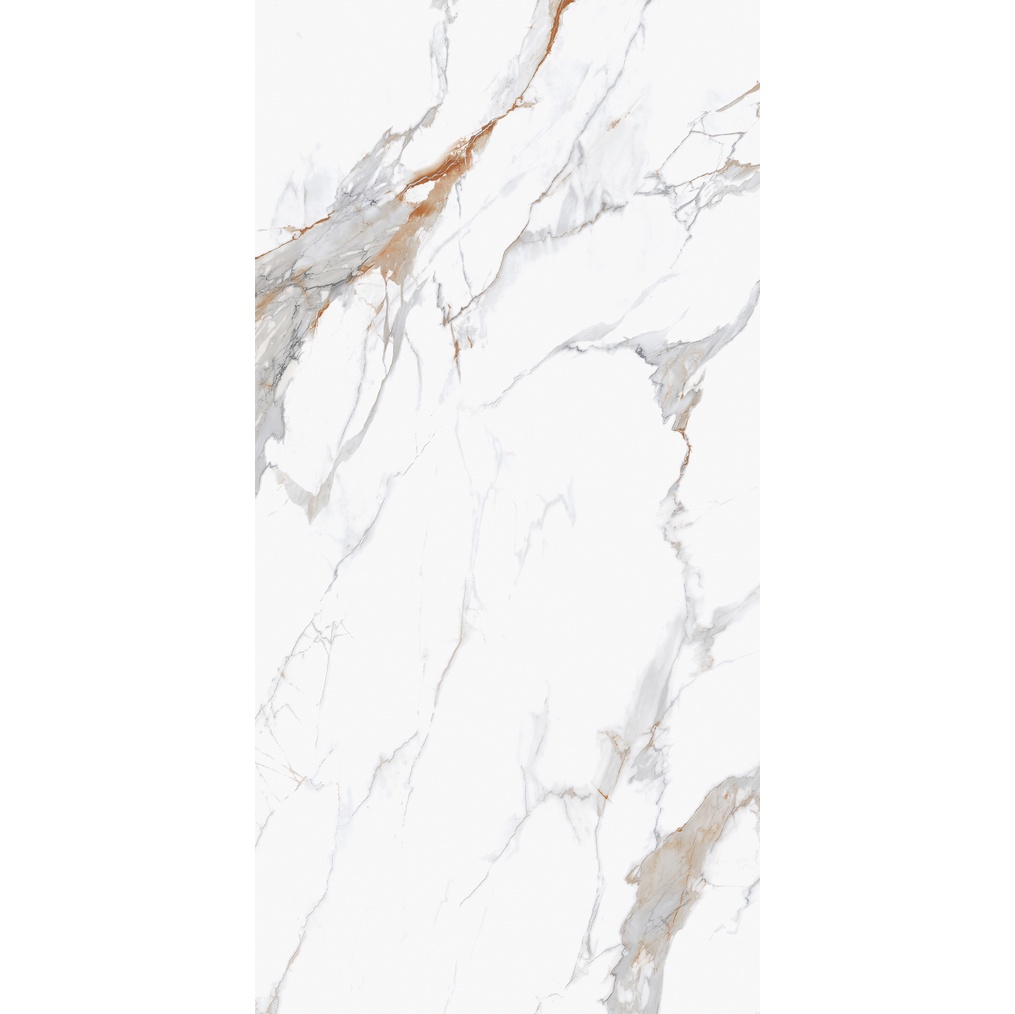
Are porcelain tiles good for bedroom floors? Yes. A floor-rated porcelain tile can be a practical bedroom material when durability, easy cleaning, design consistency and low water absorption are priorities. The best bedroom porcelain tile is not automatically the largest, most polished or most expensive option. Its finish, color, size and installation must complement the room's light, furniture, acoustic comfort and daily use.
Bedrooms differ from kitchens and outdoor entrances. They normally encounter less water and grease, but people spend long periods there barefoot, move furniture around the floor and expect a calm atmosphere. This guide explains bedroom tile selection for homeowners, interior designers, apartment developers and distributors. It also covers the questions bulk buyers should ask before choosing a collection for villas, residential towers or hospitality bedrooms.
Porcelain is a dense type of ceramic tile, generally classified by a water absorption result of 0.5% or less under widely recognized testing systems. That low absorption can be useful in humid climates, air-conditioned interiors and homes where routine cleaning involves water. Unlike some soft flooring materials, porcelain is a hard surface that can be swept, vacuumed or damp-mopped with products compatible with the finish and grout.
It is important to separate the tile's performance from the complete floor assembly. A correctly selected tile can provide a long-lasting surface, but an unstable substrate, incomplete adhesive coverage or poorly designed movement joints may still lead to cracks. Similarly, hard tile can feel cooler underfoot and reflect more sound than a carpet. Those characteristics are design considerations, not reasons to reject every bedroom tile project.
Claims such as “scratchproof,” “non-slip” or “maintenance-free” should not be accepted without product-specific evidence. A bedroom floor can still be scratched by grit under a chair, become slippery during wet cleaning or suffer visible grout discoloration if the wrong cleaning materials are used.
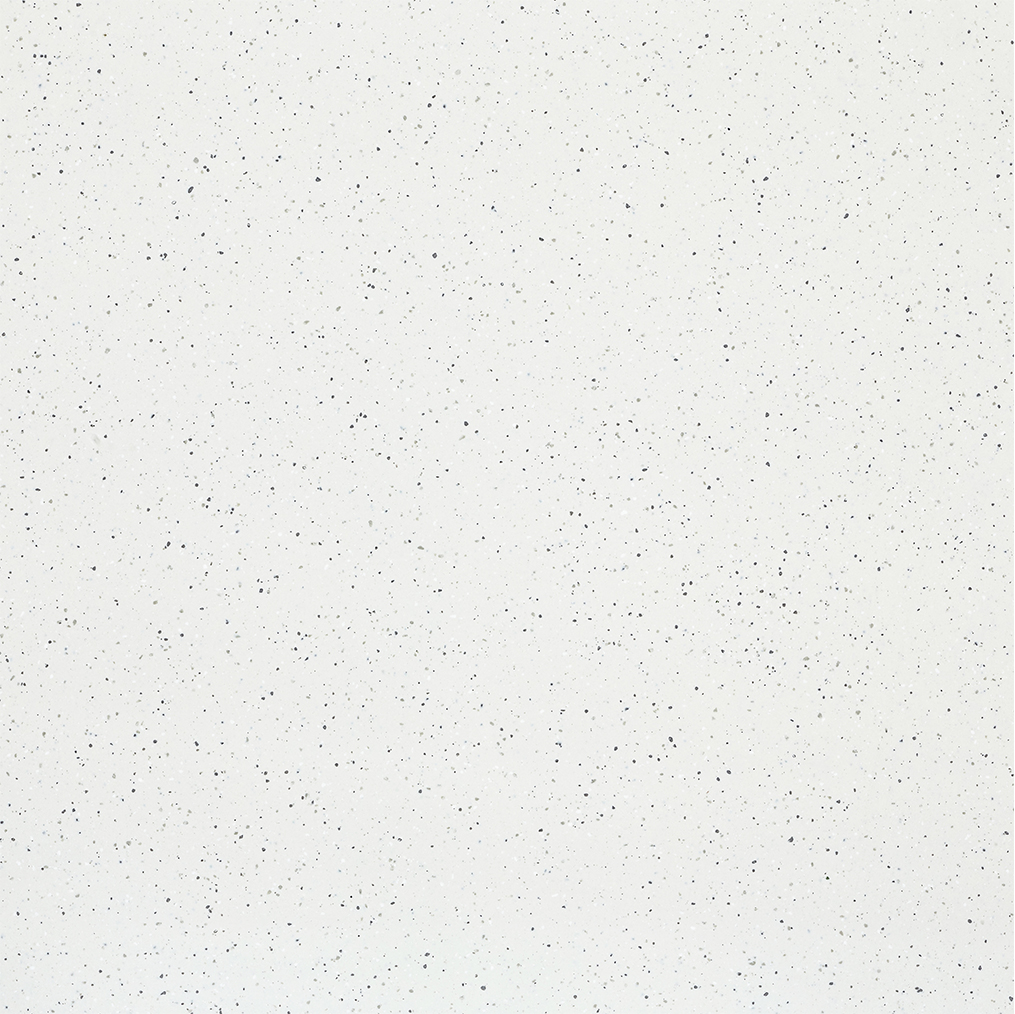
Finish is often the decision that changes how a bedroom feels most dramatically. The same pale stone visual can appear soft and restful when matte, or brighter and more reflective when highly polished. Choose by the actual room experience rather than a finish label alone.
| Bedroom decision | Matte porcelain | Polished porcelain |
|---|---|---|
| Visual character | Low-reflection, restrained appearance | Bright, mirror-like highlights and strong light reflection |
| Morning and evening lighting | Less visible glare from direct light | Can increase reflections from windows and bedside lights |
| Footprints and dust | Often visually forgiving, depending on texture and color | May show marks and streaks more clearly |
| Cleaning considerations | Textured surfaces may need attention to trapped dirt | Smooth surfaces can be easy to wipe but reveal haze |
| Wet floor conditions | Check tested wet traction; matte does not automatically mean safe | Check wet traction especially carefully before extending into wet zones |
| Design fit | Minimalist, rustic and warm-neutral interiors | Formal interiors and selected dry, luxury bedroom schemes |
A practical strategy is to place full-size samples on the floor beside the bed, curtains, wardrobe and wall finish. View them in daylight and with the final artificial lights switched on. Ask whether the reflection is comfortable when the occupant lies down or walks toward the window. The answer may be different from what looks attractive in a bright showroom.
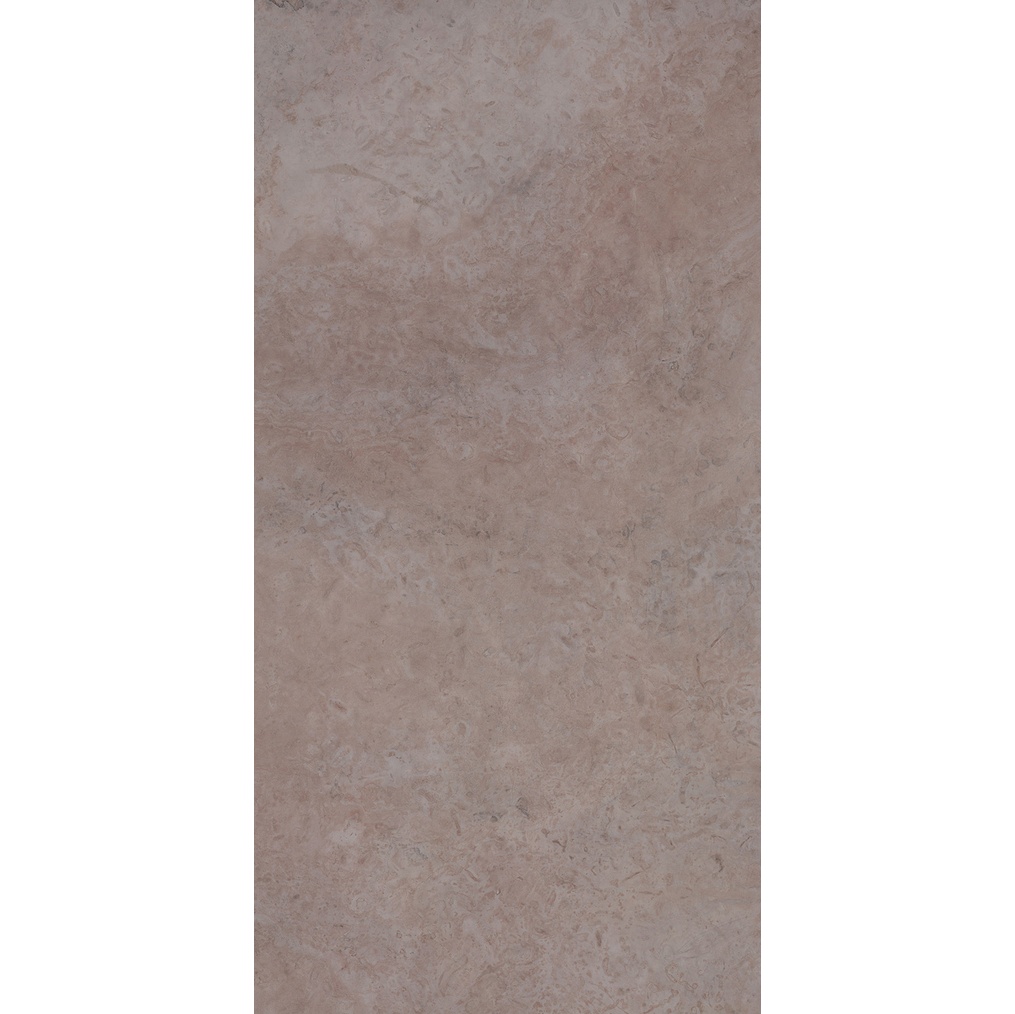
For actual options, review rustic matte tile finishes and polished glazed porcelain designs. Confirm the selected product is floor-rated; decorative wall products should not be assumed suitable for bedroom floors.
The right size depends on usable floor dimensions, furniture positions, door thresholds and the desired visual grid. A large tile can reduce the number of visible grout intersections, but it can also produce narrow cuts along walls if the room dimensions are not planned properly. The installed arrangement matters more than an isolated sample.
| Nominal size | Area per tile | Potential bedroom use | Planning priority |
|---|---|---|---|
| 600x600 mm | 0.36 m² | Compact to medium bedrooms and modular floor plans | Balance edge cuts and establish a regular grid |
| 800x800 mm | 0.64 m² | Spacious bedrooms and connected dressing areas | Confirm substrate flatness and room proportions |
| 600x1200 mm | 0.72 m² | Modern rooms with a strong directional layout | Choose long-edge orientation around bed and doorway |
| 750x1500 mm | 1.125 m² | Selected premium suites with generous access and working space | Handling, transport, cutting and installer experience |
These are design options, not a promise that every collection is available in every size. The published tile portfolio lists 600x600, 800x800, 600x1200 and larger common formats, with customization available for eligible orders. For more detail on large square modules, see the 800x800 porcelain tile selection guide.
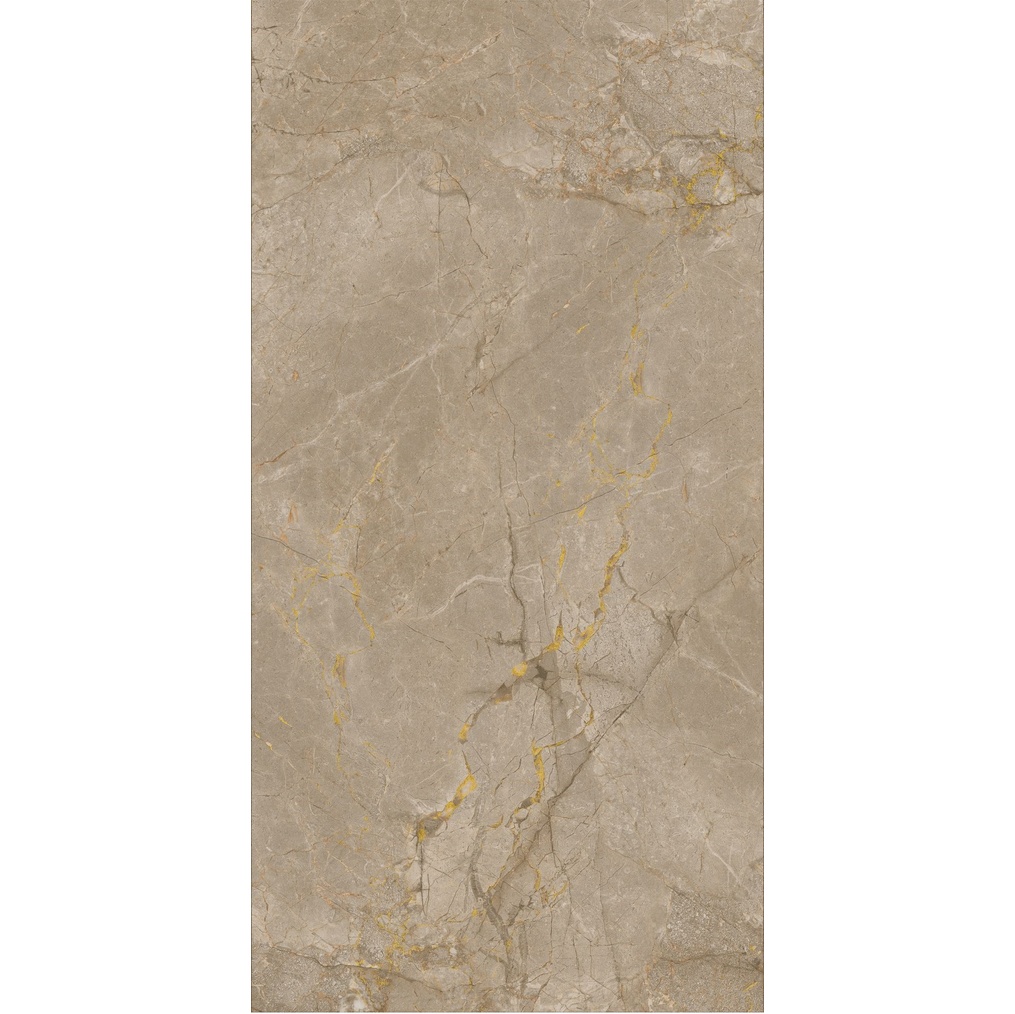
Warm neutral porcelain can work with natural wood furniture, linen upholstery and muted wall colors. In a bedroom with limited daylight, a soft beige floor may look welcoming without becoming visually dominant. A stone effect with moderate movement can add character, but strong veins repeated every few tiles can create a busier floor than expected.
Light gray or off-white floors can create a clean, open appearance, especially in small apartments. Their drawback is that dark hair, fine dust or contrasting grout can become more visible. Test the floor beside the actual skirting and cabinetry. If the floor connects to a corridor, plan the joint alignment rather than changing the grid abruptly at the bedroom door.
Dark tiles can create a dramatic suite when combined with sufficient lighting and lighter textiles. They may also reveal pale dust and water residue more readily. In a small bedroom with little natural light, a dark polished floor may feel visually heavy. Approve an actual sample and grout mock-up before choosing the final shade.
Wood-look porcelain offers a warm design language while retaining the care characteristics of tile. It can complement bedrooms with upholstered beds, light timber wardrobes and simple wall finishes. However, design similarity does not mean the floor behaves exactly like wood. Tile remains a hard surface and needs a compatible adhesive and grout system. The wood-look tile collection provides another visual direction to compare with stone and matte designs.
Porcelain can feel cool because its surface conducts heat differently from carpet or wood. In a warm or humid climate, this sensation may be welcome; in cooler climates or heavily air-conditioned rooms, some occupants prefer rugs, slippers or a suitable underfloor heating system. Comfort is therefore part of the room design, not just a material property.
If electric or hydronic floor heating is proposed, verify that the selected tile, adhesive, grout, substrate and heating product are compatible. Expansion and movement requirements still apply. A rug beside the bed can improve underfoot comfort, but choose a backing material that does not stain the tile or interfere with cleaning. Rugs should also remain stable to reduce trip risk.
Hard floors can reflect footsteps and furniture noise. For apartment bedrooms and hotels, acoustic performance should be evaluated at the assembly level, including the slab, underlayment, ceiling construction and any relevant impact-sound requirements. A porcelain tile alone cannot guarantee a particular acoustic rating.
Rectified porcelain tiles have mechanically finished edges that can support a consistent visual joint when installed correctly. This can be helpful in modern bedrooms where the design calls for a clean floor grid. However, rectified does not mean grout-free. Every installation must accommodate the tile's dimensional tolerances, substrate conditions, movement joints and applicable local standards.
Choose a grout color that complements the tile and furniture palette. Close color matching can soften the grid, while contrasting grout emphasizes each module. The finished appearance depends on the actual dried grout shade, not only a color chart. Check the tile's shade variation before purchase; stone-inspired collections may be intentionally more varied than minimalist solid-color designs.
Much of a bedroom floor is covered by the bed, nightstands or wardrobe. Plan the layout around the portions that remain visible, especially the walkway from the door and the area in front of the window. A centered grid may look symmetrical on paper but place narrow slivers in the most noticeable location. A simple dry layout helps resolve this before adhesive is mixed.
Using a coordinated floor collection in a bedroom and dressing room can reduce abrupt material changes. Check transitions, door clearance and substrate heights early. If the adjoining bathroom requires a different slip-resistant finish, a coordinated color from a suitable product series may be more sensible than insisting on exactly the same polished surface everywhere.
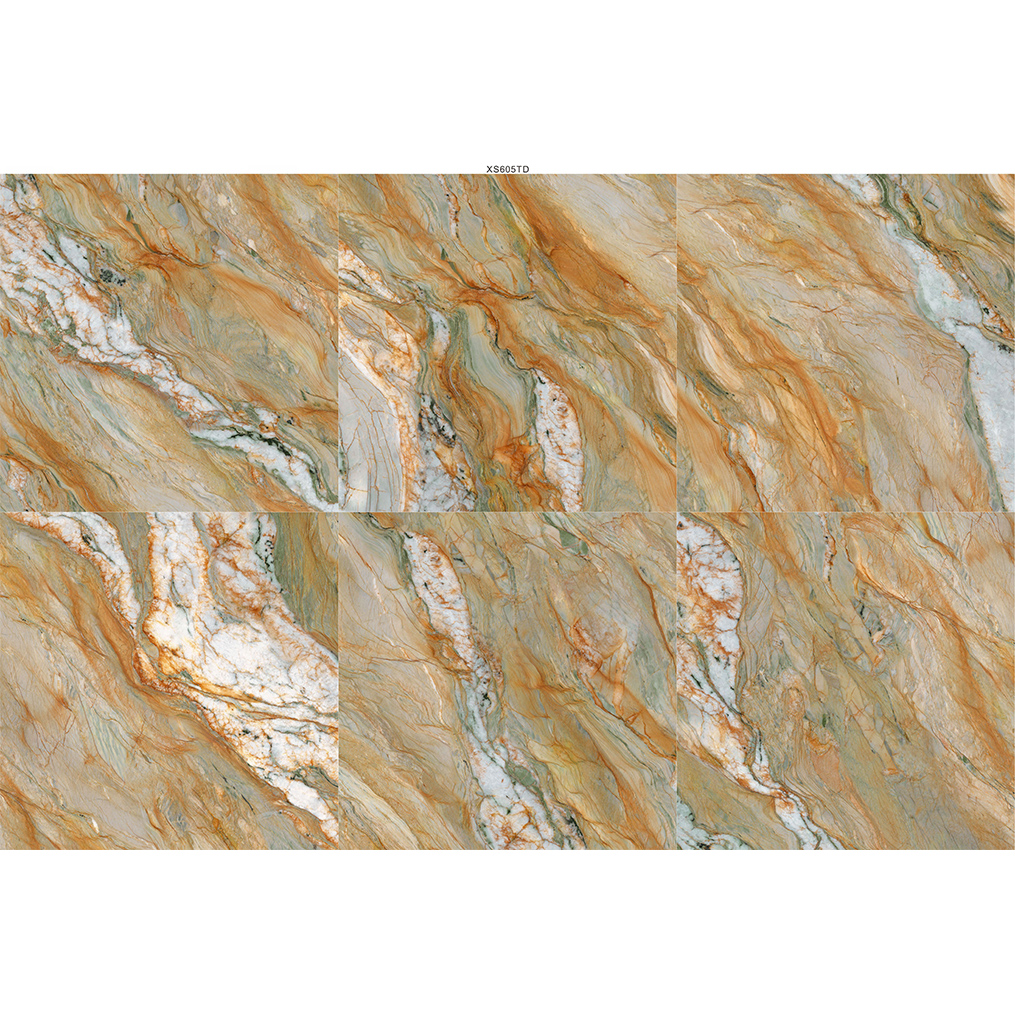
Marble-look and wood-inspired collections often include multiple printed faces. Request enough sample faces to review the visual variation in context. For large orders, confirm how the face designs are distributed and how cartons are identified. An architect's rendering may show perfect pattern continuity that is not realistic without an agreed installation plan.
Measure the actual tiled floor rather than automatically deducting the entire footprint of fixed furniture. The layout designer should determine whether the tile continues under built-in cabinets or is terminated at an appropriate edge. Add an allowance for cuts, breakage, pattern matching and a reserve from the same batch.
For example, a 4 m x 5 m rectangular room has 20 m² of gross floor area. Using nominal 600x600 mm tiles, the theoretical count is 20 ÷ 0.36 = 55.56 tiles. A planning allowance of 10% gives 61.11, rounded to 62 complete tiles before converting to full cartons. With nominal 800x800 tiles, the same area is 20 ÷ 0.64 = 31.25; after 10% allowance it becomes 34.38, or 35 complete tiles. The smaller piece count does not necessarily make the larger tile cheaper to install.
A long narrow wardrobe opening, diagonal pattern or irregular wall angle may increase waste. The installer should produce a cut layout and confirm the final quantity. Always keep a small, labeled spare stock for future repairs if the project budget allows.
Residential developers and hotel operators need consistent material schedules across many rooms, not merely a design photograph. Even if each room uses a modest quantity, combined quantities can make shade variation, packing efficiency and installation sequencing important. The specification should connect the selected design to an inspectable product code and agreed production reference.
The supplier's quality-control overview describes dimensional and surface inspections, while the OEM/ODM program describes customization of size, pattern, thickness and packaging. These capabilities are relevant when developers need coordinated bedroom finishes across multiple buildings or distributors need private-label residential collections. The exact options should be agreed for the selected SKU and order quantity.
Routine care usually starts with removing dry dirt before damp cleaning. Sand or grit under a chair leg can abrade the finish over time, even on a hard tile. Use protective pads under furniture and lift heavy pieces rather than dragging them across the floor. Follow the tile and grout manufacturers' cleaning instructions instead of using strong acids, abrasive powder or unapproved polishing products.
High-gloss floors may show streaks if a cleaner leaves residue; textured floors may require a different mop or brush to reach the surface profile. Clean grout according to its material type. A stain-resistant porcelain body does not automatically mean that cementitious grout is stainproof. Protect the floor from construction dust and paint while other trades are still working.
Porcelain generally has lower water absorption, but both materials can work where the particular product is floor-rated and suitable for the expected use. The decision also depends on price, design, installation and local project requirements.
Matte finishes often create a softer atmosphere with less glare. Polished finishes can suit formal dry interiors. Compare physical samples in the room and verify the intended-use and safety data for the specific product.
Often yes, when the tile, heating system, substrate, adhesive and grout are designed to work together. Confirm the installation instructions and movement-joint requirements with qualified professionals before ordering.
Many glazed porcelain surfaces do not require routine sealing, but some finishes and grout materials have different care requirements. Follow the selected product's maintenance guidance rather than applying one rule to every porcelain tile.
A 600x600 mm tile is a flexible starting point, although 800x800 and rectangular formats may also work with careful layout planning. Choose based on actual dimensions, visible cut locations, furniture and the installer's assessment.
Porcelain bedroom flooring works best when the finish creates the desired atmosphere and the technical specification supports everyday use. Review color, reflection, comfort, acoustic needs, dimensions, layout and cleaning as one coordinated decision. For projects involving many bedrooms, add sample approval, shade control, export packing and reserve-stock planning to the selection checklist.
Explore the wholesale porcelain tile collections and request product-specific samples using the tile inquiry page. JBN Ceramic supports residential developers, designers and distributors with coordinated porcelain tile sourcing, OEM/ODM options and inspection-focused project supply—share your bedroom floor schedule to start a practical specification discussion.
Feel free to reach out for any queries. We would be happy to help!
We look forward to working with you.
Navigation
Navigation
Contact Us
Telephone: 0086-757-83327093
E-mail: jbn002@jbnjbn.com
WhatsApp: +86 136 9028 1303
WeChat: +86 136 9028 1303
Address:Building 4, Area B, Ceramics International Trading Center, Jihua Xi Road, Foshan, Guangdong, China
Get in Touch
Get in Touch